


Three years. That’s how long it’s been since Harry Styles released his Grammy-winning sophomore solo album, Fine Line; he now has laid down the carpet as a humble invitation welcoming us to his latest studio offering, Harry’s House. During this time, changes have upended life and the world as we know it—evolution, the sorrow of growth, and unexpected life changes have been the order of events post-COVID. And what makes the One Direction alumnus’s third studio album a gift is that it’s a playful mirror of all these realities that dares to smile, laugh, and dance in the face of it all.
The brevity in the songwriting and the eclectic production’s sparse nature—influenced by synth-pop and R&B sounds—feels a bit like a walk through a slightly furnished home. A little tour of sorts, as Harry takes us into thirteen different tracks—though I like to think of them as rooms.
Some rooms of Harry’s House are whimsical and joyous, like the record-opening song “Music for a Sushi Restaurant”, “Daydreaming”, and “Cinema”, which see the singer-songwriter flaunt a colour-rich rainbow of his vocal capabilities and moods, tempering the album’s denser moods and themes with summertime warmth and happy performances. The first-mentioned picks up where “Adore You” left off back in 2019 in tone and execution, accompanied by blazing trumpets and sweet marriage of guitars.
Other rooms are darker in theme, inspiring seriousness and thought with subjects of longing, love, and the ambivalence that is part and parcel of sudden changes.
The album’s lead single—and TikTok hit—”As It Was” and the folk-inspired “Matilda” are both housed within themes of change and chronicle the inevitability of future events and growing pains. But there’s a subtlety with which he explores these themes and how he captures the sombre moods of upheavals without losing his grip on hope and his humanity.
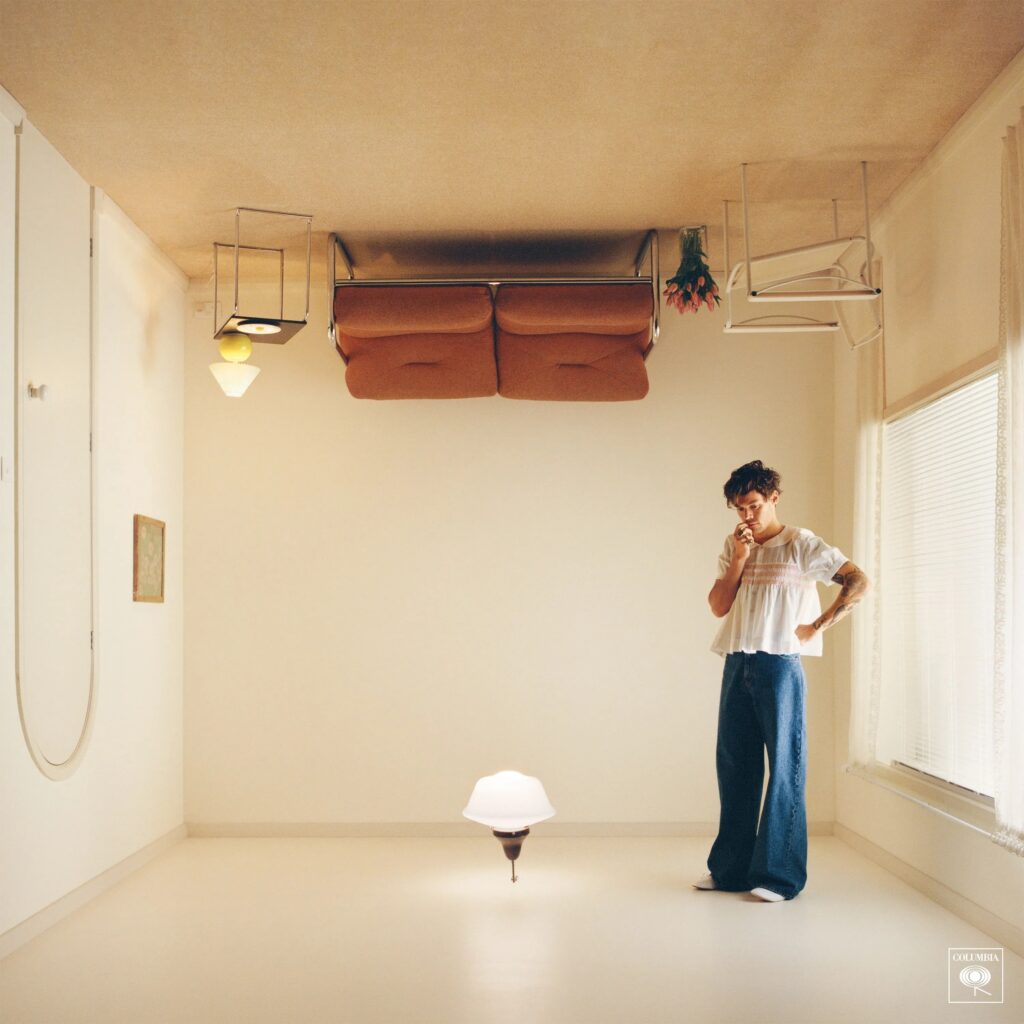
In “As It Was”, he reflects: “In this world, it’s just us / you know it’s not the same as it was”, while “Matilda” sees him narrate: “You can see the world, following the seasons / anywhere you go, you don’t need a reason / ’cause they never showed you love / you don’t have to be sorry for doing it on your own”. Both songs detail the growth and the pain that comes with it—the two things the world’s been forced into and made accustomed to for the past several years.
“Late Night Talking”, “Little Freak”, and “Love of My Life” are the love-inspired rooms of Harry’s House, seeing the musician let down the bucket into the deepest well of his vulnerable side to source various vivid vignettes, ranging from love and fulfilment to sultry yearning and lust. “Little Freak” is the hedonistic peak of the trio, a tale of wistful lust (“I’m not worried about where you are, or who you will go home to / just thinkin’ about you”) spun from a tapestry of flashing imagery (“You bring blue lights to dreams / starry haze, crystal ball / somehow, you’ve become some paranoia / a wet dream just dangling, but your gift is wasted on me”) to paint cinematic pictures.
Harry’s House is an even mingle of poetry, thought-provoking storytelling, and light-hearted songwriting balanced over production so thin that it borders on transparent. Not that this is a bad thing; I’m not complaining. If anything, it makes the album—and Harry—shine. A praiseworthy combination of vocals and instruments from start to finish.


