


Following the visuals of “Isoka” and “Amavaka”, afropop singer-songwriter Jabulani “Sjava” Hadebe has transposed the platinum-selling “Amakhehla” from Isibuko to music video format. Directed by Luthando Sigubudu, with the short film co-stars fellow features Dumakahle, Anzo, and Vernotile, along with an ensemble cast of elderly extras who serve as makeshift ancestors meant to mirror the thematic narrative of one never walking alone in the song.
Less is more in the music video, keeping true to Sigubudu’s creative touch as natural landscapes such as rippling cerulean waters and monolithic hills dominate the spatial surroundings. The snapshots of young lambs grazing and candle lights billowing in the wind contribute to the rustic texture synonymous with country life that doesn’t call too much attention to itself, thus spotlighting the subjects of the song: amakhehla (ancestors).
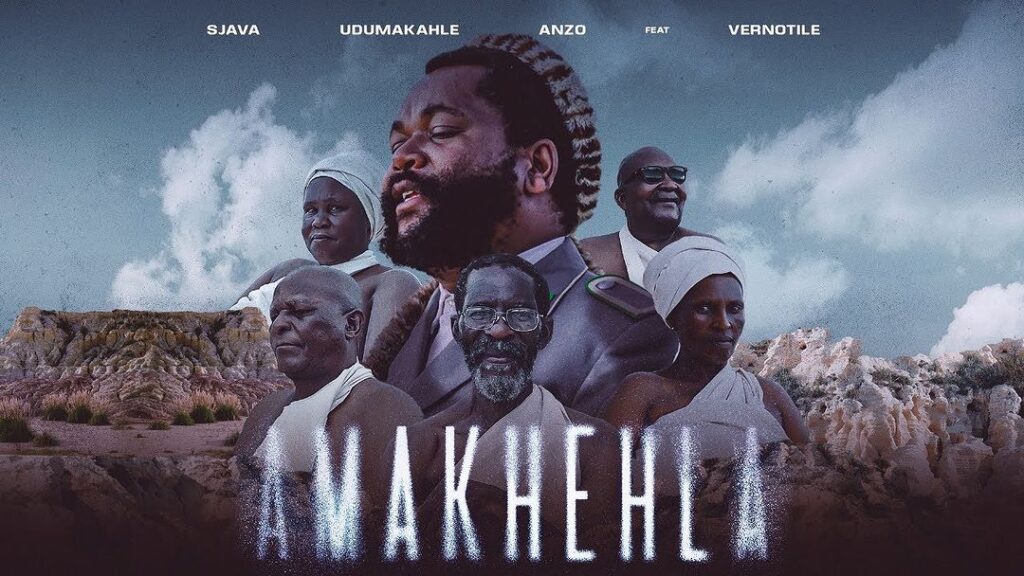
The controlling metaphor of amakhehla is symbolised by placeholding senior people aptly clad in white and arranged in a collective. Although they say nothing in the music video, they are as much a presence as the hills with their occasional pensive stares at the camera and their shiftless postures.
In some instances, their involvement is metonymic, like when Dumakahle sings: “Ngihamba nomkhulu bami”. Even though he’s situated in a clearing surrounded by empty seats that were previously occupied by the elders, the chairs are not mere props but territory markers. White-covered moving figures orbit Sjava in another frame, while Anzo appears also barricaded by seated elders. This recurrent aspect of the music video conjures up the chilling reminder that even when someone seems most isolated, they are never truly by themselves and without defense.
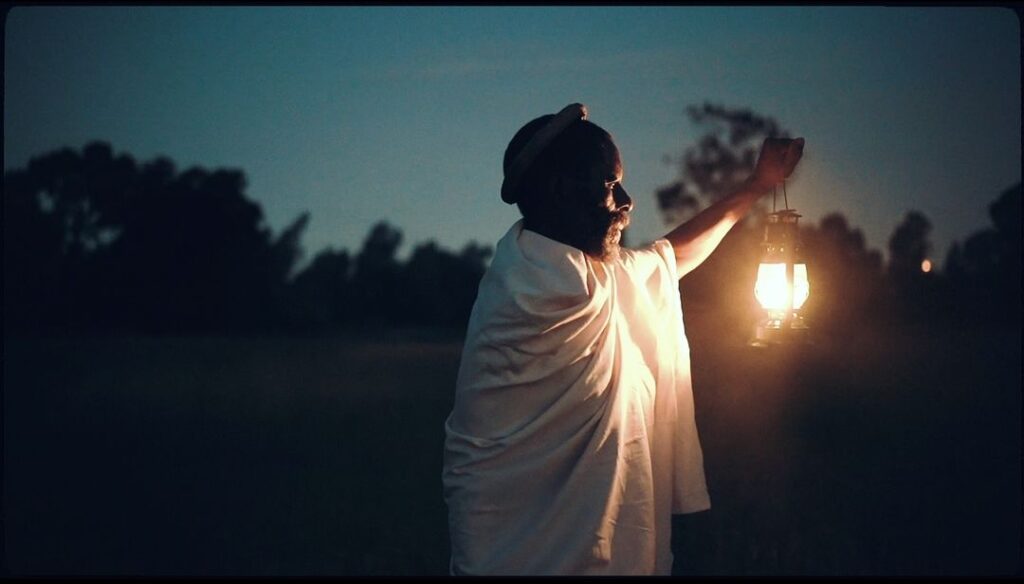
Retribution is also represented in the music video, as the scene of domestic abuse is depicted resolving in the abuser being escorted by police while the victim looks on with her baby in her arms. Paralleled with the imagery of elders warding off harm from the musicians, the scene rehashes the theme of retributive justice: that the ancestors are not only active but are willing to go to any lengths to protect their own, as affirmed by Sjava’s lyrics: “Ngicela nitshele isitha sami / Ukuthi ang’hambi ngedwa / Ngihamba nabangabonwa”.
Minimalism and symbolism are the key constituents in the visuals of “Amakhehla”. The collective cast say a lot without saying anything at all, and the landscape only affirms this.


