


And with that said, Round One is over with.
Compton’s very own self-styled human sacrifice has been on the clock since the surfacing of “Push Ups”, back when the culture at large had to consult DJ Akademiks to ascertain whether or not it was an authentic diss in a world corrupted by AI-generated songs. With pressure mounting on Kendrick Lamar courtesy of social media, the hip-hop community’s eroded sense of patience, and the now-retracted “Taylor Made Freestyle”, hip-hop’s sole Pulitzer Prize winner’s Tuesday surprise release via YouTube was not only a welcome turn of events but one enough to make heads cock back, considering that “euphoria” came out quicker as a response compared to “Push Ups”.
Although Kendrick’s battle form has been a subject orbited by speculation and theory – with him never having been battle tested till now – the eccentric lyricist has showed enough soul since blowing up with Section.80 (2011) and gall (does anybody not know what he did on “Control”?) for one to know that he’s not one to sacrifice technique and art. On his first battle-rap foray with “euphoria”, Kendrick doesn’t shed his mad-genius persona, opting for the unorthodox approach of remaining faithful to the employment of multiple accents, gradations of various personalities, and dense lyricism to spew some of the most vile vitriol against collaborator-turned-fiend Drake.
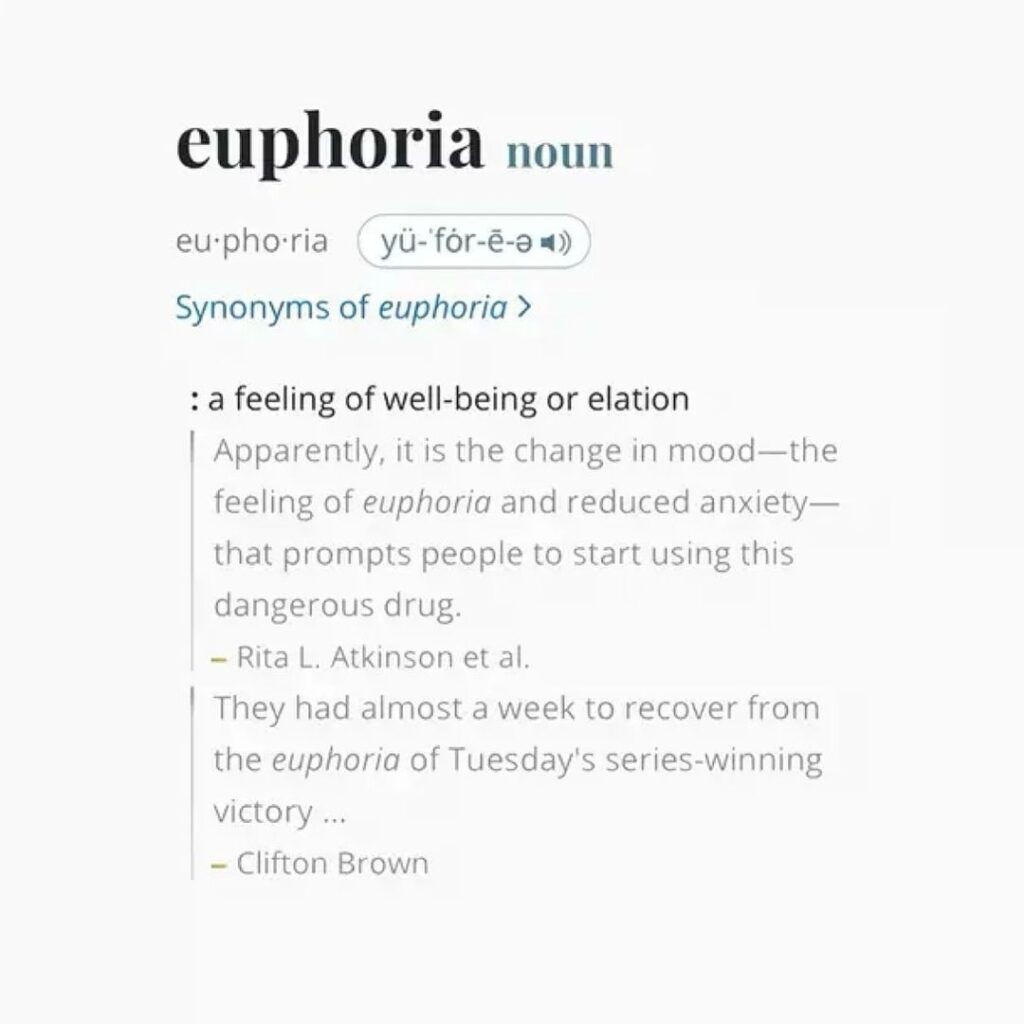
Song Artwork
“euphoria”, on both production and songwriting fronts, borrows nothing from standard archetypal diss records. Jay-Z’s “Takeover” and Pusha T’s “Story of Adidon” are still remembered today for being soul-scathing verbal onslaughts that remained true to musicality, while Nas’s “Ether”, Tupac’s “Hit Em Up”, and Ice Cube’s “No Vaseline” are still hailed as blueprints for designing battle-ending guillotines. All these songs have one thing in common: a standard approach a listener might deem straightforward – something “euphoria” doesn’t possess and so makes it stand out. With several beat switches, another divergent choice, Kendrick Lamar fashions a tiered diss record that allows him to lean into his strengths of experimentation and jazz (the first beat of the song) before he heats up the pot with a more modern approach of trap-influenced sounds. This unconventional structure is the only hurdle that might come across as an unnecessary frill, especially for those who simply signed up to see blood and hidden skeletons, not accents and tangential personas.
On this rebuttal, though, Kendrick delivers a motherload of a mouthful partitioned into three parts. Starting off on a low and cool tone, Kendrick bases his first verse on the narrative of Drake being an inauthentic avatar of the hood and the rap game (“You’rе not a rap artist, you a scam artist with the hopes of being accеpted / Tommy Hilfiger stood out, but FUBU never had been your collection”) and a morally-bereft faker, calling him a “pathetic master manipulator” and a “habitual liar”. Kendrick slyly uses this case against Drake to clean up Drake’s accusation leveled against his wife, Whitney, of supposed infidelity, flipping the “Push Ups” narrative on its head. He bookends the first portion of the track with the threat: “Don’t tell no lies ’bout me, and I won’t tell truths ’bout you.”

The second stab, done atop blazing trumpets, a rumbling bass, and apocalyptic church bells, is as chunky as the third part, a doozy in which Kendrick digs into his quiver to attack Drake’s character even further. The California native has always been a literary figure in the rap scape, and he doesn’t shun his identity in his delivery, with the second verse flowing as a stream of dark consciousness. The harangue covers themes of past criminality and street cred (“Have you ever played have-you-ever? Okay, nigga, let’s play / Have you ever walked your enemy down like with a poker face? / Have you ever paid five hundred thou’ like to an open case? / Well, I have, and I failed at both, but I came out straight”) and respect (“Oh, you thought the money, the power or fame would make you go away?”).
Drake’s pressure spot has always been his power struggle with lack of acceptance, chinks in the armour Pusha T and Rick Ross have aimed at in their respective diss songs dedicated to Drizzy. On “euphoria” Kendrick jams the knife deeper, cleverly calling back Drake’s own diss line towards Meek Mill on “Back to Back” in which he rapped “Trigger fingers turned to Twitter fingers” by saying “I hate when a rapper talk about guns, then somebody die / They turn into nuns, then hop online, like “Pray for my city” / He fakin’ for likes and digital hugs”. Doubling down on this, Kendrick also references past gun lessons to overturn Drake’s allegations against him never having been embroiled in gang life (“The very first time I shot me a Drac’, the homie had told me to aim it this way / I didn’t point down enough, today, I’ll show you I learned from those mistakes”).
The second half also brings with it one of the song’s highlights in which Dot proclaims himself Graham’s “biggest hater”, rapping: “I hate the way that you walk, the way that you talk, I hate the way that you dress / I hate the way that you sneak diss, if I catch flight, it’s gon’ be direct / We hate the bitches you fuck, ’cause they confuse themself with real women.” In that sudden moment of lyrical clarity, Kendrick infuses his intent with such stunning bluntness and verve in cadence, it’s altogether impossible to separate the game from the man himself: Duckworth absolutely abhors the man named Aubrey Graham and there’s no question about it. And while he does make mitigations for Drake’s existence by stating that he likes him “with the melodies” and that he’s one of the “three GOATs”, the underlying distaste and undercurrent of disapproval is enough to conjure up one verdict: Drake, on a status level in the hip-hop world, is, to Duckworth, a pathetic excuse of a person he gives recognition to only on a grudging basis.
The third portion of the song builds up with a crescendo’s gradient, with Kendrick vilifying Drake’s fatherhood (“I got a son to raise, but I can see you don’t know nothin’ ’bout that”) and desecrating his manhood (“When I see you stand by Sexyy Red, I believe you see two bad bitches / I believe you don’t like women, it’s real competition, you might pop ass with ’em”). The humorous aspect of this side of “euphoria” is its smart interplay with pop and meme culture, playing on the social conspiracies that Pusha T’s damning diss forced him to be a proud father and that he’s a woman-hater who secretly harbours feminine tendencies. What’s more, Kendrick’s character assassination rubs salt on the already-open wound of Drake having ghostwriters (“Am I battling ghost or AI?”).
The song ends with more ominous threats of violence (“Don’t speak on the family, crodie / It can get deep in the family, crodie / Talk about me and my family, crodie? / Someone gon’ bleed in your family, crodie”) and more damaging reveals (“If you take it there, I’m takin’ it further / Psst, that’s somethin’ you don’t wanna do”).
“euphoria” is not at all something to turn up to like “Push Ups”, nor does it have the head-bopping effect and energy seen in “Like That”. However, this is a diss written and performed in its own peculiar and Lamar-esque style. Kung Fu Kenny imbues enough hate, contempt, and disapproval into his words without sacrificing the artform, such that two things cannot be brought into question: Lamar’s intense dislike for Drake and his status as rap’s finest songwriter. Is it a knockout blow? Not by a long shot. But it’s a heavy swing that will require Drake to dig deeper than he did with Meek Mill to be able to top this response or even give him a substantial chance of winning. After all, how do you even respond to a grown man revoking your N-word pass? Possible. But it will take some doing.
Listen to “euphoria”:


