


Over the past decade and a half, the global musical landscape has experienced an undeniable African renaissance. From international insurgence and the prominence of Afrobeats to the equally global and rhythmic dominance of Amapiano, there is a strand of critical acclaim and record-breaking streams that have become a norm. At the forefront of this exponential growth is Zimbabwean-born, South African-based singer and songwriter Charmaine Shamiso Mapimbiro, affectionately known as Sha Sha, who has not only positioned herself as the Queen of Amapiano but has made award-winning strides as one of the spearheads of the piano vanguard.
Sha Sha’s journey exemplifies the maxim that mastery requires ten thousand hours of dedication. Discovered at seventeen by acclaimed singer-songwriter and producer Audius Mtawarira, who became her mentor, she refined her artistry through years of collaboration with Amapiano luminaries like DJ Maphorisa and Kabza de Small, and alongside artists such as Rouge and Priddy Ugly. A serendipitous encounter with Maphorisa, facilitated by a cab driver, led to her signing with Blaq Boy Music. Her 2019 debut Blossom EP produced a string of hits, including “Tender Love,” “You,” “Water,” and “Mutare”—the last-mentioned being a heartfelt tribute to her Zimbabwean hometown. This artistic achievement was crowned with a BET Award for Best International Act.
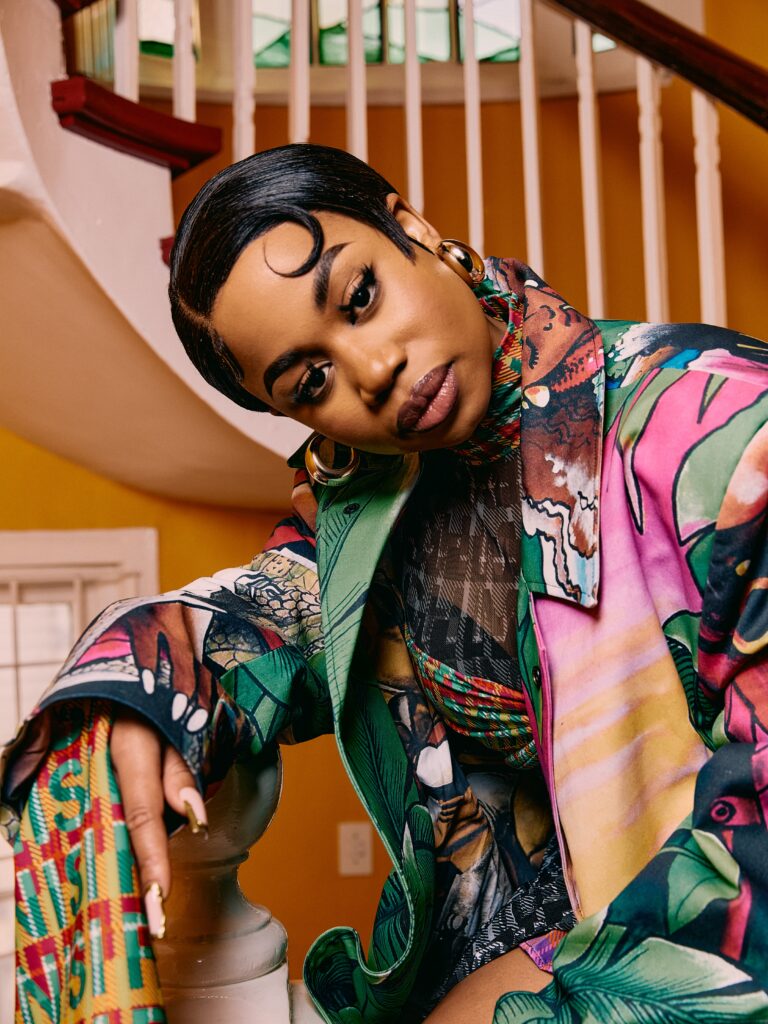
Sha Sha | SUPPLIED
Her artistic fingerprint is unmistakable across a spectrum of collaborative catalogue, which boasts the SAMA-nominated “Akulaleki” with Samthing Soweto, “Nge Thanda Wena” alongside Mlindo The Vocalist, and the Scorpion Kings’ “We Mama.” Her debut album, I’m Alive, featured the standout “Ungowami,” while her contribution to Nomfundo Moh’s “Phakade Lam” further cemented her status as a force to be reckoned with in the Amapiano cultural conversation. Each composition, from vocal inflections to riffs, hooks, and staunch penmanship, accentuates her reverence for the avant-garde craftsmanship that she holds in high regard, creating timeless soundscapes that enhance every occasion—from spirited road trips, sweaty rendezvous in the club and intimate Sunday braais.
Having inked a management deal with Black Major during the “I’m Alive” era, Sha Sha has been quietly crafting her return to the throne, delicately balancing art and commerce. Her 2024 summer release “Ndawana,” featuring Kelvin Momo and Sykes, sung in her native Shona, and the street anthem “Eglasini,” featuring Tyler ICU, Scotts Maphuma, 2woshort & Tyrone Dee—have set the benchmark for a new chapter of chart-topping ascent. These carefully timed releases have achieved viral social media status and subsequently accumulated nearly three million streams collectively.
Your journey from choir singer in Mutare to “Queen of Amapiano” reads like a story of destiny. How did those early years, moving across Zimbabwe and living with your grandmother and aunts, shape your understanding of music as art and cultural expression?
Sha Sha: “When I think about my journey into music, I moved between so many countries and places. I was influenced by different cultures and their music. By the time I chose music at my aunt’s place and travelled to Harare, Zimbabwe’s capital, I’d already fallen in love with music in many different ways. I think what shaped me was how I learned to adapt, putting all these lessons into my work and my diversity. It goes deeper than Mutare – I went to at least 10 different schools growing up, so this variety of influences shaped my core approach to art.”
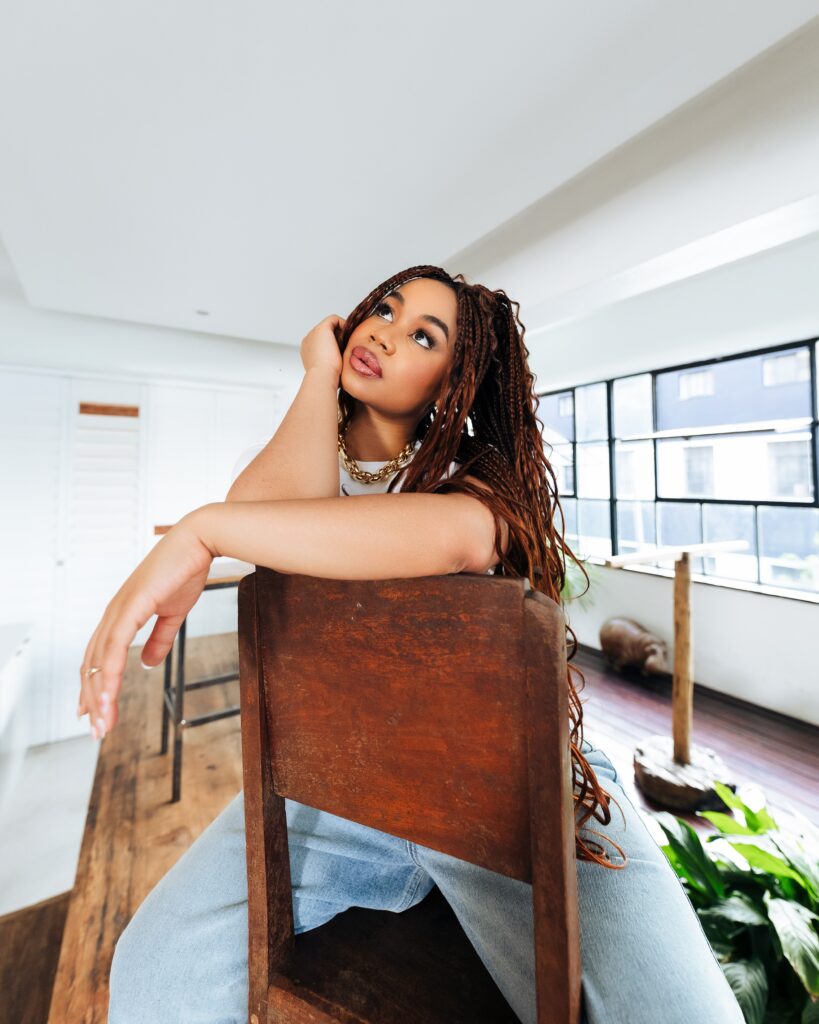
Sha Sha | SUPPLIED
The fusion of your formal musical training – choir and piano – with amapiano’s street essence creates something unique. How do these seemingly contrasting musical foundations inform your creative process today?
Sha Sha: “The first thing this diverse background does is give you strength and versatility in expression – it’s like developing a muscle. That ability to adapt became especially important when I found myself in the Amapiano scene. After being exposed to so many different worlds, finding my creative pocket became my superpower, bringing me success and fulfilment.”
You took some time away from the creative spotlight of music before your release of “Ndawana” and “Eglasini”. Why did you take a break, and how was the creative process of creating music again and finding your voice?
Sha Sha: “Behind the scenes, I was going through the process of leaving my label, which was quite a journey – it wasn’t easy at all. During this time, I took the opportunity to work on myself, my identity, and who I am, and I think that’s an ongoing journey. These two situations were happening simultaneously and complemented each other. Self-work wasn’t just influencing my creative process; it impacted every aspect of my life. I needed that time to rebuild, assemble the right team, and prepare to emerge in a way that reflected my personal growth.
Working with Black Major since 2022 has been amazing. They’ve opened doors I never imagined – like performing at Afronation in 2023 – and their contribution to my artistic development has been phenomenal. Black Major is like a loving family filled with remarkable individuals. Being in a family-like environment is so important to me. While they’re professional, it’s more than just ‘Oh, we have to work, let’s work.’ For me, it’s about building genuine connections with people – that’s when you really enjoy the fruits of your hard work.”
Stream “Ndawana” here:
From singing in Shona on “Ndawana” to capturing South African street culture in “Eglasini,” you’re bridging multiple cultural spaces. What responsibility do you feel as a cultural bridge-builder?
Sha Sha: “Everything starts with my identity as a musical creative. A key part of who I am comes from having the privilege of living in different spaces – Zimbabwe and South Africa. I’ve always wanted to connect with people I’ve encountered locally and globally. With “Ndawana,” I realized no one had ever heard me sing a full verse in Shona on Amapiano. I thought about how many Zimbabwean diasporans worldwide love Amapiano and wanted to tap into that cultural space.
At the same time, living in South Africa has made it my second home, and I have amazing, loyal South African fans. So, it became important for me to represent both sides of the diaspora because I’ve experienced how both countries’ diverse cultures have shaped me. I feel it’s part of who I am to take on that responsibility of bridging these cultures together – it’s fundamental to my identity.”
Your recent collaborations span from amapiano pioneer Kelvin Momo to street-energy specialists like Tyler ICU and 2woshort. How do these diverse partnerships challenge and enhance your artistry?
Sha Sha: “The challenges opened up new ways of expression for me. With ‘Eglasini,’ I ventured into a completely different sound – people usually know me for my soulful stuff. Creating that record was challenging, but more than anything, it was fun. Being in the studio with Scotts Maphuma, 2woshort, Tyler, and Baby S.O.N – who helped with some of the writing – was an experience.
It was all experimental for me, and I kept thinking, ‘Okay, this is fun, this is dope, let’s see how this turns out.’ Even though it was outside my comfort zone, I used it as an opportunity to find a different way to express myself. It let me show my sassy, fun side instead of just being the romantic lover girl who comes naturally on songs like ‘Ndawana.’ Those comfort zone songs are second nature to me, but ‘Eglasini’ was like, ‘Well, this is going to be something different’ – and I really enjoyed the whole process of making it.”
Stream “Eglasini” here:
Another interesting factor is how “Ndawana” and “Eglasini” enjoyed success as viral hits. How do you leverage social media’s power to heighten your music’s success?
Sha Sha: “As someone who would prefer to just make a song, release it, and step back, I’ve had a love-hate relationship with social media because I’m such an introvert. But honestly, I’ve seen its power, especially watching how these songs take off with TikTok challenges. It was only recently that I started feeling comfortable showing more of who I am while using these platforms to promote our music.
Social media has played a huge role in the success of our records, particularly with ‘Eglasini.’ Not that ‘Ndawana’ hasn’t been doing well – it has – but the impact of ‘Eglasini’ through social media has been special. Seeing the numbers, the social media challenges, and people having fun with the record has been amazing. Coming from someone who was skeptical about social media before, I’m now in a good place with it. As I’ve embraced it more, I’ve seen how valuable it’s been in letting people into my world.”
As a BET Award winner and influential voice in amapiano, how do you balance international recognition with maintaining the genre’s authentic roots and street credibility?
Sha Sha: “First and foremost, I’ve been very intentional about my international collaborations. I deeply respect Amapiano’s original sound and its roots while also being open to the various sonic interpretations of it around the world. At the end of the day, music as a whole is a calling for me – singing for people is my calling. I feel that no matter what sound I explore, it will be a way to express myself, hoping that listeners will be touched and moved personally. That’s what makes music so powerful and fulfilling.
As for maintaining the cultural roots? I respect the craft while being open-minded about where the sound can evolve. The genre has morphed and now has so many subgenres – and exploring them isn’t a bad thing at all.”
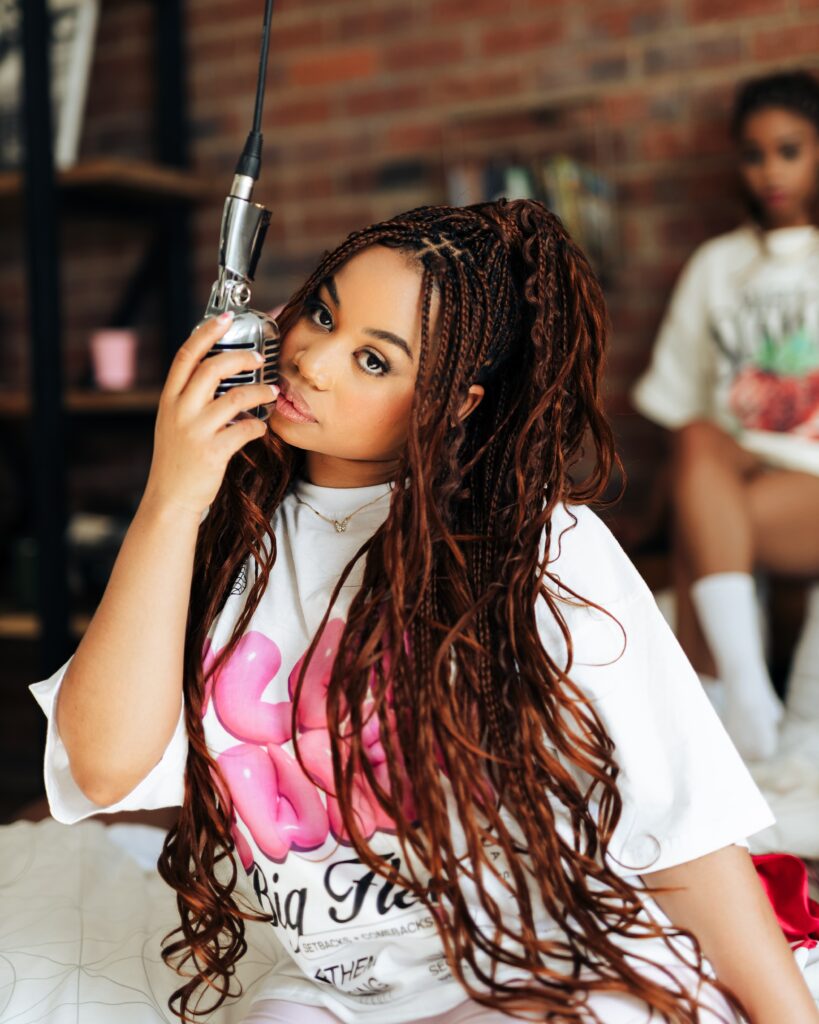
Sha Sha | SUPPLIED
As you prepare for your upcoming album, how will these contrasting singles influence its direction, and what new territories do you hope to explore?
Sha Sha: “When it comes to new music, especially after these recent singles, I kid you not – I’m so open to a diverse palette of sounds, it’s not even funny. Of course, Amapiano is still a part of me, but as a musician, I want to explore different spaces and do more international collaborations, whether with producers or fellow artists. This year feels like I’ll be tapping into global spaces more, so you might hear me on an Afrobeats record or an R&B record – as an artist, you never know what will catch your attention.
Take ‘Phakade Lami’ for example. I was at a writing camp when I heard the song and immediately fell in love with it. At that time, I wasn’t looking to do many features, but when I heard it, I met Nomfundo’s manager and asked, ‘What is this song? Who is this?’ When they told me it was Nomfundo, I said, ‘Listen, I wouldn’t be mad to be a part of this. I love this music.’ I did my verse and called Ami Faku, who jumped on it and sent it back. That just shows that with music, anything can happen – it wasn’t Amapiano, but it’s now sitting on over 27 million streams.
People will be shocked at the different genres they will see me in this year, but we definitely won’t forget Amapiano.”
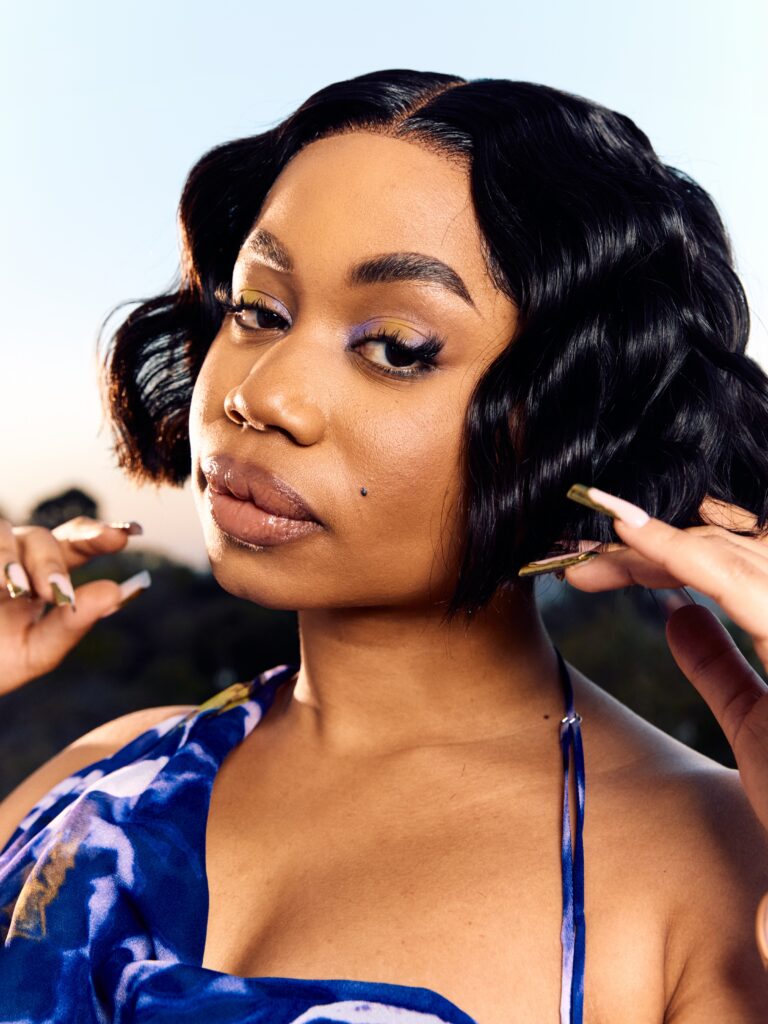
Sha Sha | SUPPLIED
Thank you for joining us for this interview. Before you leave, please let us know what you have planned for 2025 and beyond? What’s on your vision board?
Sha Sha: “Usually, I don’t like to plan out my year because I believe that God always takes you in a different direction when you plan. But this year, I’d absolutely love to create more music, more visuals, and more content. People are also going to see me wear my business hat more often. I pray everything will contribute to making me a household name while strengthening my entrepreneurial pursuits as I explore businesses I’m interested in. I don’t like to announce all my plans prematurely, but fingers crossed for my pending success.”
Connect With Sha Sha:
Instagram: @shashaofficial1
X: @ShaShaOfficial_
Facebook: @shashaofficial1
TikTok: @shashaofficial1_
YouTube: @shashaofficial368


