


A decade in the making and prophesied about in umpteen rap guest appearances during the Features Only Era, J. Cole’s The Fall-Off, branded as his swansong, has dropped. Once thought to be a myth that would suffer the same fate as Dr. Dre’s Detox, his seventh studio album is a double-disc offering, the first that Jermaine has travelled down the murky road of two-sided projects, with his opus comprising twenty-four joints. And for a collection that took this long to make, The Fall-Off is a polished work of art, rightfully so, replete with hard bars, technique execution, and improved production that isn’t as predictable as Cole’s previous works. And yet, for his last run under the sun, one of the generation’s hardest emcees has somewhat also crafted a body of work that is good but not as monumental as the hype leading up to it all these years has been.
As with most two-CD albums, The Fall-Off ran the risk of sinking into the hole of humdrum rapping and droning production. Such undertakings demand every creative daring enough to make the jump to operate at their highest capacity. With this release, J. Cole scarcely escapes the pitfall, thanks to production from a star-studded roster including long-time collaborators such as T-Minus, Vinylz, and Omen, among others as well as The Alchemist and DZL.
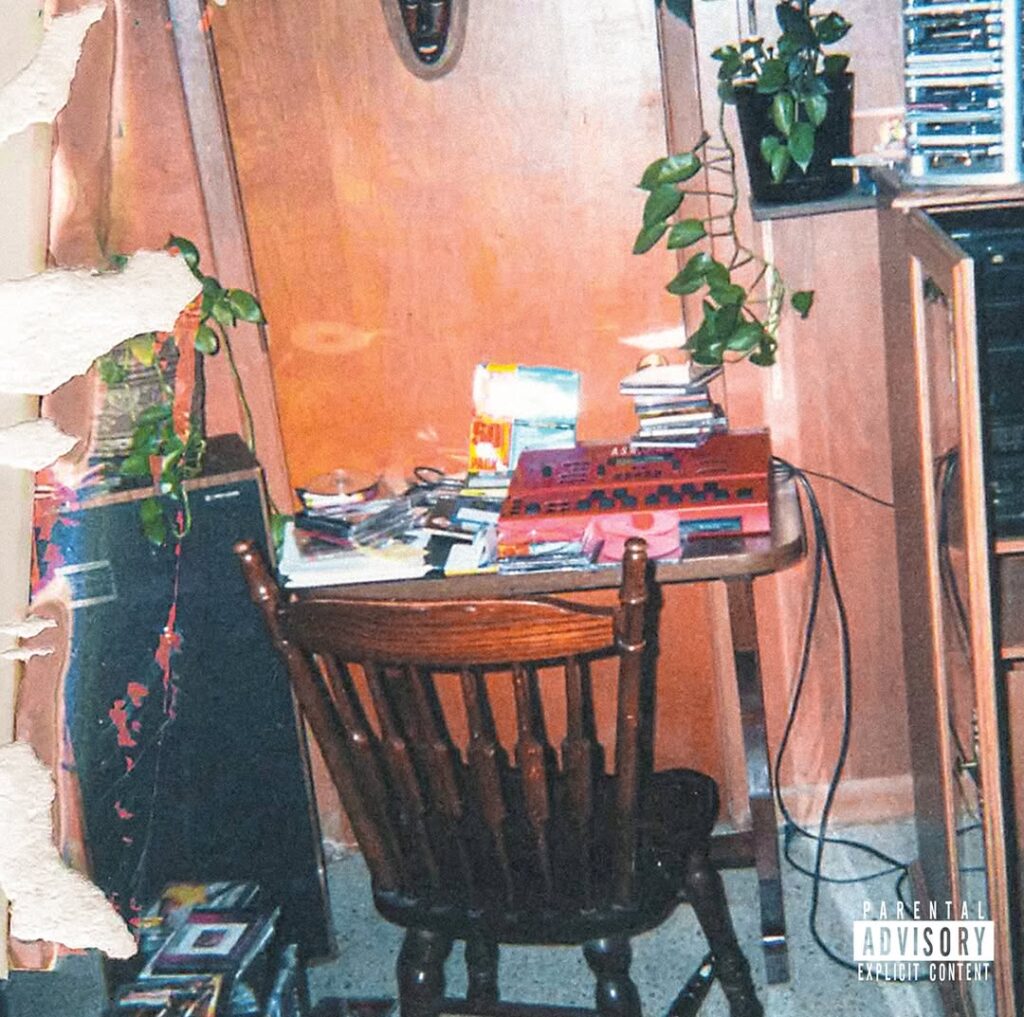
The Fall-Off album cover | SUPPLIED
The production of the album reflects J. Cole’s growth from the perspective of both discs being made as him when he was 29 and 39 years of age. Primarily a hip-hop album, The Fall-Off features elements of trap influences, soul samples, and grimy production reminiscent of old-school hip-hop music. There are even listens of the album where the early 2000s sound surfaces with sample-heavy beats that reach for the heart rather than trying to ignite the ratchet side that wants to do nothing but turn up. Cole, however, doesn’t stick to that; he goes on an experimental limb every now again, such as on “The Let Out”, working around guitar strums to do something that sounds close to folk music, but not quite all at once. The sound of the album is, with the shadow of a doubt, a unique one, kaleidoscopic even. The innovation, however, doesn’t automatically lift it a tier above the other works in his platinum-selling discography. It’s different, sure, and sentimental. But it’s not a frontier-pushing album that’s as ambitious as 2014 Forest Hills Drive or straightforward and in-the-moment as 2013’s Born Sinner.
Throughout the album’s playback time, Jermaine reminisces about his time back in the Ville, looking back at aged memories through songs like “Safety”, “Run a Train” and “Poor Thang”. And it’s in such songs where Coleman shines the most, periods where the polysyllabic shine of his pen pulls through with vivid storytelling and lively narratives enough to make one feel as though one is sitting on his lap and watching him flip through an old picture album rather than listening to him rap. The stories are kinetic and there is lived-experience wisdom in the bars and not simply the intelligence of a rapper who knows he’s got it or at least thinks so. It is the same with the poignant single “The Fall-Off is Inevitable”. J. Cole is able to extrude the best parts of his powers when he explores themes of nostalgia, the futility of conflict, the damage of Black trauma, outgrowing one’s own environment and coming-of-age.
Listen to “The Fall-Off Is Inevitable”:
J. Cole also sprinkles some surprises on the album with uncredited appearances from past collaborators such as Tems, Future, as well as something from Erykah Badu and Burna Boy. A breath of fresh air for an album that people were beginning to speculate would be another no-features affair.
The album only begins to sour when J. Cole tackles his songs with revisionist lyricism, parts where the North Carolina attempts, however pointlessly, to rewrite his standing in the now-dismantled Big Three as well as his questionable status among the all-time greats of the rap game. Bars such as “I’m the future of this rap s***, f*** everything I did in the past” on “Two Six” and portraying himself as a victim of the rap game’s seduction on “I Love Her Again” are concepts that ring hollow and minus some of the power that the album holds. A lyrical masterclass in its own right, “I Love Her Again” is a diagnosis of exactly the problem Cole has had in establishing himself as an undisputed all-time great: the perpetual self-victimisation of a man whose actions don’t match the size of his bravado. It is has gotten to a point where the theme has become cumbersome to even listen to. Instead of exiting the Kendrick-Drake Beef and the aftermath of the joust like he did at the Dreamville Fest, Cole would much rather expend his energy trying to explain that the reason the abomination that is “7 Minute Drill” even exists was because Hip-Hop, his lifelong crush-turned-instigating temptress, had whispered the temptation in his ears. A risible angle that is the sole blemish to one of the album’s undeniable highlights.
The Fall-Off was touted as J. Cole’s version of Jay-Z’s 1996 classic Reasonable Doubt by the man himself, but the album lacks profoundly. This is not to say that The Fall-Off is bad. It’s a good album, and that’s precisely the issue with it; when you go on for years about how important your last album will be with feature runs of being “the greatest” preluding the drop, tossing up a good album is tantamount to a self-professed smart student coming back home with a report card lined with B grades after promising a column of straight As. It’s not by any means a failure of an album, but it is a reflection of the character that is J. Cole: greatness promised, but evidently not delivered.
Preview The Fall-Off:


