


Artistic depth comes from living the moment. It comes from time, for time bears depth, time bears experience, and time is the mother of all creativity. Being absent for the past three years has given Baby Keem a depth in his music, as reflected on his new album, Ca$ino. At the Los Angeles listening session and live event leading up to its release, Keem revealed that this project isn’t just a collection of songs, it’s a reconciliation with his past. He spoke openly about the loss of his grandmother, the trauma of his upbringing in Las Vegas, and the family struggles that once felt too heavy to articulate. Originally intended to be named after his mother, the body of work evolved into Ca$ino because the city, with all its glamour, vices, and contradictions, became a metaphor for his life, a place of risk, temptation, and transformation.
What emerges on Ca$ino is an artist who has spent years digesting his story, confronting what he once hid, and reshaping those experiences into a deeply personal and reflective chapter in his music.
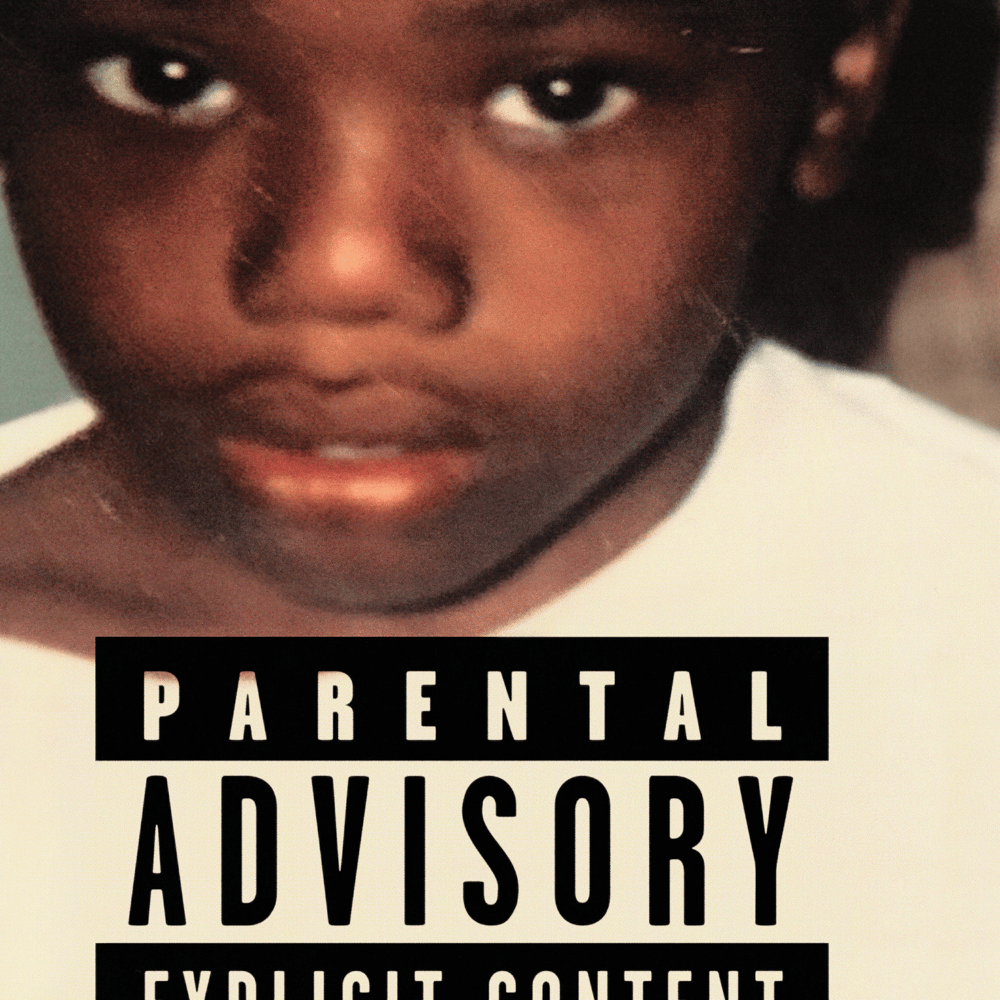
Ca$ino album cover | SUPPLIED
From the very first moments, Ca$ino feels intentional. Not loud for the sake of attention, not chaotic for the sake of aesthetic, but deliberate. The album plays like a psychological map, tracing Baby Keem’s internal evolution. Where earlier in his career he thrived on volatility and instinct, here he sounds grounded. Calculated. Self-aware.
The casino metaphor becomes the album’s emotional architecture. A casino is built on spectacle, flashing lights, noise, promise. But beneath the surface lies mathematics and consequence. The house always takes something. During the listening session, Keem explained that Las Vegas wasn’t just a backdrop to his childhood, it was a teacher. It showed him glamour and decay in the same breath. It normalized risk. It blurred the line between survival and temptation. That duality shapes Ca$ino. Success is not framed as a jackpot moment, it is framed as survival in a system that demands risk. Every choice carries stakes. Every win has a cost.
Keem spoke candidly about grief, particularly the passing of his grandmother, and how that loss forced him into introspection. He described being in a space where silence was necessary, where he had to confront parts of his upbringing he had once disguised with humor or aggression. That emotional excavation is embedded in the record. The album doesn’t just narrate events, it wrestles with them. It interrogates how trauma mutates into ambition, how instability can produce both hunger and anxiety.
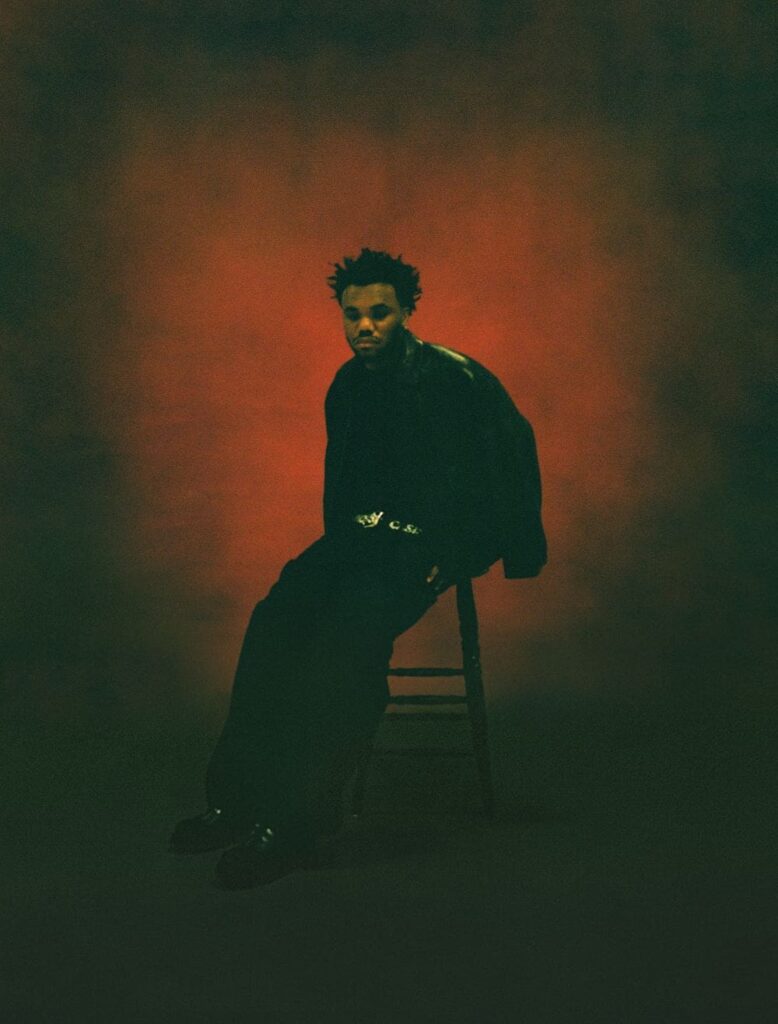
Baby Keem | SUPPLIED
The production reflects this tension beautifully. There are skeletal drum patterns that leave room for confession, then sudden bursts of distortion that feel like anxiety breaking through composure. Keem’s vocal elasticity, once a stylistic trademark, now feels narratively purposeful. His pitch shifts and tonal pivots mirror emotional instability, childhood confusion, and adult self-interrogation. When his voice cracks or rises unexpectedly, it feels less like experimentation and more like memory surfacing. In the listening session, he emphasized that many of these sonic choices were intentional, meant to mirror the psychological swings he experienced during those years away.
Tracks like “No Security” introduce a sense of instability, a reminder that safety was never guaranteed. The writing here is sharp but restrained, letting implication do the heavy lifting. On “I Am Not a Lyricist,” Keem dismantles bravado entirely, confronting family trauma and identity with unsettling clarity. He admitted during the live event that some of these lyrics were difficult to record, not because of technical challenge, but because of emotional exposure. It’s one of the most vulnerable performances of his career, not because it’s melodramatic, but because it’s honest.
“Circus Circus Free$tyle” operates almost cinematically. Referencing Las Vegas not as fantasy but as environment, Keem blends nostalgia with critique. The glamour of the Strip is reframed as backdrop to survival. He described in the session how growing up around spectacle shaped his understanding of performance, how he learned early that image can be currency. That realization bleeds into the track’s layered storytelling. Meanwhile, “House Money” captures the duality of his current position, confident yet cautious, aware that even when you’re ahead, you’re still gambling. It’s bravado tempered by awareness.
Check out “Circus Circus Freestyle”:
There are softer moments, too. “Good Flirts” and “Dramatic Girl” offer melodic reprieve, allowing Keem to explore connection and intimacy without abandoning the album’s thematic weight. During the listening event, he mentioned wanting the album to reflect fullness, not just pain, but also lightness. These songs don’t feel like detours, they feel human. They remind listeners that joy can exist alongside trauma, that vulnerability isn’t only about pain, but about allowing yourself to feel without defense.
What elevates Ca$ino is cohesion. The sequencing feels authored, not assembled. The transitions are intentional. The emotional pacing resembles a night inside an actual casino, the adrenaline at entry, the ego at the tables, the creeping introspection when the crowd thins and you’re left alone with your thoughts. By the end, the spectacle fades, and what remains is reflection. Keem described the album as something that needed to play like a full experience, not just a playlist, and that design is audible.
During the listening session, Keem described this album as being for the misunderstood kid, the one walking home slowly, carrying more than anyone realizes. He framed Casino as a conversation with that younger version of himself. That sentiment lingers across the project. This is not music designed to impress at first glance; it is music that unfolds with attention. The bravado is still there, but it no longer dominates. It coexists with accountability.
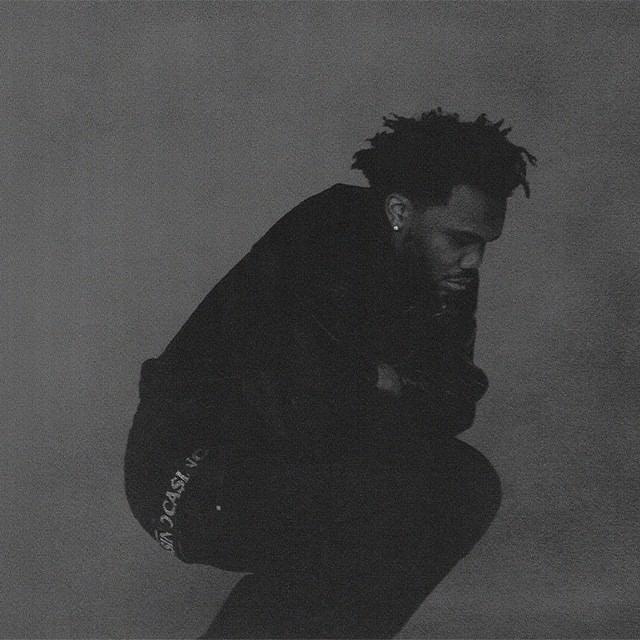
Baby Keem | SUPPLIED
In many ways, Ca$ino marks a shift from prodigy to architect. Earlier projects showcased raw potential and fearless experimentation. Here, that experimentation is structured. The unpredictability is mastered. Keem sounds less concerned with shock value and more invested in permanence.
Ultimately, Ca$ino is not about winning. It is about understanding the game. It is about acknowledging that risk shaped him, that silence reshaped him, and that growth required confrontation. The album stands as proof that time, when embraced rather than resisted, deepens creativity. And after three years away, Baby Keem hasn’t just returned. He has evolved.
Preview Ca$ino:
Words by Zimiso Nyamande


