


In a profound artistic statement, Malome Vector has unveiled his highly anticipated 1964 EP, a masterful fusion of musical brilliance and cultural enlightenment reverberating through the African diaspora’s very fabric. This seven-track odyssey suspends the boundaries of conventional sonic palatability, weaving an intricate lineage of lyrical prowess, rhythmic versatility, and thematic depth that syncs reverent homage to the epochal year when Lesotho, the Mountain Kingdom, claimed its hard-won independence from the shackles of colonial rule and Malome Vectors foray into creative autonomy.
1964 envelops the listener in a mesmerizing aural expedition, each composition a vivid, melodic vignette that chronicles Malome Vector’s own artistic emancipation from his label ties with Ambitiouz Entertainment, as this offering serves as the first release of his independent label, The Whole Time Entertainment.
The pulsating “Coming Thru” sets the tone, its infectious polyrhythmic groove a clarion call to restorative hope, doused with the affirmation “Something good is coming through/I can feel it in my bones” followed by laments forecasting his bold retirement from poverty. Conversely, the introspective “Please Pray,” graced by the soulful, impassioned vocals of Mlindo The Vocalist, delves into the spiritual realm as the duo wrestles with trust issues, economic strife, and mental disparity, all of which are poignantly redeemed through the soft touch of a mother’s prayer to navigate life’s tempestuous storms.
Listen to “Please Pray”:
The scintillating afro-pop ballad “Naledi” shines as a radiant tribute to the indomitable romantic flare of the Basotho spirit, its effervescent melodies and soaring harmonic arrangements mirroring the eternal beacon of longing and courtship shared with an impassioned love interest. Malome Vector’s collaborative prowess truly soars on the riveting “Bashemane” and the anthemic “Rebafumane,” where his lyrical finesse, sharper than the finest-honed blade, intertwines with the formidable talents of Ntate Stunna, submerging the listener in a sonic kinship, heightening the sensibilities of traditional sounds, amapiano, kwaito, and African trap music.
Embodying the multifaceted, kaleidoscopic nature of the African diaspora, “Chop Chop” and “Move On” seamlessly integrate disparate genres and influences, their rhythmic tapestries a vibrant celebration of rags to riches ambition and healing from unbreakable trauma. Malome Vector’s deft musicianship shines through, deftly navigating the intricate soundscapes with the grace of a master craftsman while infusing each verse with profound narratives that resonate across vast expanses, their universal truths echoing through the ages.
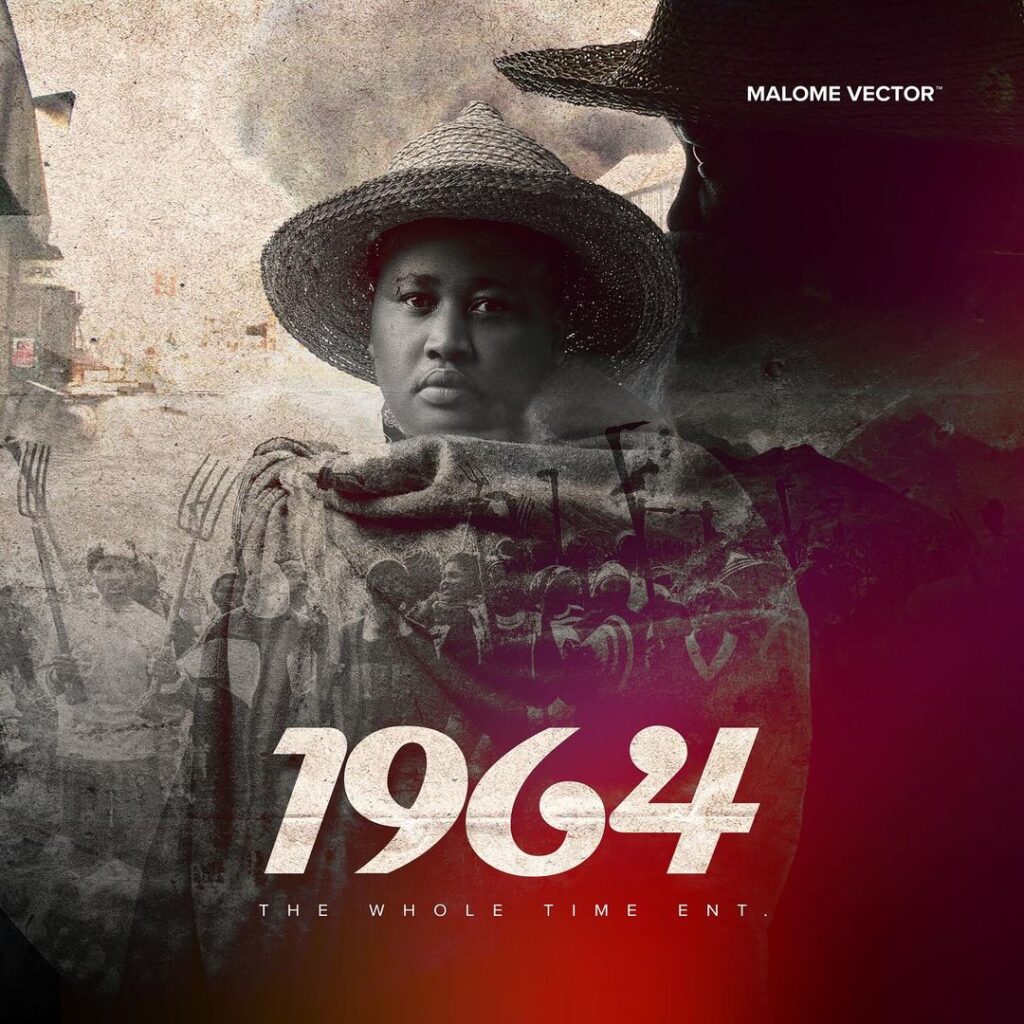
The essence of 1964 is encapsulated in its evocative, visually arresting artwork, a masterful synthesis of historical reverence and contemporary verve. Malome Vector’s visage, adorned in traditional Basotho garb, is artfully superimposed over a backdrop of sepia-toned imagery, conjuring visions of a storied past replete with struggles and triumphs that have paved the way for artistic liberation. The EP’s title, emblazoned boldly in a typeface that evokes modernity and timelessness, serves as a clarion call to embrace one’s heritage while forging ahead into uncharted creative territories with unbridled passion and fearlessness.
On the reverse, each track’s title is etched with reverence against a backdrop reminiscent of ancient parchment or the weather-beaten walls of a centuries-old mountain village, a symbolic nod to the enduring legacy of oral traditions that have sustained and nurtured cultures across the vast African continent for millennia. The featured artists’ names are proudly displayed, honouring the collaborative spirit that has long been the lifeblood of African music, woven from the threads of myriad voices and experiences.
Through 1964, Malome Vector has crafted a sonic offering that breaks the mould of mere entertainment, offering a profound exploration of cultural identity, artistic sovereignty, and the indelible bonds of kinship that unite the far-flung African diaspora. Within the historical framework of contemporary African music, 1964 will undoubtedly be enshrined as a seminal work. This masterpiece heralds a new era of artistic emancipation for an artist who has for too long been forced to sacrifice his myriad cultural treasures upon the altar of oppression.
Through this phoenix rebirth and musical homage to the fertile soils of the Basotho heartlands, Malome Vector has etched an indelible mark upon the global musical consciousness, solidifying his status as a cultural luminary and a torchbearer for the boundless creative potential that lies within the embrace of freedom. Long live the ingenious artistic spectacle that is 1964!


