


To a nation torn by the blood spilt in the name of freedom, her voice emerges as a spiritual band-aid. To wordsmiths and songwriters alike, she is among the most prolific; some know her as the quintessential ghetto child; others know her by her regal title “King Tha”, and to those who are closest to her, she is simply Thandie with that soothing voice, a beacon who embodies the essence of ubuntu not being reduced to a mere kindness but serving as the highest form of civilisation. Born to Pan-African journalists, Thandiswa’s upbringing, before and beyond the passing of her mother when she was 16, was an extensive political awareness where animmovable discipline and integrity would be instilled into King Tha and would serve her until this day where she continues to influence the preservation of language, culture and the personal, political and spiritual.
A multiple award-winning artist in her own right, Mazwai found her voice as part of the pioneering Kwaito groups Jacknife and Bongo Maffin, becoming a cultural staple among the creatively pioneering youth who were finding their voices in a country that had its first brush with democracy. Her seminal 2004 debut solo album Zabalaza (meaning rebellion/protest) embedded itself into the social conscious of the nations people touching on critically important issues ranging from poverty to the HIV/AIDS epidemic. Produced by Dr. Sipho Sithole, it featured top South African musicians namely Bheki Khoza, Fana Zulu, Sipho Gumede and Khanyo Maphumulo and set a precedent for Mazwai as an essential part of the post-apartheid sonic identity.
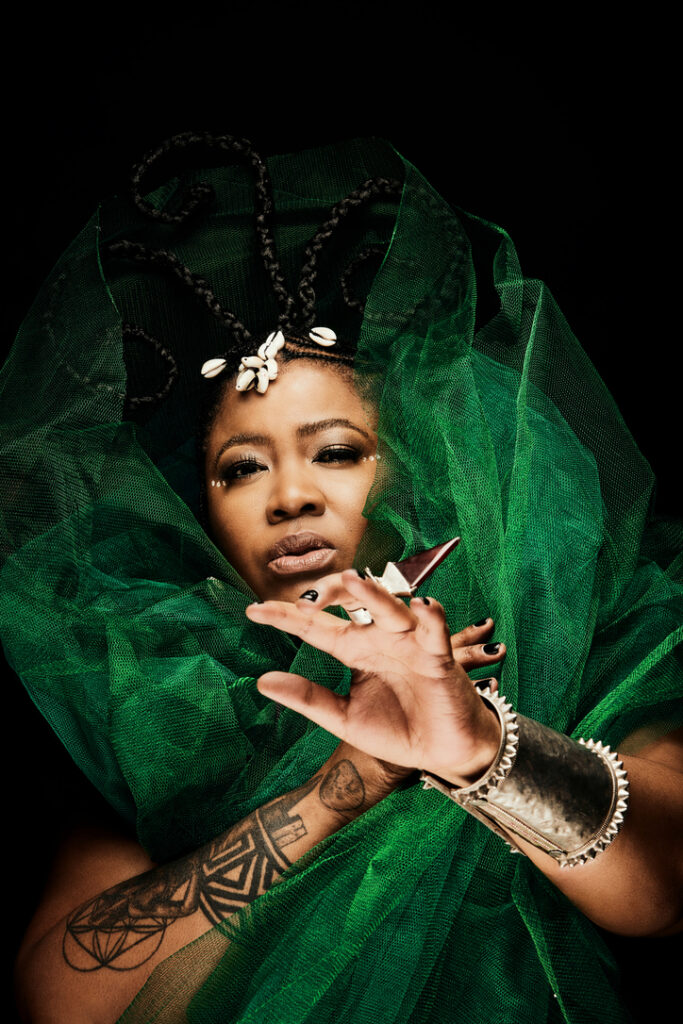
Subsequent albums like ‘Ibokwe’ saw Mazwai settle into an African cadence and sonic texture, having become a scholar of the iconic Busi Mhlongo. Her influential 2016 album ‘Belede’ named after Mazwai’s mother, was not only an ode to the continuation of her mother’s spirit and the African thought she represented but a purge from depression after losing Mhlongo and Hugh Masekela, not to mention calling into central focus, the Fees Must Fall political/cultural climate. Mazwai has maintained meaningful cross-generational connections which set her apart as a force that captures the nostalgic, melancholic in the philosophical vortex of Pan-African thought and literature which imbues the lyrical texture of what we can expect from her forthcoming offering, Sankofa.
The young revolutionary at heart, who grew up greeting her peers and elders with a solid right hand first and the utterance of the political reclamation “Izwe Lethu”, finds herself at a new crossroad in her tussle with a stained freedom that is not entirely free. Using music as a canvas to confront, heal and self-affirm, Sankofa is poised to instill a paradigm shift in our consciousness as of the 10th of May 20204. An exploration of her Pan-African identity, ‘Sankofa‘ is a word in the Ghanaian Twi language that means reclaiming what is lost from the past, typically to build a brighter future.
Sankofa was recorded across South Africa, Senegal and the United States. Traditional Xhosa instruments from archived field recordings were responded to by collaborators who seek to confront the personal and collective wounds to define, affect and process African unity in all its shapes and forms. Sankofa is led by the single “Kulungile”, which features an ambient sound from umhrubhe (traditional instrument), which lays the foundation for Thandiswa to heal her childhood trauma as she welcomed us into a conversation with her younger self who needs to be validated and reminded that kulungile (it is okay, all has passed).
In this interview, I was honoured to have an audience with the king where we explored confronting childhood trauma, the importance of education and cultural preservation, her new album, her creative process, treating work like prayer and more.
Watch “Thandiswa Mazwai: Tiny Desk x globalFEST” Here:
Congratulations on your iconic Tiny Desk Performance. I’m grateful for how you carry African history with you wherever you go, and I must ask why it is important for you to teach, enrich, and speak to the consciousness of those whose lives you always touch with your music.
Thandiswa: “It began with the education that I got from my late mother when I was growing up, I was 16 when she passed. I’ve had this obsession with her memory and the things she held very dear in her life; Pan-Africanism was one of them: A pride in our history, culture, and languages. Through my work, I obsessively strive to make my mother proud. I’ve always had my own understanding of how amazing we are as Africans, and the amazing possibilities that are there for us as soon as we love and own all stories in their authenticity.”
Is that why you are also dedicated to having a brand that boasts pride in our ideologies, culture, and who we are as a people?
Thandiswa: “Absolutely. As the world moves forward, we move along with it. In the same breath, we must look behind and remember what makes us who we are. Are we historically aware of why we are in the place we are in? What were some reasons that brought us to where we are? What history colonisation and apartheid have hidden from us? Do we know about ancient African scripts from 3000 years ago, astronomy, astrology, psychology, medicine, and mathematics stemming from African teachings? The majority of the world’s most valued information is African knowledge systems. So as we look forward and get into the future, we must take ourselves into the future with nothing to lose, we must become new people.”
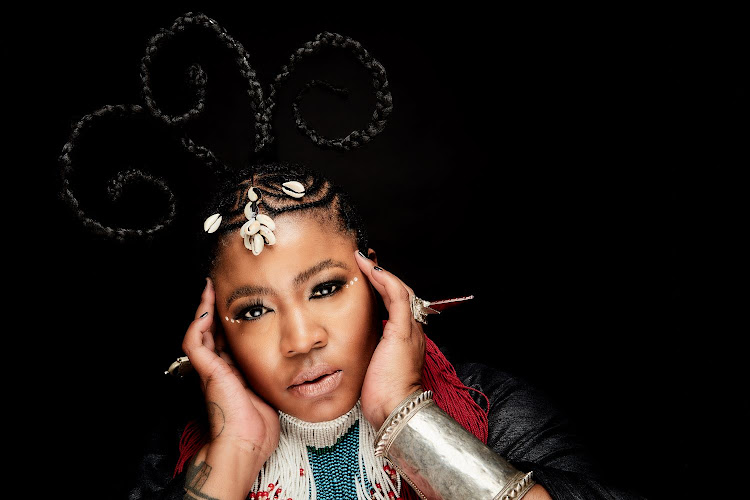
Your performance also features “Children of The Soil,” a song on the new album, Sankofa, a record dedicated to claiming identity and the continued journey to absolute freedom. Do you feel that in the wake of the world’s collective progress, we have forgotten the core of who we are as a people and that we still have more hard-won freedoms ahead of us?
Thandiswa: “Thank you for bringing that up. “Children of The Soil” is about remembering we are African for a reason, and we must root ourselves in our divine purpose; many books have captured this call to being. I’m an avid photography lover, and when I was younger, I picked up numerous photography books. A photographer would go into an African village and photograph these beautiful native folk in amazing beads, hair, leather, and architectural designs of houses. It was ridiculous. One of the books was called “The Last African,” and I was fascinated by the idea that there’s an Africa beyond the veil that existed, and we have become something else from those last Africans mostly because we don’t ascribe to our own traditions and ways of being. I’m not talking about returning to a village; I’m talking about greeting, whether you know someone or not, being neighbourly, and things that make us African regardless of what we wear.
“The most critical lesson Africa can give the world is teaching our fellow man how to be truly human, with kindness, love, grace, and the sharing of vital resources. The more we forget these things, the more wicked the world becomes. Africa is the centre of the world for a reason; we are here to keep the world centred and be humanity’s sanctity. I believe humanity’s greatness is really carried in how African people and other brown people of the world carry themselves; we are an important part of how the world operates. We don’t have to change everything about ourselves; the most important thing we shouldn’t do is create wounds.”
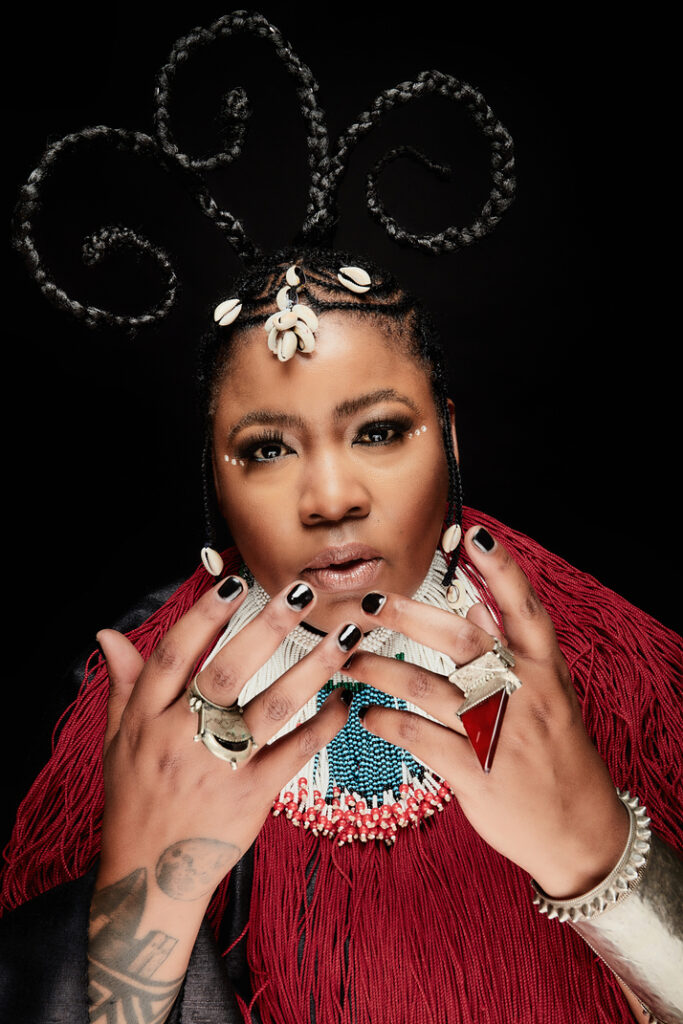
Sankofa features archival IsiXhosa music, Jazz and West African rhythms. How did you go about sourcing and incorporating these cultural artefacts into the healing discourse of the album?
Thandiswa: “In 2010, I went to visit the International Library of African Music at Rhodes University where I got access to an archive of field and research of Xhosa Music which contained umrhubhe, uhadi, all these types of musical expressions that exist within the tradition; I had these recordings for a very long time. During the COVID lockdown, I went back to these recordings and realised I could use them as a bedrock for creating new songs, and these field recordings became the building blocks of the album. After I did all the pre-production on songs with my friend Tendai Shoko, we would put down to bass, notes, and guitar chords to create demos, which we would then take to my producers Nduduzo Makhathini and Meshell Ndegeocello. What I noticed was they were really responding to the archives, and this became the looming spirit that carried us through the album: all of us experimenting, discovering, investigating, questioning, collecting our lineages, rooting ourselves and responding to the archival experience and infusing it with something from the now. In West Africa, they responded to the archive by marrying expressions from umrhubhe with the Kora bringing their colour into it, making this a truly Pan-African album. The album was recorded in Johannesburg, South Africa, Dakar, Senegal, and New York in the United States, so it speaks not only to the Pan African spirit but also to the diaspora.”
In “Kulungile,” the sound of umrhubhe (an indigenous instrument) is heard at the song’s beginning. This took me to a time when you posted about the late Mama Madosini and said her album “Power To Women” carried you through a difficult time in your childhood. Is this why you featured the instrument in the song dedicated to our inner child healing?
Thandiswa: “I am the kind of artist that often speaks of things to do with the black collective, so I’ll write “Nizalwa Ngobani?,” “Zabalaza” and when I was with Bongo Muffin, I’d write songs that say “Mntana omuntu omnyama uzawuphelelaphi?.” This song began as something about me, and I wanted to speak to the personal because as much as we can go on endlessly about the collective, the collective can only once the person looks within and introspects. Many of my friends, incredible filmmakers, artists, writers, politicians, and judges always carry something from childhood that affects them and how they move and respond to the world, which is not always good. I wanted to write a song that would try to heal some of my childhood trauma and speak to the traumas of other people, and to that effect, the presence of umrhubhe is quite effective.”
Stream “Kulungile” Here:
And you did such a stellar job at confronting childhood trauma and fostering generational healing. Regarding reclaiming and speaking to the personal, did you stretch that during the album so that we could investigate and connect with our inner selves?
Thandiswa: “Yes because while the work borrows elements like Hip-Hop drums, the presence of traditional archival artefacts like umrhubhe and uHadi that makes the work meditative, this can also be noted in the length of the songs on the album. Despite the current climate where two- to three-minute songs thrive, we dug deep and made six- to eight-minute songs; the shortest song on the album is about five minutes. So, as you close your eyes and meditate on the work, you will hear all the elements that have carefully been crafted for you to abandon your own restrictions and pay attention to the message in the music that celebrates all of us. When I started making music, I was writing for South Africans; it was in indigenous languages for a reason; I wanted my generation to understand and hear the conversation I was having with them. Over time, the base for whom I have the generational conversation has expanded to include my Pan-African self. This album expands me, and I hope it expands everyone who listens to it. It’s like an international lens, the same in which Americans think if something is the best in America, it is the best in the world; we have to treat Africa with the same reverence; I use this album to drum that into us.”
We’re celebrating over 20 years of your seminal album Zabalaza, and I strongly feel beyond the linguistic preservation of African languages, what keeps this work timeless is how each project, be it “Nizalwa Ngobani?” “Ingoma” or complementary works like “Belede” are treated like prayers. Do you approach your work as a grand anointing of the soul?
Thandiswa: “Yes, and there are two layers there; the one is that I treat the process in which these albums are made as sacred, and the music we bring to life already sits in and is drawn from, the ethereal. I’ve also realised that the ethereal also carries itself into the texture and cadence of my voice. Whether I’m singing on an Amapiano beat or belting my pipes away to “Ingoma,” “Nizalwa Ngobani”, or “Zabalaza”, people will always connect to the spiritual resonance of the music and create a special bond with it. I’m privileged to have that and share it with spirits such as Simphiwe Dana and the late Busi Mhlongo, who have always moved me with the ethereal nuance their voices carry in the music. It always reminds me to honour our work’s meditative and spiritual calling. So yes, I do treat my works as prayers both in how I channel the beyond when my voice sings and being insistent on lyrical liberation and authenticity so that when I do deliver the work, the spiritual relief and emotion of release also delivers me from the agony of holding the burdens of the soul within.”
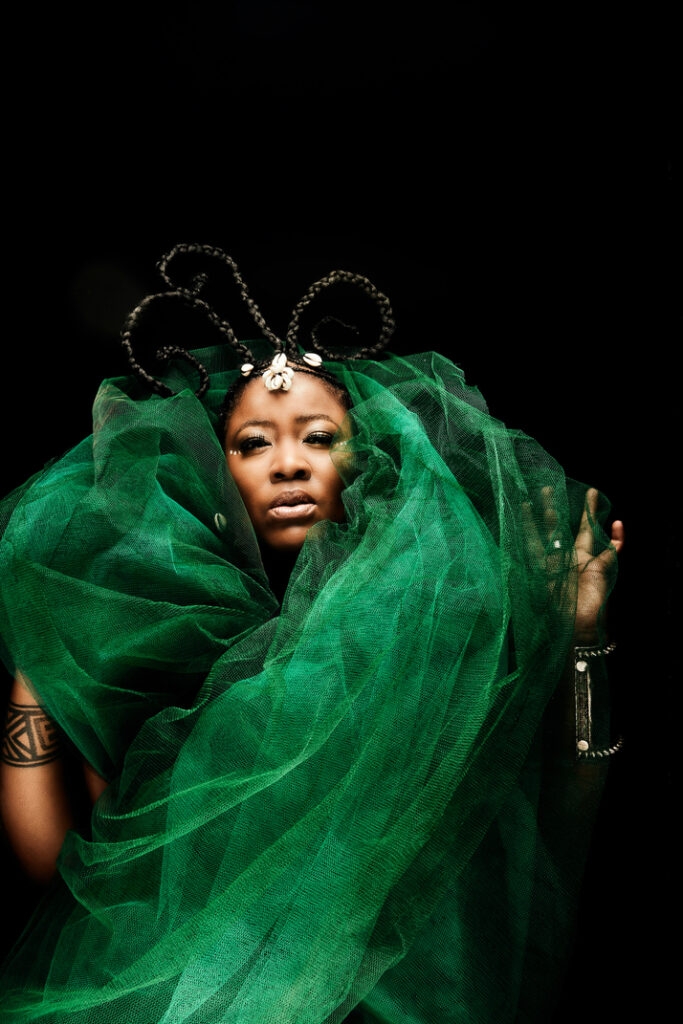
Thank you for joining us for this exclusive interview. Before you go, could you share with us what’s next for you beyond the tour and visuals for “Kulungile”?
Thandiswa: “I wouldn’t know the first thing to tell you, haha; some of these things come as a surprise, but what a year it’s been already. In January, I was in New York, performing at one of the most prestigious venues in the world, the Lincoln Centre. In February, I collaborated with Meshell Ndegeocello on her album, which I’m proud to mention; she won a Grammy, and I was like, one day, I will win one, too. In March, we celebrated 20 years of “Zabalaza”; in April, my single “Kulungile” and my Tiny Desk performance came out! I am incredibly exhausted, I feel like the Incredible Hulk when he deflates and I am eager to power up again and give you my best on this Sankofa Tour. Spending so much time between making the album and the events that followed and are still coming has made me feel like a superhero, and I can’t wait to take you all on a captivating journey with me as divinely planned events continue to unfold.”
ALBUM LAUNCH – CARNIVAL CITY
11 May 2024, 8 pm
Tickets R350-1000
Tickets here.
DURBAN PLAYHOUSE
31 May 2024, 8 pm
Tickets R350-600
Tickets here.
ARTSCAPE CAPE TOWN
20 July 2024, 8 pm
Tickets R350-600
Tickets here.
Pre-save Sankofa Here.


