


There is a peculiar burden that comes with becoming a generational artist. At some point, the conversation shifts away from what an artist is creating and toward what people expect them to become. Every album is measured against a mythical version of their past, every creative decision is scrutinized for signs of reinvention, and every release is expected to redefine an entire genre all over again. Future has carried that burden for well over a decade. Since emerging as one of Atlanta’s most influential voices, he has fundamentally altered the DNA of trap music, transforming it from a regional sound into the emotional and commercial backbone of modern hip-hop. His fingerprints are everywhere, from the melodic cadences of today’s biggest stars to the emotional openness that now defines contemporary rap. The Real Me arrives not as an attempt to reclaim that legacy, but as a reminder that Future never lost it. This is the work of an artist who understands that once you become the blueprint, your job is no longer to chase the future, it is to continue defining the standard against which everyone else is measured.
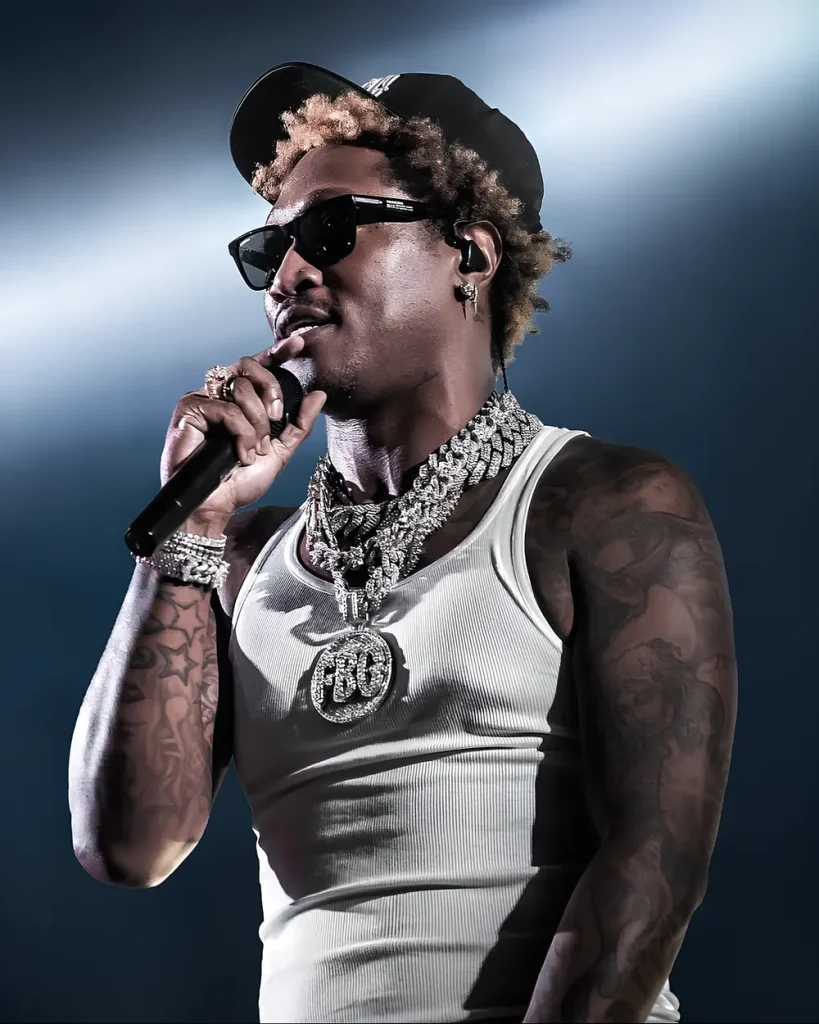
Future | SUPPLIED
The album’s title naturally invites listeners to expect an unusually intimate body of work, one that strips away the larger-than-life persona that Future has carefully constructed throughout his career. Yet that expectation misunderstands what has always made him such a fascinating songwriter. Future has never dealt in straightforward confession. His honesty has always existed in fragments, buried beneath excess, hidden inside contradictions, and disguised through stories of luxury, addiction, romance, paranoia and ambition. The “real” Future has never been the man who suddenly explains himself, it has always been the one who reveals his emotional landscape without ever fully translating it. The Real Me continues that tradition.
Rather than offering neat answers about who Nayvadius Wilburn is beneath the celebrity, the album embraces the complexity that has always defined his music. It presents a man who can feel isolated while standing at the very top of the mountain, someone who has mastered the art of making success sound strangely lonely. That emotional ambiguity has been one of Future’s greatest artistic gifts, and it remains intact here.

Future | SUPPLIED
What makes Future exceptional has never simply been his ability to write trap records, countless artists can make hard-hitting songs about money, women and status. His true innovation was emotional architecture. Before Future, trap was largely celebrated for its aggression, street realism and relentless bravado. He expanded its vocabulary, proving that vulnerability could coexist with confidence and that emotional exhaustion could be just as compelling as dominance. He turned Auto-Tune into something far more expressive than a vocal effect, using it as an instrument capable of communicating pain, detachment and longing in ways traditional rap delivery often could not. Nearly every generation of melodic rappers that followed, from Atlanta and beyond, exists in conversation with ideas that Future helped normalize. Listening to The Real Me, that influence becomes impossible to ignore. Even when the album feels familiar, it reminds listeners that what now sounds familiar once sounded revolutionary when Future introduced it. The greatest innovators eventually become victims of their own influence because the world catches up to them, mistaking originality for convention simply because everyone else has borrowed from it.
One of the album’s most compelling qualities is its refusal to rely on spectacle. In an era where blockbuster rap albums often resemble carefully assembled playlists of celebrity collaborations, Future once again chooses solitude. The absence of guest appearances forces the listener to remain inside his world without interruption, allowing the album to develop a singular atmosphere that feels cohesive rather than commercially engineered. There is confidence in that decision. Few artists possess a voice distinctive enough to sustain an entire project without external assistance, but Future’s presence has long functioned as an instrument in itself. His delivery shifts effortlessly between detached observation and melodic melancholy, while the production surrounds him with expansive, cinematic textures that have become synonymous with his artistry. Rather than chasing viral moments or obvious chart records, The Real Me feels interested in preserving a mood. It trusts the listener to sit inside that atmosphere instead of constantly demanding attention through surprise features or dramatic stylistic pivots.
Check out “Konnichiwa”:
That decision also speaks to where Future currently exists within his career. There is a temptation among critics to interpret consistency as creative complacency, but that assumption often ignores what longevity actually looks like. Artists who have genuinely shaped culture rarely spend their later years abandoning the very language they created. They refine it. Future no longer sounds like someone searching for his identity because he found it years ago. The sonic universe he helped build remains instantly recognizable, not because he is repeating himself without purpose, but because he has developed one of the strongest artistic signatures in contemporary music. Jazz legends, filmmakers and fashion designers are rarely criticized for maintaining a recognizable style once they have mastered it. The same generosity is seldom extended to hip-hop artists. The Real Me challenges that expectation by embracing the confidence of an artist who understands that evolution does not always announce itself through radical change. Sometimes maturity reveals itself through subtle refinement, greater restraint and complete command over one’s creative language.
None of this suggests that The Real Me surpasses the towering achievements of projects like Monster, DS2, HNDRXX or I Never Liked You. Those albums remain defining moments not only within Future’s catalogue but within the broader history of trap music itself. However, evaluating every new Future release solely by whether it eclipses his classics is ultimately a losing exercise. Few artists spend fifteen years competing against their own greatest work while simultaneously remaining commercially dominant and culturally influential. The more meaningful question is whether Future still occupies a space that nobody else has successfully replaced. The answer remains yes. Even after countless imitators and an entire generation of artists inspired by his sound, there is still something unmistakably singular about a Future album. His music carries a texture, an emotional weight and an atmosphere that continues to distinguish him from those who followed the path he helped create.
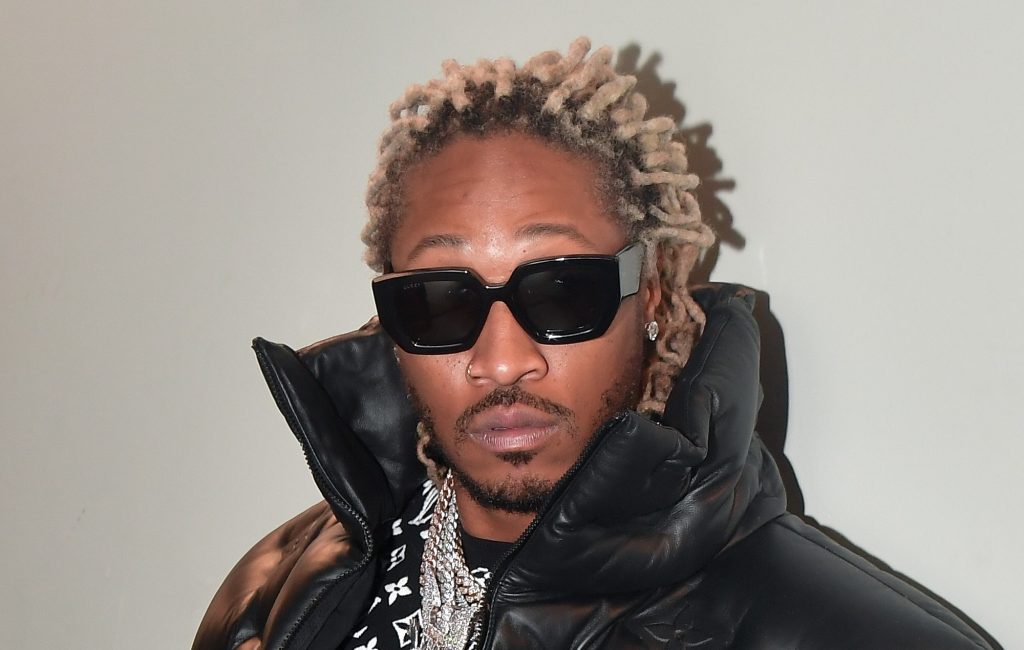
Future | SUPPLIED
The Real Me is less concerned with rewriting Future’s story than with reinforcing why that story still matters. It is an album that asks listeners to reconsider what artistic greatness looks like once an artist has already transformed a genre. Future’s legacy was never going to be determined by one album, nor does it require dramatic reinvention to remain relevant. His greatest achievement is that trap music continues to exist within a world he helped imagine more than a decade ago. Every new artist exploring melodic vulnerability, every producer building dark atmospheric soundscapes, and every rapper blurring the lines between emotional confession and larger-than-life mythology owes something to the foundation he laid. The Real Me may not seek to redefine trap music in the way DS2 once did, but perhaps it doesn’t have to.
Legends are not remembered because they continually reinvent the blueprint. They are remembered because, years later, everyone is still building from it.


