


There is a particular danger in making protest music in 2026. The genre has been so thoroughly mined, so efficiently packaged and distributed, that sincerity and performance have become nearly indistinguishable. “Conscious” has curdled into a brand. Against that backdrop, the “Arise” Boy Spyce collaboration with Falz, does something quietly remarkable, it insists on being felt rather than simply heard. The distinction sounds obvious until you notice how rarely it actually happens.
What separates “Arise” from the crowded field of pan-African rallying cries is not the ambition of its message, which is familiar, necessary, and unapologetically bold, but the discipline with which that message is carried. There is no sprawl here, no self-congratulation. The track moves with the economy of something built to last, not to trend. Boy Spyce, still carving out the edges of his artistic identity, steps into this with more composure than his discography might have predicted. The collaboration reads less like a mentorship and more like a genuine meeting of minds, two artists with different textures of anger arriving at the same conclusion through different routes.

Falz | SUPPLIED
The hook is the song’s spine, and its power lies in what it withholds. “African people arise / Fight for your lives” is, on paper, a slogan. In lesser hands, it becomes exactly that a bumper sticker, inert and declarative. But Boy Spyce finds something inside the line that pure conviction alone cannot manufacture, restraint. He does not shout the hook, he carries it. There is a subdued ache in his delivery, a quality closer to grief than to anger, that reframes the entire emotional register of the song. He is not issuing a command from a podium. He is making a plea from within the same condition he is describing. That tonal intimacy is the difference between rhetoric and resonance.
The extension of the hook “gather for church or shrine” operates on multiple levels simultaneously. On the surface, it is an inclusive gesture, a reaching across the fractures of faith that have historically been weaponized to divide African communities. But it also invokes something older and more elemental, the idea of assembly as sacred, of collective presence as its own form of power. The phrase refuses to privilege one tradition over another, and in doing so, widens the circle without diluting the call. It is a lyrical move that suggests a songwriter thinking beyond the verse, constructing meaning at the level of the sentence, not just the sentiment.
Falz’s verse arrives like a formal indictment, and the choice of address, “oyinbo” sets the tone before the argument even begins. It is not a gesture of performance, it is a structural choice. By naming the addressee directly, Falz closes off the comfortable distance between listener and subject, forcing a reckoning with the colonial gaze that the song is examining. The references that follow, Edo bronzes, blood diamonds, the systematic hemorrhaging of the Congo, are not decorative gestures toward historical awareness. They are evidence, assembled with the care of someone who understands that specificity is the only antidote to abstraction.
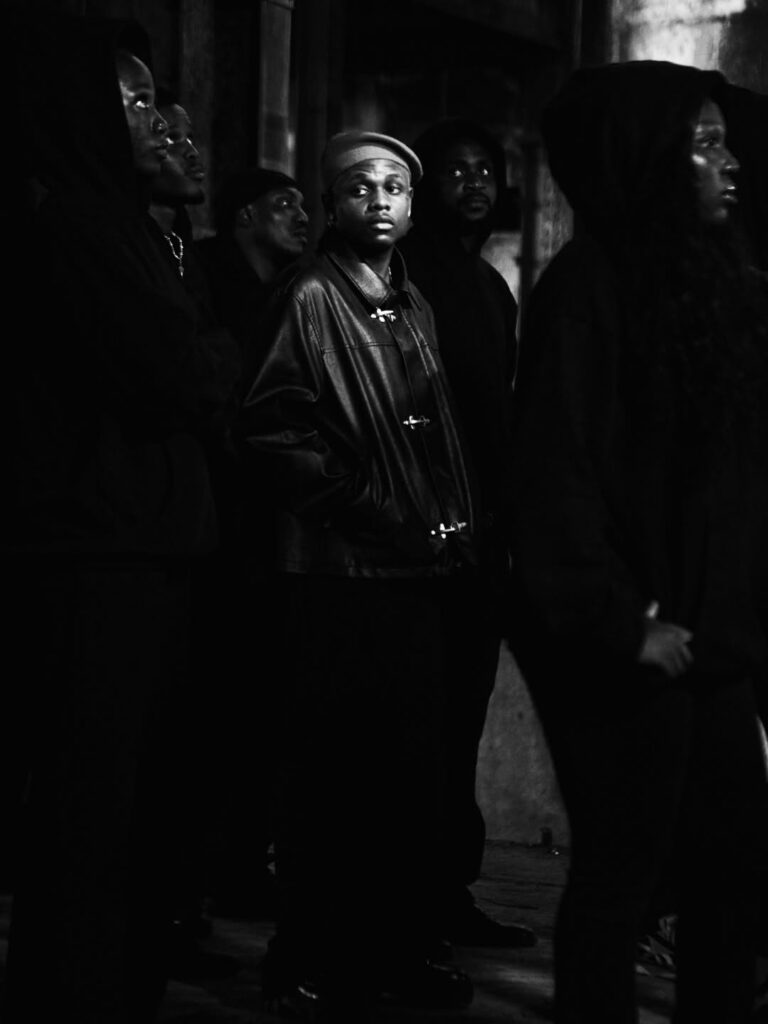
Boy Spyce | SUPPLIED
What makes Falz effective here, as he has been consistently throughout his career, is that he never allows the didactic to flatten the musical. His cadence remains conversational, unhurried, almost judicial, even as the content presses toward the essayistic. There is a precision in how he constructs his argument, moving from extraction to erasure to the psychological afterlife of colonialism, each bar building on the last like chapters in a brief. The line “Obiageli to Nicole” lands with surgical force because it compresses an entire history of cultural violence into a single image, the renaming of people as a condition of their acceptance, the erasure of selfhood as a pre-requisite for belonging. It is the kind of writing that makes you stop, rewind, and sit with the discomfort.
Falz has always operated in this space, the intersection of popular music and political education, but what “Arise” demonstrates is how much more effective that project becomes when the surrounding architecture is worthy of it. He is not carrying the song here. He is deepening it.
Boy Spyce’s verse works from the inside out, which is exactly the right instinct. Where Falz diagnoses systems and traces their historical origins, Boy Spyce documents the psychological residue, the way those systems settle into daily life and quietly dictate what people believe is possible. References to doctors who have “japa’d,” to political figures recycling the same hollow rhetoric across election cycles, feel immediate and lived-in rather than abstracted into thesis points. He is not writing about a condition from a distance, he is writing from within it.

Boy Spyce and Falz | SUPPLIED
But the verse finds its real velocity when Boy Spyce turns from documenting frustration to interrogating its origins. The questions about Lumumba and Sankara, why they were hidden, why their stories were buried beneath a particular construction of African history, signal a mind that is not satisfied with naming the problem but wants to understand the architecture of how the problem was made invisible in the first place. He is tracing the epistemology of oppression, not just what was taken, but how the knowledge of the taking was suppressed. That is a more sophisticated question than most protest music bothers to ask, and the fact that he asks it in the middle of a commercial R&B record, without breaking the song’s melodic logic, speaks to a genuine artistic intelligence.
This is where Boy Spyce separates himself from the broader category of young Nigerian artists engaging with social themes. He is not performing awareness. He is demonstrating it, and the difference is legible in the writing.
The production deserves more credit than it typically receives in conversation about this track. The instinct to lean into restraint, to build a soundscape that serves the voices rather than competing with them, is itself a form of editorial intelligence. The percussive foundation has steady, almost processional quality, as though the beat is designed to accompany movement rather than inspire it from the outside. There is something deliberate in that rhythm, it does not excite, it convenes. It creates the conditions for listening, for the kind of attention the lyrics
demand.
Check out “Arise”:
The choral textures layered beneath the hook are deployed with a light touch, suggesting community without manufacturing it. They operate the way the best backing vocals do, as a feeling rather than a statement. Together, these production choices reflect a coherent vision of what the song is trying to do, create space, not fill it. In an era where sonic maximalism has become the default, that restraint reads as confidence.
The real achievement of “Arise” is structural, the way Falz and Boy Spyce occupy different registers of the same argument without either voice cancelling the other out. Falz brings historical and political density, Boy Spyce brings melodic instinct and emotional immediacy.
Where their perspectives intersect, in the shared refusal to accept the present as inevitable, the song finds its center of gravity. But they arrive at that center by different roads, and the track is richer for it.
Crucially, Boy Spyce does not recede in Falz’s presence. He does not defer or imitate or sand down his own perspective to fit beside a more established voice. He sounds like a peer operating with a different lens, and that confidence, earned, not performed, is itself a statement about where he is as an artist. He is not asking permission to be taken seriously. He is simply proceeding as though that is already settled.
Words by Zimiso Nyamande


