


Gearing up for the release of his upcoming album, a follow-up to his 2023 studio project Music Theory, South African producer and disc jockey Prince Kaybee offered a taste of his next mix in the shape of “Heno Babayo.” Reinvigorated by a new deal signed with PLAYY. Records, the award-winning afro-house sound leader, Kabelo Motsamai, kicked off his late-2020s campaign three years after his last body of work.
“‘Heno Babayo’ was just a fun song to make,” he said of the song, underlining the light-hearted motivation behind the making of his latest single. A characteristic which has been the signature of Kaybee’s fingerprint in the groove culture of Mzansi.

Prince Kaybee | SUPPLIED
From hits such as the rugged-textured “Club Controller” to the thumping nocturnal staple “Banomoya,” Motsamai’s electronic anthems, touched with organic instrumentation, have served as some of the most era-defining songs of the late 2010s. With the aforementioned songs becoming signature opera in his extensive catalogue, Motsamai’s music has made it altogether impossible to speak about contemporary house music in Mzansi without mentioning him.
Adding to the work he has done in the 2020s, namely on The 4th Republic, Gemini, and Music Theory, Kaybee talked briefly about what his followers could expect on the forthcoming record.
“There are a number of collaborations that people can expect to see in the album,” Kaybee said. “My next single will also be dropping very soon. People can expect music as I have released it before because my main focus with the album has been on the craft sonically.”
“I’m at a place where I can make The music I want.”
– Prince kaybee
Seven albums deep in the game, with the eighth due for a drop, the “Gugulethu” hitmaker spoke about where he was creatively and the freedom of no longer making music from a place of proving a point to the industry and also for survival.
“I would say that I’m in a seamless headspace in the sense that I feel like I’m making music that I like. Before, it was all about trying to make music for the sake of breaking into the industry. You know, it was about keeping the lights on and putting bread on the table. Now that I’m firmly planted, I’m at a place where I can make the music I want,” he said.
Check out “Heno Babayo”:
For the “Better Days” star, music has always been about the feeling, its creation a spur-of-the-moment phenomenon.
“I don’t think it’s possible to direct the creative process of new music. I am a person who usually goes with the flow when I create, and I make music based on whatever I’m feeling at the time. I don’t normally have a plan, such as doing something specific when I wake up. I feel like it; I go for it, and if I don’t, I just leave things. I feel music has shown to be its own source of strength and bloodline. Music can survive on its own; we are the ones being directed by it, and by that I’m talking about real musicians. People who play instruments and create stuff. There isn’t any curated space—everything comes to you as it is, and it’s your job to interpret that the best you know how,” he said.
A spearhead in the house movement, Kaybee reflected on the current state of the sound and its progression in the ecosystem of Mzansi.
“I feel like house music in the country is in a healthy place. I’ve seen quite a lot of growth within the genre, and it’s something I’d say I’m happy about. Economically, as an artist, if you’re operating from a place where you need a lot of help from other people to be creative, it’s a bit of an issue. The reason we see so many artists coming up is that music is much more lucrative nowadays. I mean, you release a song on Monday, and by Friday of the same week you’re probably a star because you’ve gone viral,” he said.
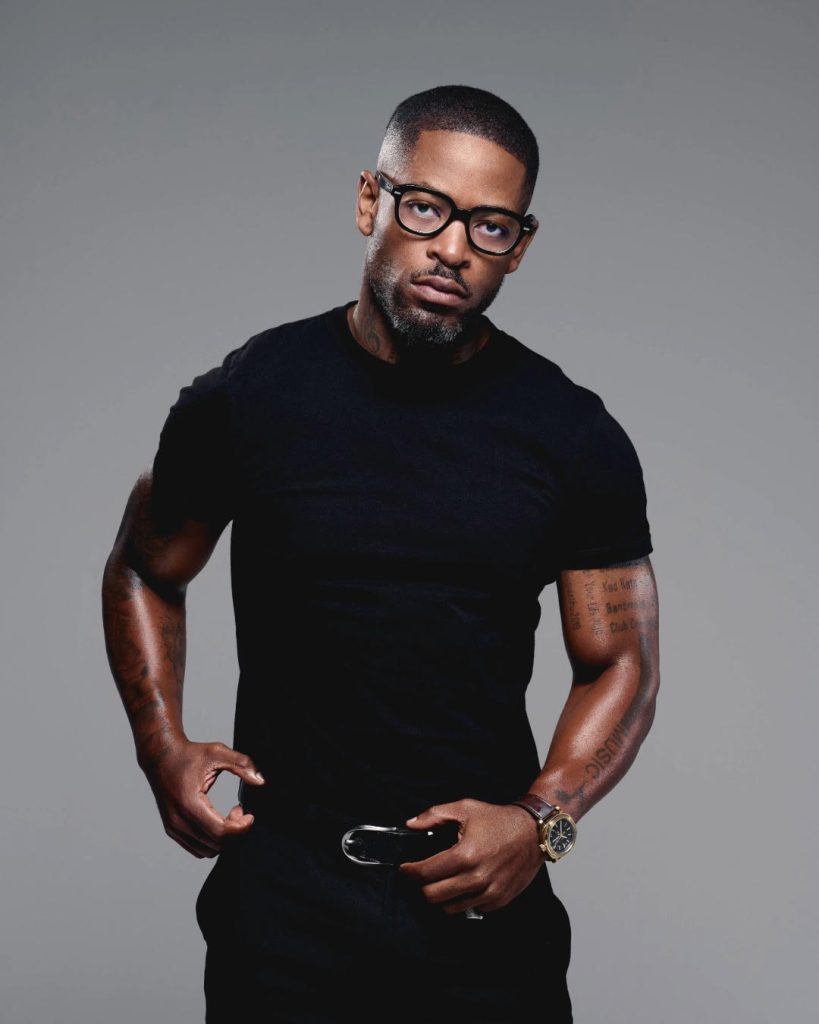
Prince Kaybee | SUPPLIED
The bridges of social media, trends, and viral moments have, over the years and expedited by the COVID-19 Pandemic, given countless ordinary folks with a dream viable avenues to superstardom. Bypassing gatekeepers and industry tastemakers, art, in the age of social media, has been blown wide open, the audience and competition battling for eyes on a global scale.
Motsamai shared his thoughts on this.
“I, for one, like how things have turned out in the music industry, but there are a lot of people who have a problem with that. They say that music is now infested with a lot of people who don’t know music and people who are supposedly not real artists. There’s some truth behind those sentiments, but I’m one of those people who wants to see others succeed at the same time,” he said.


