


There is something quietly radical about an artist of Little Simz’s stature choosing, in the immediate aftermath of a career-defining album, to take a hard left turn. Sugar Girl, her four-track EP, arrives less than a year after Lotus, a record burdened with emotional excavation and the fallout surrounding the collapse of her long-running creative partnership with Inflo. Where Lotus felt bruised and inward-facing, Sugar Girl moves with the energy of someone refusing to sit still long enough to mourn. It is restless, impulsive, occasionally chaotic, and all the more compelling because of it. Rather than attempting to reaffirm her lyrical supremacy after Lotus, Simz sounds liberated from the need to prove anything at all. This is the sound of an artist who has already settled the debate internally and decided the next logical step was to disappear into strobe lights and basslines.
Built alongside producer Jakwob, who previously collaborated with Simz on 2024’s club-driven Drop 7, Sugar Girl leans aggressively into electronic textures, distorted bass, twitching percussion, industrial synths, and fractured vocal manipulation. The EP feels engineered for physical environmentsm, dark rooms, crowded dance floors, sweat, movement, release. Its confrontational quality is less political than sonic. Jakwob pushes Simz into heavily processed and pitch-shifted vocal spaces that initially feel disorienting for a rapper whose greatest weapon has traditionally been clarity and precision of delivery.
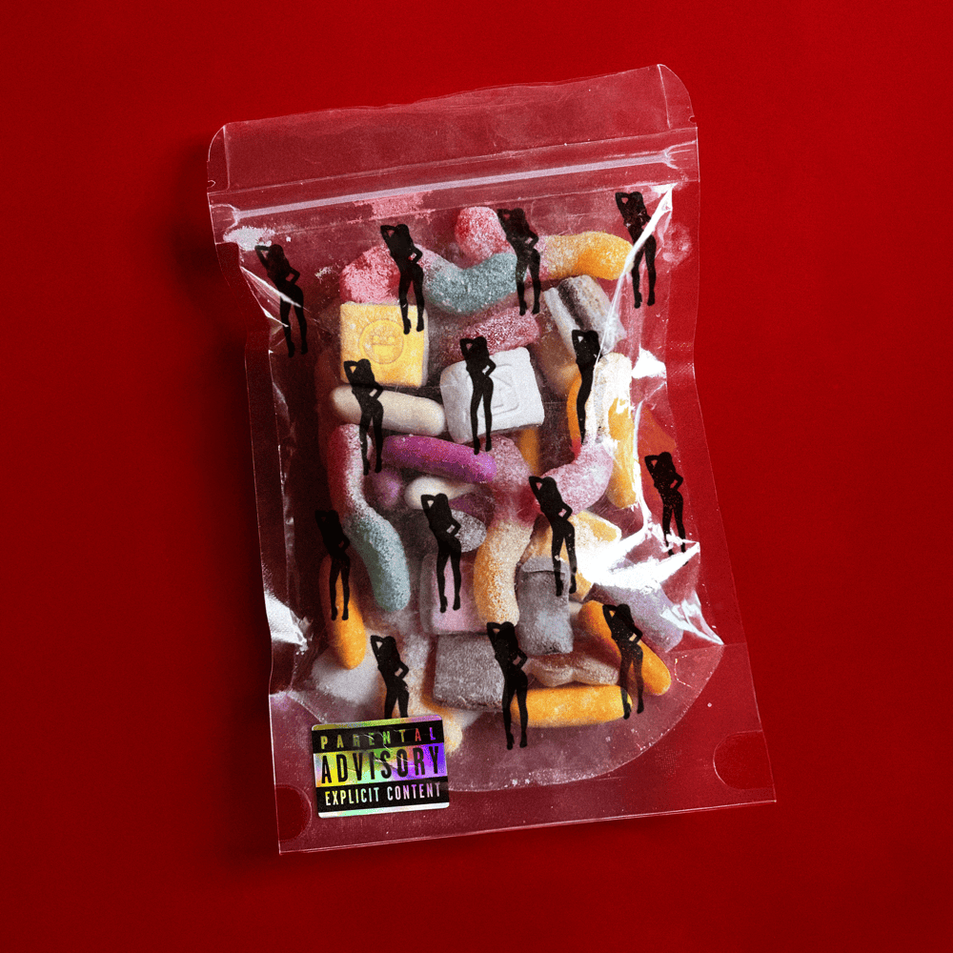
Sugar Girl cover art | SUPPLIED
Nowhere is that more evident than on “That’s a No No,” a rage-trap opener built around warped vocals and disjointed synth architecture before suddenly collapsing into a beat switch that strips the production back and allows Simz to rap in her natural cadence. That moment becomes the EP’s emotional and artistic hinge. For a brief stretch, the distortion disappears and Simz reminds listeners exactly who she is, “Put out your best thing and I see that flopped / You cannot level with anything that I’m delivering.” It lands like a warning shot. In less than a minute, the project regains its centre of gravity.
Thematically, Sugar Girl orbits feminine confidence, competition, pleasure, and emotional control. “Game On,” first performed during Simz’s Coachella set alongside JT, is tense and futuristic, music for a nightclub that does not quite exist yet. “Open Arms,” arguably the EP’s centrepiece, recruits DEELA for a bone-rattling Afro-tech detour that feels genuinely fresh within Simz’s catalogue. The track hints at an entirely unexplored corridor in her artistry, one that deserves more than a single appearance on a thirteen-minute EP. Then comes “Telephone” featuring 070 Shake, a nocturnal closer suspended somewhere between alt-rap, electronic haze, and distorted dream-pop. Its ghostly synth work and spectral backing vocals create the feeling of drifting through empty streets after a night that ended badly.
The collaborative architecture of Sugar Girl is central to its identity. The EP operates almost like a curated celebration of feminine energy, bringing together artists from entirely different sonic ecosystems without forcing cohesion for its own sake. JT injects explosive charisma into “Game On,” sharpening the track’s competitive edge rather than overwhelming it. DEELA introduces an Afro-diasporic pulse that momentarily stretches the project beyond its London-New York axis. 070 Shake feels the most naturally aligned with Simz’s experimentation, helping “Telephone” land like a melancholic comedown after the preceding adrenaline rush. Simz, interestingly, often positions herself less as the singular focal point and more as curator, facilitator, and architect. It is a role she occupies convincingly.
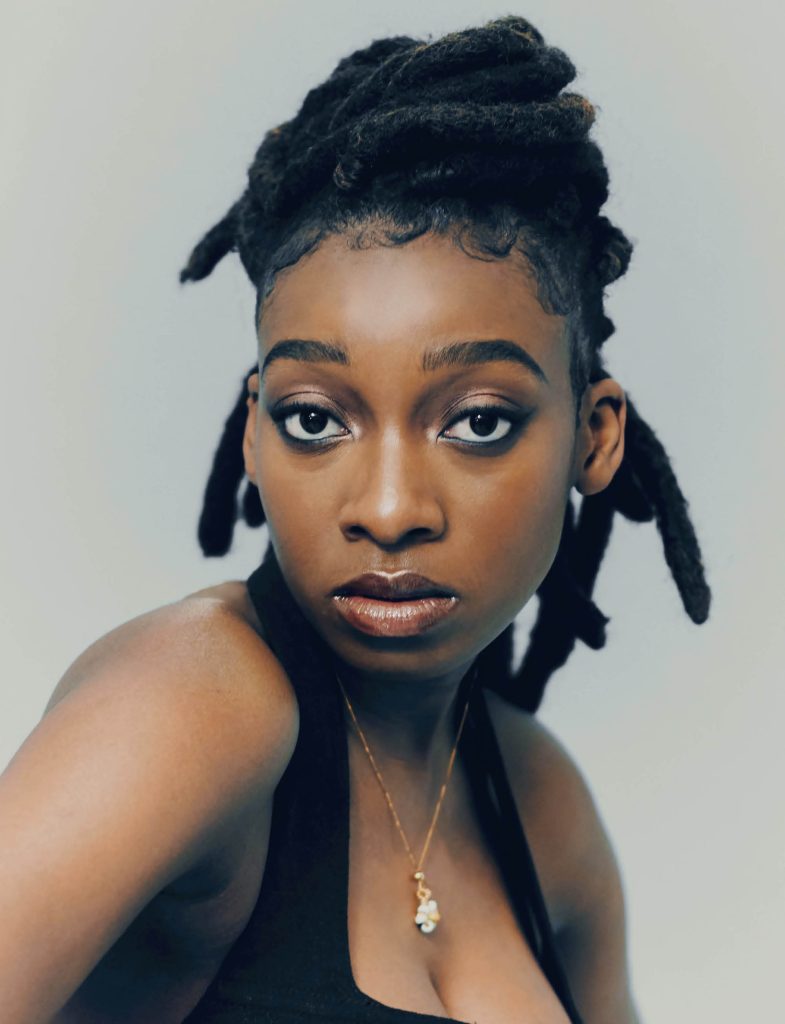
Little Simz | SUPPLIED
The critical tension running through Sugar Girl is whether fearlessness automatically translates into artistic success, and the EP wisely never resolves that question. There are moments where the experimentation outruns the execution, where vocal processing obscures rather than enhances, and where some of the club-oriented production feels indebted to sounds already approaching saturation. It is simultaneously a flex and a provocation for an artist of Simz’s calibre to release a project containing so little straightforward rapping. Yet that contradiction is precisely what makes the EP interesting.
Sugar Girl functions as an anti-algorithmic release, messy, instinctive, occasionally uneven, but defiantly alive. It is not a definitive Little Simz project, nor does it aspire to be. Instead, it captures an artist suspended between emotional aftermath and creative reinvention, chasing momentum through uncertainty and discovering, more often than not, something vital in the process.


