


The easiest move with a Chris Brown album in 2026 is to arrive already decided. The verdict tends to precede the listening. His history is over-documented, his public image over-archived, and in most serious R&B discourse the reaction has been rehearsed into instinct, suspicion first, analysis second, if at all. BROWN doesn’t attempt to interrupt that reflex or negotiate with it. It simply exists and asks, with unusual restraint for an artist of his scale, to be experienced without the shortcut of conclusion. When that request is granted, when the 27 tracks are absorbed without pre-emptive dismissal, the record reveals itself as something more deliberate than its reputation allows, a long-form attempt by an artist who has lived at the centre of global pop for two decades to finally take inventory of what that position has produced in him. The title, which is a backronym Break Rules Only When Necessary, functions less as slogan than as thesis. This is not a gesture of rebellion. It is closer to documentation under pressure.
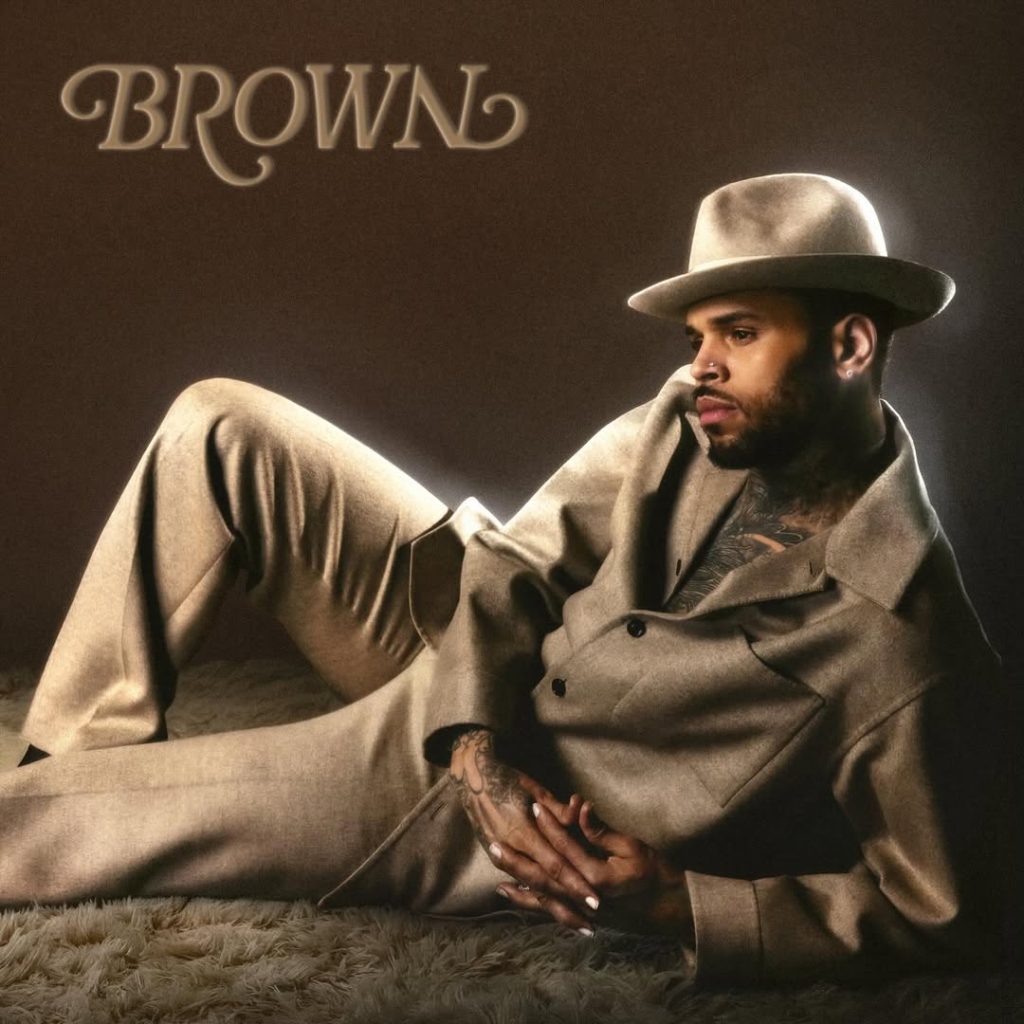
BROWN album cover | SUPPLIED
The sonic architecture of BROWN is among Brown’s most intentional statements since F.A.M.E. Rather than aligning with the dominant pulse of 2026, he pulls backward, into the slower tempos, melodic saturation, and structural patience of 80s and 90s soul, and rebuilds that language through contemporary production logic. Metro Boomin’s opening contribution on “Leave Me Alone” establishes the tone immediately, weighty 808s, subdued synth work, and a claustrophobic emotional space that recalls neo-soul interiority more than mainstream R&B immediacy. It is a deliberate disruption of expectation, particularly for listeners anticipating surface energy. From there, the album commits to atmosphere as its primary mode of expression. “In My Head” unfolds in suspended textures that allow Brown to drift rather than perform. “Something in the Water” and “Won’t Let Me Leave” resist conventional hook architecture, instead sustaining emotional states across full durations. The pacing is not passive, it is controlled restraint, built for attention rather than consumption.
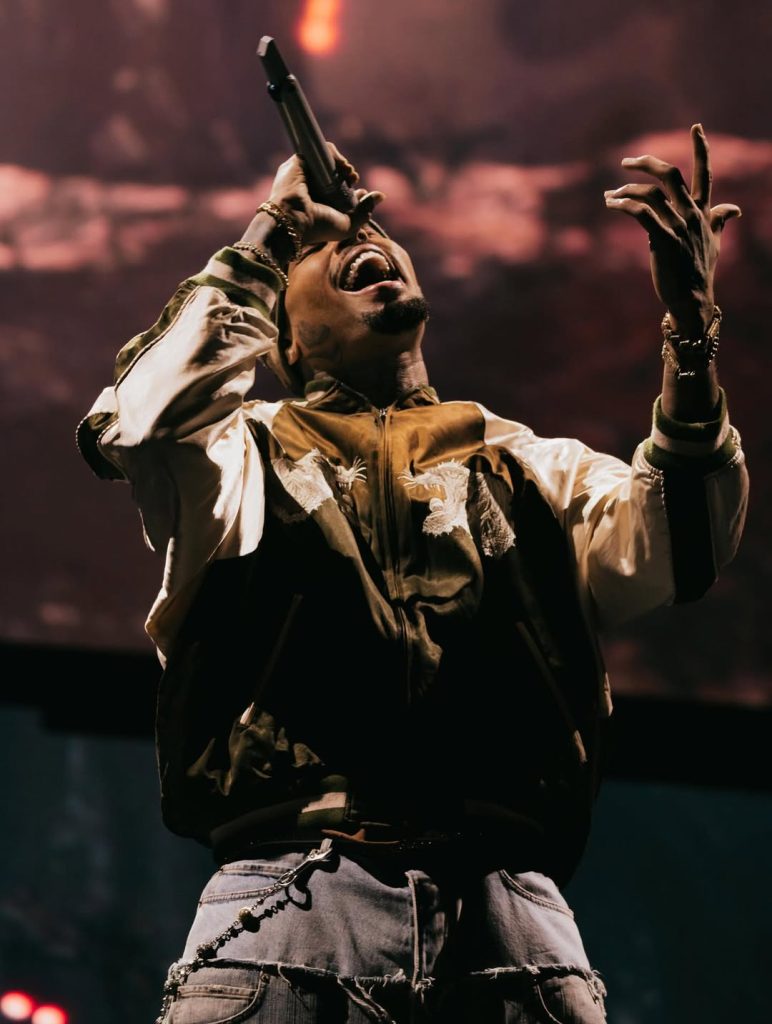
The collaborations across BROWN feel less like feature placements and more like structural decisions. Bryson Tiller on “It Depends” and Leon Thomas on “Fallin’” occupy the same emotional register Brown is circling, subdued, conflicted, inward-looking. Lucky Daye on “Slow Jamz” represents the album’s most overt classicism, vocal precision deployed in service of melody rather than spectacle. Even Vybz Kartel’s presence on “Fuck and Party” reads as intentional continuity rather than aesthetic detour, dancehall cadence has always sat just beneath Brown’s rhythmic instincts. Taken together, these pairings suggest an artist thinking in tonal alignment rather than commercial calculus, using other voices to extend emotional texture instead of expanding reach.
Chris Brown | SUPPLIED
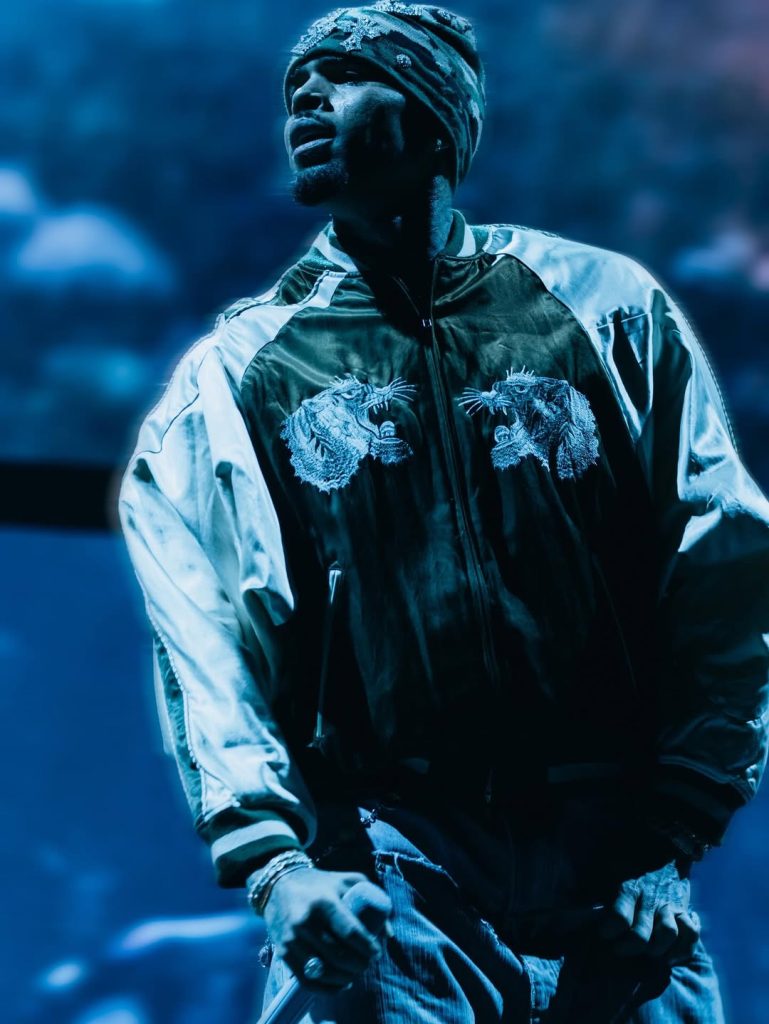
At its centre, BROWN is structured around a persistent question of love, stripped of its idealised framing. “What’s Love” functions as the album’s most exposed moment, not because it performs vulnerability, but because it fails to resolve it. The admission at its core is simple and destabilizing, after years of relationships, collapse, and public scrutiny, the concept itself remains undefined. “Colours” extends this into bodily and psychological residue, treating experience as accumulation rather than narrative closure. “Hate Me” completes a quiet triad of self-exposure, allowing anger to exist without resistance or correction. Together, these songs form the emotional spine of the record, not catharsis, but sustained confrontation.
The 27-track structure invites criticism by default, but it also clarifies intent. Brown’s discography has rarely operated under scarcity logic, it reflects abundance, unevenness, and range as constitutive features rather than flaws to be edited out. Within that framework, the length becomes less excess than inventory. The same artist who delivers the precision of “What’s Love” also produces lighter, more accessible material like “Call Your Name,” and the album refuses to treat that split as contradiction. “Perfect Timing” with Fridayy sits comfortably in conventional romantic R&B, while “For the Moment” demonstrates Brown’s continued command of mid-tempo construction at a technical level. The sequencing does not resolve these tensions; it holds them in parallel.
Chris Brown | SUPPLIED
The closing track, “Present,” resists resolution entirely. Over Metro Boomin’s restrained production, Brown withdraws from narrative closure. There is no reframing, no redemption arc, no final statement of coherence. The album ends in suspension, which functions as its most honest gesture. It refuses to tidy itself for critical comfort. That refusal will likely frustrate those expecting a concise artistic argument, but the record is not built on concision. It is built on accumulation, of tone, of contradiction, of self-awareness arriving too late to simplify anything.
What BROWN ultimately offers is not resolution but scale, a portrait of an artist shaped as much by longevity and visibility as by musical intent. Its weight is not purely aesthetic, it is biographical. It carries the residue of two decades lived in public, without attempting to convert that residue into narrative redemption. In that sense, it succeeds not through perfection, but through density. It holds together without pretending to resolve itself.
Preview BROWN:


