


Davido’s sixth studio album, Oriadé, feels less like another declaration of dominance and more like an artist taking stock of what it has taken to become Davido. The title, drawn from the Yoruba words “ori”, head or destiny and “adé” crown, immediately frames the album around purpose, fulfilment and responsibility. That distinction matters. Davido has spent much of his career making music from a position of urgency, turning personal victories, heartbreak, rivalry and ambition into records that demanded attention. On Oriadé, the need to prove himself appears to have softened. The crown is already there; the question now is what it means to wear it.
That change in posture is evident from the opening moments of “On The Road.” Rather than arriving with the explosive confidence associated with some of Davido’s biggest records, the album begins with movement and reflection. There is still the familiar luxury, the references to hard work and the unmistakable confidence, but there is also an awareness of time. On “Amazing Grace,” featuring Black Sherif, gratitude and perseverance become central, while “Constantly” and “Julie” turn inward, allowing Davido to sit with vulnerability rather than simply performing strength. It is a subtle but significant evolution for an artist whose mythology has often been built around being larger than the moment. Here, he sounds comfortable enough to let the moment speak for itself.
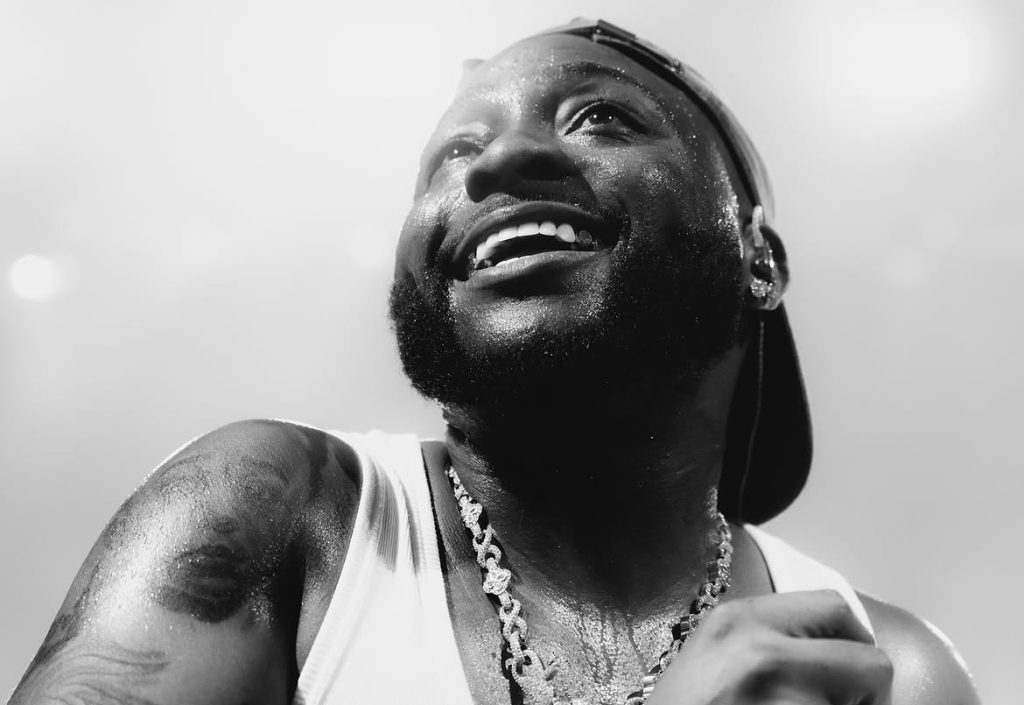
Davido | SUPPLIED
The strongest evidence of that maturity comes through in the album’s quieter spaces. “B4 B4,” featuring Mayorkun and FOLA, is particularly revealing because it brings together different stages of Davido’s musical world without turning the collaboration into a nostalgia exercise.
There is familiarity in the record, but also a sense of mentorship and continuity. The same dynamic appears on “My Light,” where Llona’s introspective delivery gives the album one of its most emotionally affecting moments. Davido does not overwhelm him, instead, he meets the younger artist from a different point in the journey. That exchange captures something essential about Oriadé, experience has changed Davido’s relationship with ambition. He no longer has to occupy every inch of the song to establish his authority.
The album’s collaborations also expand its cultural argument. Black Sherif brings Ghana into the conversation, JAZZWRLD and GL_Ceejay connect “I Know Who I Be” to South Africa, while Mayorkun, FOLA and Llona represent different currents within Nigeria’s contemporary music scene. Leon Thomas and Aya Nakamura widen the project’s international dimensions, particularly on “Tell Everybody” and “Yaya.” What makes these appearances significant is that they do not feel like a checklist of global names assembled to manufacture crossover appeal.

Davido | SUPPLIED
Instead, they reinforce Davido’s understanding of African music as an interconnected ecosystem. Oriadé is international because African music is international, not because its identity has been stripped down to make it easier for the rest of the world to consume.
That cultural confidence may ultimately be the album’s most important quality. Davido has spent 15 years participating in the transformation of African pop from a regional force into a global cultural industry. Oriadé appears conscious of that history without becoming trapped inside it. The production moves through Afrobeats, African pop and club-oriented textures, with songs such as “Zanzibar” and “I Know Who I Be” keeping the project connected to contemporary listening habits. Yet the album is deliberately restrained, clocking in at roughly 39 minutes and resisting the excess that has sometimes characterised Davido’s larger-than-life presentation. Even the imagery of the jewelled hands holding a crown communicates a quieter kind of power. He is not asking whether he belongs at the top anymore. He is reflecting on the weight of having arrived there.
Check out “I Know Who I Be”:
There are moments where that restraint works against the album. Some songs feel so brief that they seem to end just as their ideas begin to develop, and a few melodies could have benefited from more room to linger. But these are relatively small imperfections within a project whose larger achievement is its sense of cohesion. Oriadé does not need to be Davido’s biggest album to be one of his most revealing. It captures an artist moving from the urgency of proving himself towards the composure of someone who understands his place in African music. For an artist whose career has been defined by hits, spectacle and relentless forward motion, choosing reflection is itself a statement. Oriadé is Davido looking at the crown, looking at the road behind him, and finally allowing the music to explain what the journey has made of him.


