


Artistic duality has the power to birth great art. When an artist is able to reach into the different cultures that have shaped them, the result can become something more complicated than a simple statement of identity. It can become a conversation between past and present, home and displacement, inheritance and reinvention. On Shona Man, KindlyNxsh finds that conversation in himself. Born in Zimbabwe and raised in South Africa, the Johannesburg-based 21-year-old has spent much of his career operating within the language, energy and codes of South African youth culture. But beneath that identity was another one he had not always known how to fully occupy. Released on September 25 through Gallo Record Company, the nine-track, 26-minute Shona Man is the sound of him finally refusing to keep those two halves separate.
That distinction matters because Shona Man is not simply an album about being Zimbabwean. Its most interesting moments are about what happens when belonging becomes something you have to negotiate. KindlyNxsh confronts xenophobia, the anxiety of being perceived as an outsider, Black-on-Black violence and the pressure to dilute parts of yourself in order to fit into a culture that has already shaped you. He has spoken openly about previously sidelining his Zimbabwean identity, and the album turns that discomfort into material. “I had to explore my identity, to find me. I am South African and I am Zimbabwean,” he says. That sentence is essentially the album’s thesis. There is no attempt to choose one side over the other. Instead, Shona Man asks what happens when both are allowed to exist at full volume. Even the decision to rap more deliberately in Shona carries that weight. It is not a novelty or a stylistic detour, it is a reclamation of a language that had been sitting inside the artist while he was building himself elsewhere.
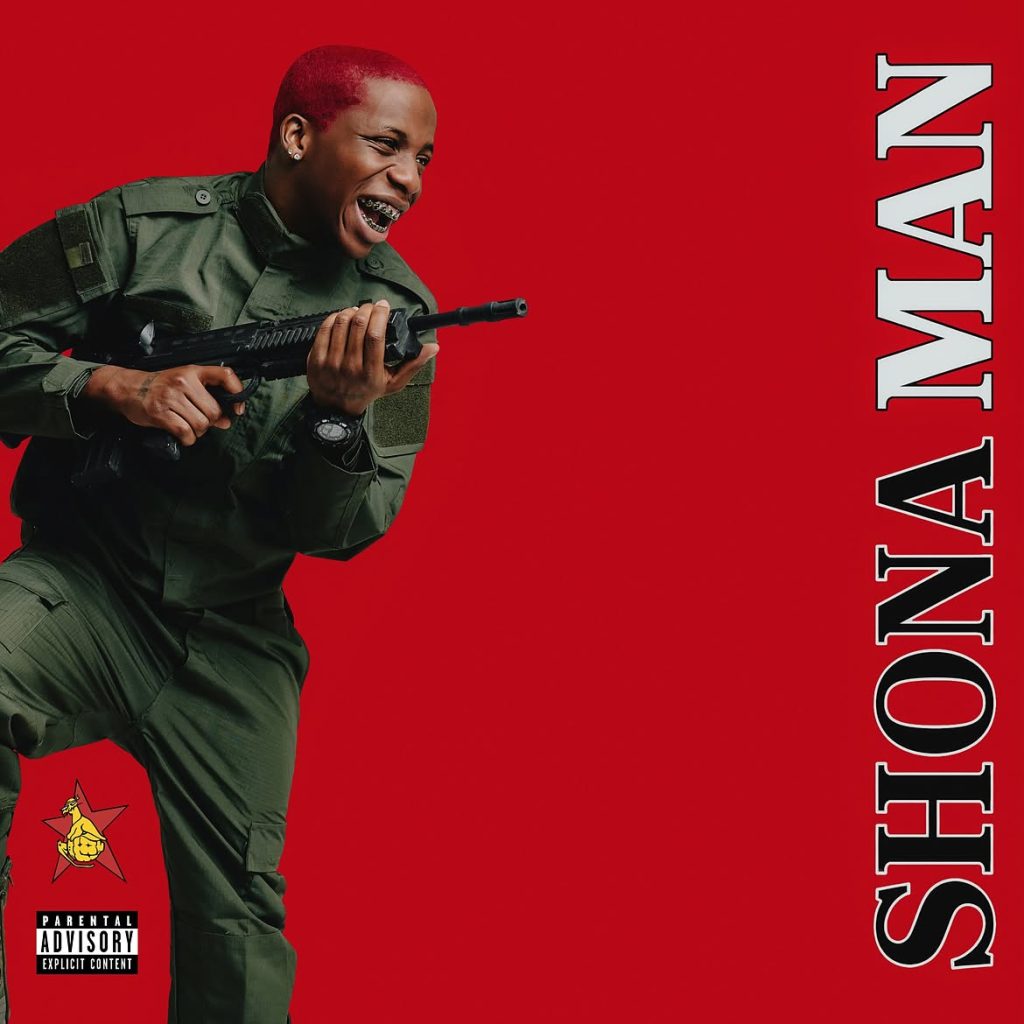
Shona Man album cover | SUPPLIED
The music is where that reclamation becomes particularly compelling. KindlyNxsh produced eight of the album’s nine tracks, and that level of creative control gives Shona Man the feeling of an artist deliberately dismantling his previous boundaries. Afrobeats, rave, techno and progressive-house textures collide with the aggression and rhythmic instinct of rap, creating music that can feel euphoric in one moment and deeply unsettled in the next. The title track is especially direct, with KindlyNxsh turning heritage into a declaration rather than an explanation, rapping, “I’m Zimbabwean… Maphosa clan.” But the record is not interested in making identity sound neat. There is poverty, political frustration, alienation and anger threaded through the celebration. That tension gives the album its pulse, the music wants to dance while the writing wants to interrogate. It is an important distinction because Shona Man never sounds like an artist simply adding African elements to an established sound. The contradiction is the sound.
And then there is Oliver Mtukudzi. Few decisions on the album carry as much cultural and emotional consequence as KindlyNxsh’s reinterpretations of “Neria” and “Todii,” including “Todii (Live).” Mtukudzi’s music is not merely being sampled here as a convenient bridge to Zimbabwean nostalgia. For an artist raised around Tuku’s records, these songs are part of the architecture of memory. The anxiety KindlyNxsh describes before touching them is understandable, there are songs that belong so deeply to a people that reworking them can feel almost sacrilegious. “I was super anxious before using the records, because of how important they are to people around the world,” he says. Yet the risk is exactly what makes the experiment worthwhile. On Shona Man, Mtukudzi’s compositions are pulled into a younger, more restless sonic world without being stripped of their emotional gravity. “Neria” in particular becomes something more inward. KindlyNxsh describes it as a sonic reflection of what being inside his head feels like, and that interpretation gives the track a different kind of weight. He is not simply revisiting Tuku, he is using Tuku to understand himself.
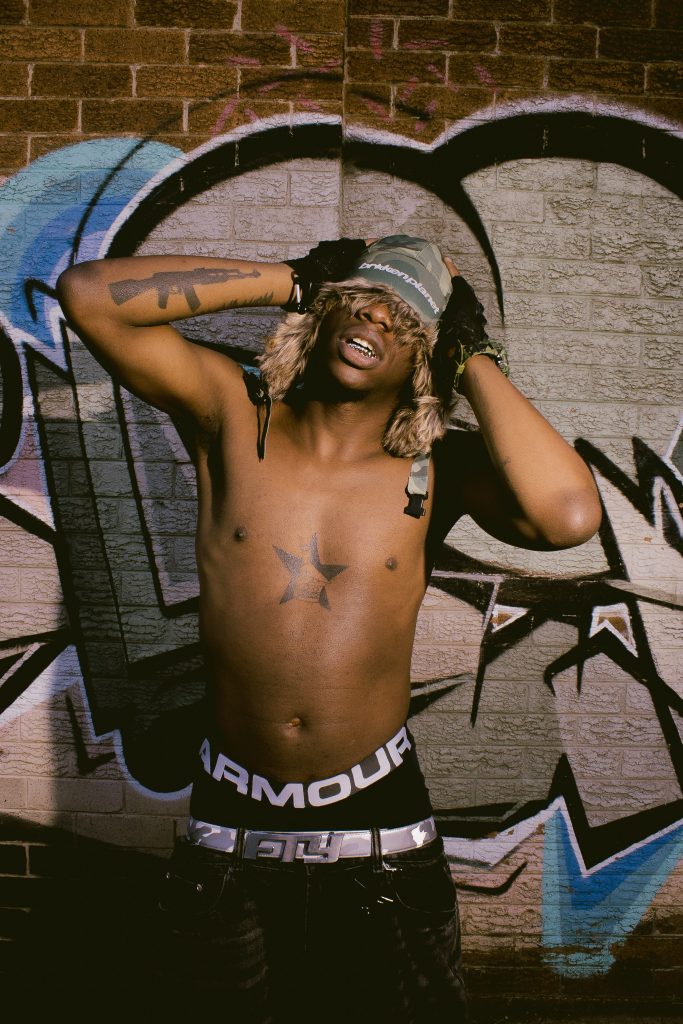
KindlyNxsh | X: @channel_reddd
“Todii” was also the song that appears to have clarified what KindlyNxsh wanted this project to become. He has explained that the response to the song forced him to recognise that there was something deeper in this direction of his artistry. “Todii taught me a lot. It made me realise that I had to take this sound seriously,” he said. That realisation seems to sit at the centre of Shona Man. “I need to have the deep songs. I need to talk about deep topics, like xenophobia. I have to talk about Black-on-Black violence. I have to talk about everything.” Those words explain why the album works best when it stops trying to prove anything. Its most affecting quality is not that KindlyNxsh can make rave-inflected Afrobeats, rap in Shona or reinterpret Mtukudzi. It is that he has begun to understand those things as parts of the same artistic language. BabyDaiz, Mfanatouchline, Sane Way and Suhn add different textures to that world, but the album remains unmistakably personal because its central conflict belongs to KindlyNxsh.
Shona Man ultimately feels like a homecoming, but not the sentimental kind. There is no neat resolution at the end of the road, no suggestion that an album can erase the complicated experience of growing between cultures. What KindlyNxsh achieves instead is more valuable, he turns the uncertainty itself into art. The album’s imperfections, abrupt shifts and collision of sounds reflect an artist still figuring out how all these identities can occupy the same room. That is precisely why the project feels alive. “I took this very serious and I think I did it in my best way possible,” KindlyNxsh says, and Shona Man sounds like the work of someone finally giving himself permission to mean every part of that statement. It is Zimbabwean without abandoning South Africa, contemporary without severing itself from inheritance, and energetic without running away from difficult questions. For an artist who once felt the need to place parts of himself in the background, Shona Man is what happens when the background finally moves to the foreground.


