Half a decade since his Pulitzer Prize-winning fourth solo album DAMN., Mr. Morale & The Big Steppers arrives not just as an album or what we might call a mere LP. Kendrick Lamar’s final project with Top Dawg Entertainment feels more like an atonement for the sin of lost years and the agonizing wait. Released as a double record, the eighteen-song sin offering is a disturbingly gorgeous garment of piercing truths sewn together with the needle of penetrating lyricism and tightened with the stitching of his sinewy and multi-faceted musical genius.
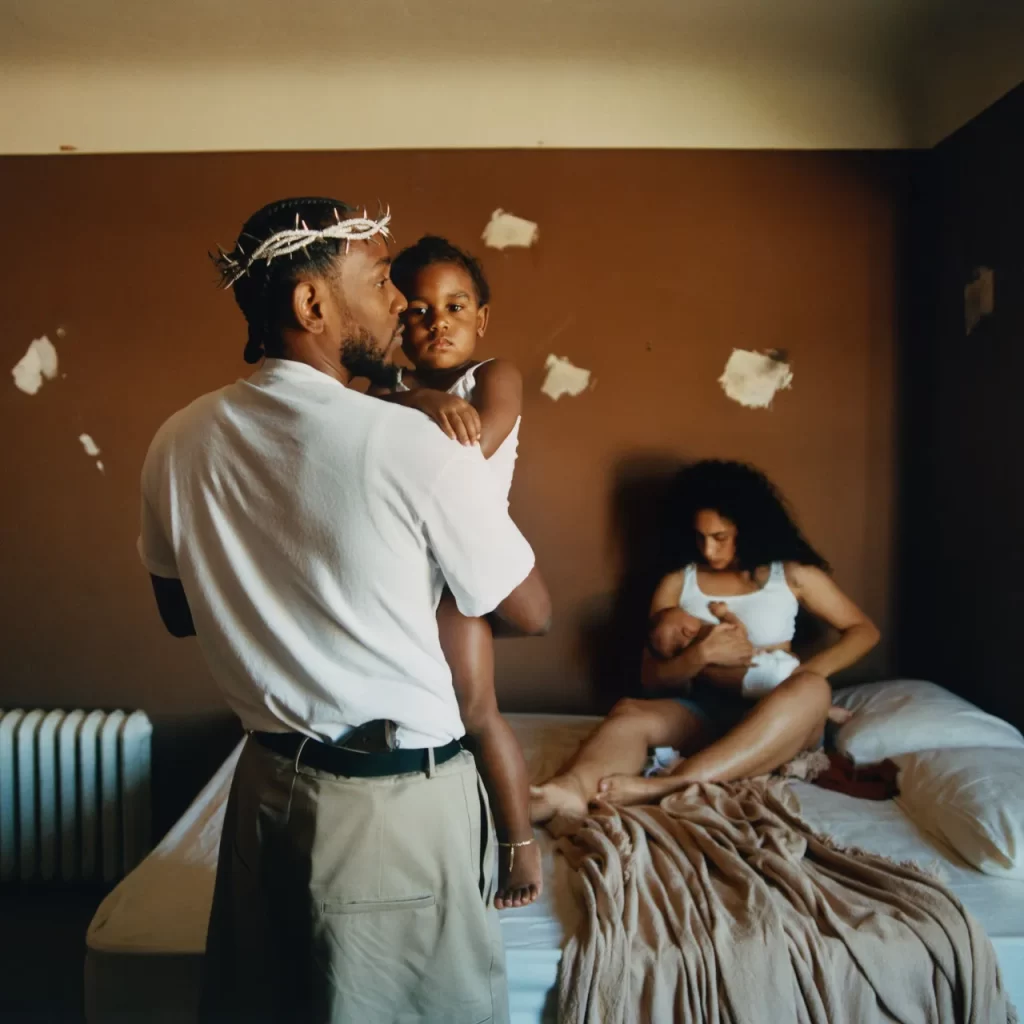
MM&TBS is a trauma-tainted grown man’s portrait. On the cover, Kendrick dons a crown of thorns with a gun tucked behind him as he carries his daughter. And on the bed, his fiance/wife nurses their new addition to the home. At first glance, this is a seemingly innocent picture of a secure, hands-on family man in love and content with his position as a father and a husband. Yet, sinister vibes ripple from a pensive Kendrick staring out the window. Almost as if he’s on the lookout for a certain danger he feels and knows would threaten what he has taken his time building if it were to locate his young family. The album plays the way it looks—with silent discomfort, sensitivity, and tension.
When I heard Big Steppers, the first nine-track half of the album, one concern came to mind, and it wasn’t even for me—it was more for K. Dot. “United in Grief” and “Worldwide Steppers” took ambitious leaps with layered songwriting and mind-sobering beats I knew on the first listen radio would shake its head at. After several more listening sessions, I feared most people – whose attention span was already rotted by TikTok and dumbed down hip-hop – wouldn’t be as appreciative of this gem of conscious rap.
After all, this is not a beats album. This is no DAMN., where almost every song was at least either a gold- or platinum-selling banger. This is a collection of experiences such as fatherhood, therapy, family issues, and masculinity, while it also looks out into the world, critiquing societal hypocrisy, cancel culture, and infidelity. Even “N95”, “Rich Spirit” (my album’s personal pick), and Kodak Black-assisted “Silent Hill”, which are the most groovy, are quite thought-provoking cuts. Because of its sheer lyrical weight and unorthodox beat selection, MM&TBS plays out like a fine-tuned To Pimp a Butterfly, only without the choppiness and kinks. Unlike Butterfly, however, it’s more focused on the world within the man, not the world around him.
In MM&TBS, we see touches of blues, soul, quiet storm, jazz, progressive R&B, and West Coast hip-hop. Kendrick was creatively intentional in shaping this album’s eclectic sound. And rightfully so.
While there’s been deafening white noise on the socials over the “trashy” and “mid” (I’m quoting people verbatim) beats, I’m of the mind they were appropriate. Speaking about mental health, family dynamics, and brokenness as a Black man calls for serious production that encourages thought and the listener to get deep. Listen to “Mother I Sober”. Imagine an archetype, turnt-up Mike WiLL beat over those recollections of domestic violence and throw in Migos on the chorus instead. It would be like wearing a stained vest, torn jeans, and Billabong flip flops to deliver a eulogy at your mother’s funeral.
Some of the more thoughtful tracks come from Mr. Morale, the latter nine joints—especially “Auntie Diaries” and “Mother I Sober”. What’s most endearing in this pair of songs is their unflinching confrontation of devastating realities mainstream rappers would be more than happy to pretend don’t exist. Listen to King Kendrick’s allyship and lyricism when tackling earlier life events regarding his trans relatives. In “Mother I Sober”, hear him chronicle his life and having to witness his mother getting abused and how generational trauma has left Black people nervous.
Whether he has failed or excelled in expression, he has made a breakthrough in one thing, which just so happens to be the most critical thing all art should aspire for: Kendrick made people think. While he’s done an appreciably reasonable job at initiating discussion, Lamar’s now left with the unpleasant and thankless task of having to wash his own hands after handling all this toxic subject matter with his bare hands.
What makes MM&TBS stand out is that, while his previous efforts have portrayed perfect brokenness through whole pictures, this album inverts that idea—it takes whole and perfect pictures and illustrates the brokenness by purposefully breaking them. That’s precisely why the album feels as ugly and emotional and raw and human as it does.