


There is something particular that occurs when two artists meet at the right time, when one brings with him something that is the lack of something, and the other, the instinct. Friendships of that kind do not announce themselves. They appear unobtrusively, in too lengthy conversations, in the sort of honesty that only comes out when neither of the parties is acting. In the case of Msaki and Jesse Clegg that is exactly where Entropy started not in a studio, not with a brief, not with a concept, but with the mere fact of two people realizing that there was something in each other worth preserving.
Out of that friendship came one of the most comprehensive and emotionally self-sufficient collections of work that Southern African music has produced in recent years, a six-track EP and its companion short film, all of which is held together by the same language to which neither artist could have grown individually. It is that sort of project that makes you remember what you are actually collaborating on, as opposed to the division of labor, but the enlargement of what either individual can feel, say, and create. Both artists were evident in the very basis of that growth, trust before craft. Jesse describes the beginning of their relationship as having been a continuation of interpersonal connection rather than the connection of music, “Our relationship had always been based on a friendship, so we would be very comfortable with each other being vulnerable to each other at the start.”
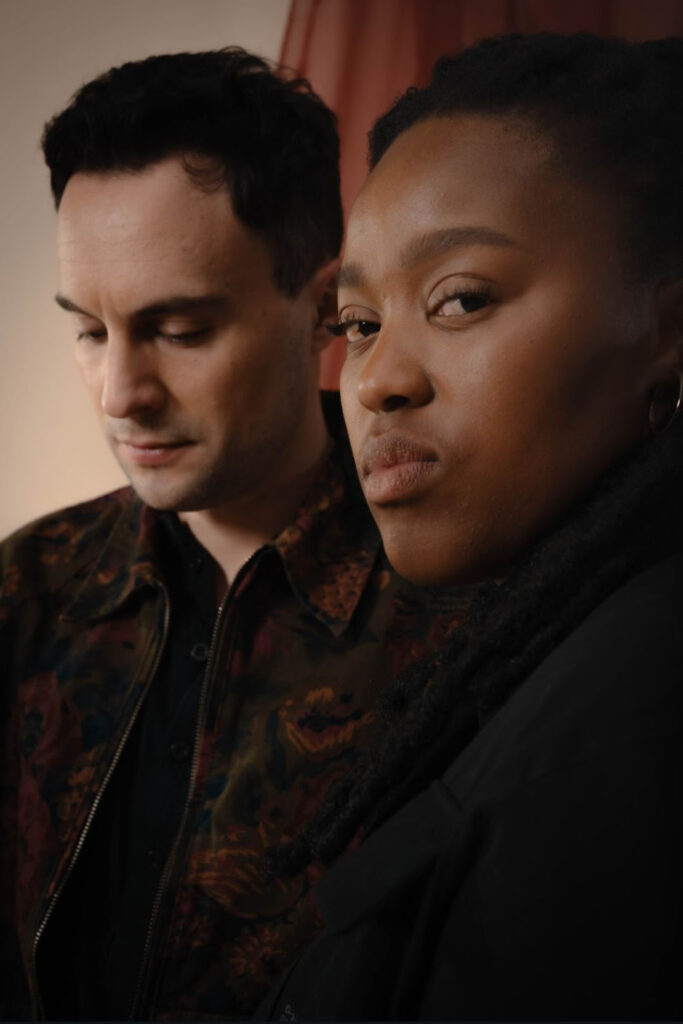
Jesse Clegg and Msaki | SUPPLIED
Msaki carries it another step further, referring to a sort of joint courage, of going to the places that hurt in a manner that she is not sure she could have done by herself, walking alone down that corridor. The creative process Jesse remembers was nearly too natural, “The process of attempting to capture some of what we are experiencing at the moment, we appeared to be able to empathize with each other, so the music was the easiest part of the whole process. The same ease can be heard in the EP, and can be seen in the film, in all the frames which believe in silence, in all the scenes which do not insist on explaining themselves.
Being a short film, Entropy does not merely project the EP onto the screen. It re-places the music as something lived, embodied, and spatial, a reflection made of the emotional structure the songs already possessed. The purpose, Jesse explains, was particular in the very beginning, “We wanted to make one like a short movie. We wanted it to be filmic. we were telling a story. That is a six-part story, with each chapter bearing the title of the song it relates to, and which follows the entire trajectory of a human relationship, the disruption that leads to love, its blossoming, its exaltation, its gradual decline, and its silent accounting.” Msaki contextualizes, “the whole project with one picture, which is the tip of the iceberg, the song, the MP3, whatever that you see on your phone, what is beneath the water. Always, it seems like a universe.” The movie is that sunken bulk. Throughout some twenty-five minutes, it tries to resist the temptation to explain itself. Meaning does not announce itself but rather accrues and that is what makes the work heavy.
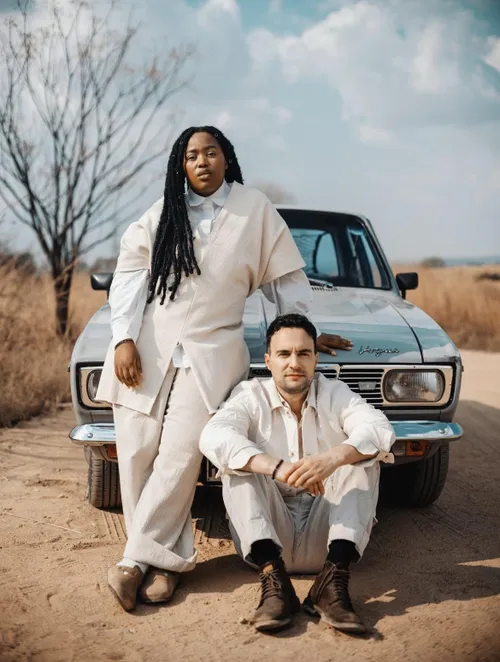
Msaki and Jesse Clegg | SUPPLIED
The movie begins with “Awake in the Nightmare,” and it does not put you at ease. The chapter has the lead actress strolling into anarchy, robbing a bank in a sequence that is cinematic in the most traditional sense of the word, desperate, physical, and unethical. The lyric of the song, everything I was trying to build fell apart, falls here not as it would on headphones alone. It is something more stratified against the backdrop of a woman in the act of heisting: this is a portrait of desperation masquerading as agency, of a person whose failure has made her go beyond the frame of normal existence. Jesse already has the instinct of foregrounding of character over spectacle in play here, “I was pushing character a lot in a lot of what we are doing. It is a bold opening statement, and a deliberate one. The movie does not start with love. It starts with the circumstances that necessitate love and also endanger it.
The second chapter, “Untimely Disclosure” comes as a relieving of pressure. The light changes, it is bright, open, green, pouring out through the frame and with it the feeling of something starting. It is in this that the lead characters fall in each other and the visual grammar is completely changed to pay tribute to that. Green, traditionally linked with growth and with things proceeding in the way that they ought, is not an incidental decision. It is the manner in which the film says, this is what the world can look like when it momentarily gets along. Jesse addresses the intentionality of this tonal structure, “There is the serene, and there is the party and out there, but as a journey, we wanted it focused. The messiness of the first chapter does not go away, it just fades out, as it always does when love first comes, and the world seems to be temporarily rearranged.

Msaki and Jesse Clegg | SUPPLIED
“See Me Through” gives that emotion a push. The lovers go out, walk around the city, fill each other with the comfort of individuals who have just understood that they are part of something. That is precisely what the song is about, the sense of belonging to someone, the sense of not giving up on each other, and the visuals give the song the due respect without over-explaining it. This chapter is so easy that it seems willful, a breathing room in the greater organization of the film. Msaki also wonders why the visual medium was even picked in the first place, “I believe it is a very special thing to do so when it enhances the music in this way. The camera is silent at this place, the two people are just so that they can be together, and such silence by itself is a declaration. We are not watching a music video. We are seeing a relationship taking root.
Then “Wayside Lover” comes, and there come the first fractures. The lovers remain in the night life of the city, and they are still dancing, but something has changed under the water. The soundscape is intruded by police sirens, not announced, not dramatic, but present, which is how reality is likely to re-enter. According to Jesse, the tonal structure of the film is a slightly increased human journey and this chapter is where the increased heightening starts to tip. The appearance of Sjava on the track gives a new register altogether. His poetry has a certain burden of the wisdom of an elder, and in the story of the film he is acted as just that, a kind of oracle, a go-between, one that will look down on the lovers and provide a point of view. In that story Jesse observes that he had written his verse in the character. His message is sharp, do not flee love, as it is never too late and it is always ready. It is a silence in the increasing restlessness of the film, and it comes as if it were hard won.
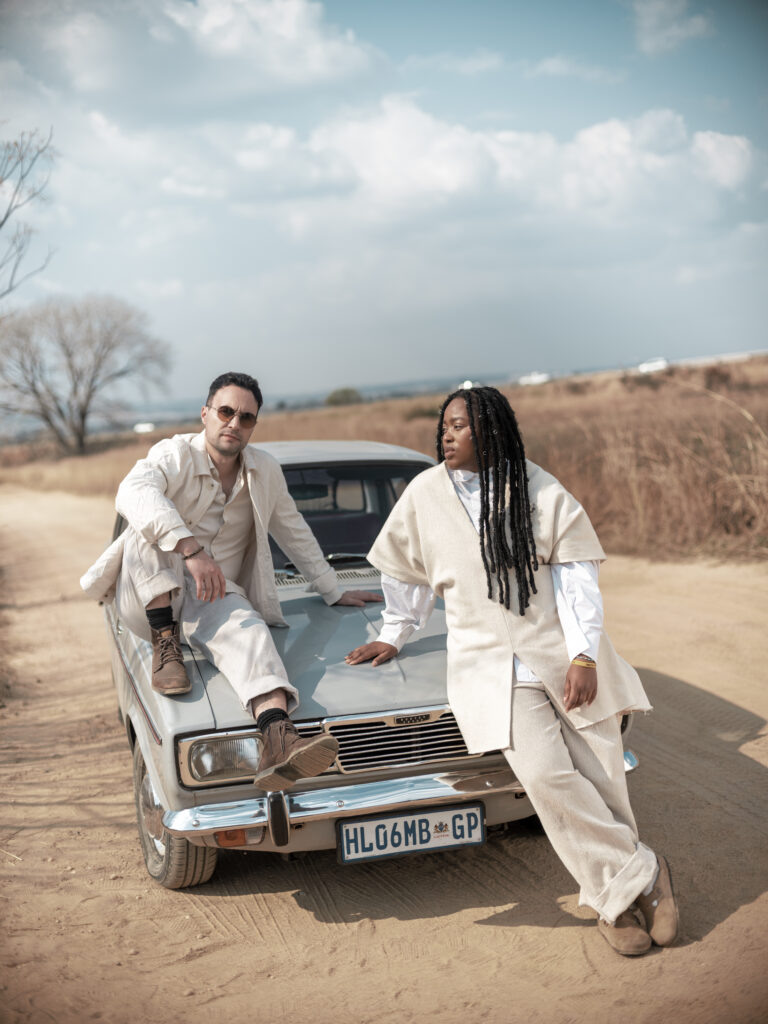
Jesse Clegg and Msaki | SUPPLIED
“How Dare You” leaves the lovers stranded. The vehicle stalls in the middle of the journey, and the visual poetry of the scene is difficult to overlook, a relationship which started in anarchy, which momentarily endured it, and is now stopped by it. This emotional center of the song is the acknowledgment that these two individuals met each other when they were in motion, already in transit, heading somewhere else. Msaki talks about the need of that sort of surrender in the collaborative process itself: “You must sort of set aside your preconceived notions or even wishes particularly when the thing begins to reveal itself. It is not only mechanical but metaphysical in its breakdown. Jesse repeats the vulnerability which lies at its core, “There is so much work that has been put into it, it is always a little bit scary. It turns out that the journey had always been in danger of this. It was not that the love was not enough, but the roads people walk down until the moment they meet no longer exist when love comes.
The last, “Cruel World for Meaning Junkies”, is the most silent and maybe the most sincere. The colour cast shifts between grey, blue, and the final warmth of a dying sunset, a language of post-apocalyptic. Far behind is the muddiness. All that is left is contemplation, and the specific burnout of individuals who are too much to just go. The term, meaning junkies, used by Msaki is not accidental in this case, it is the thesis statement of the movie that has finally come. She has described this attitude with the frankness that clarifies all that comes before it, “It is a painful life to be good with being someone who feels a lot, who feels deeply about others, who is an empath. Creatives, empaths, individuals whose every experience insists on being comprehended, things fail in them not despite their richness, but to some extent because of it. It is a cruel world, not dramatic, the song is, but in that silent, inexorable manner of giving beauty and withholding it.
Entropy is a movie of the inevitability, of love as something coming in the middle of the chaos, of love interrupting it, and then of the chaos being reinstated, not in punishment, but in prerequisite. The six chapters are not constructed in the direction toward the resolution since there is no resolution in the human experience, they are constructed in the direction toward the comprehension which is the only thing art can honestly promise. It was only plainly stated by Msaki, we are here, to open our diaries and hope that no one is alone. Such is the entire thesis. That is the work.
Watch “Entropy” the short film:
Words by Zimiso Nyamande


