


Identity starts at the root. Knowing where you come from, whose hands worked the soil under your feet, what language your grandmother prayed in, whose name sits beside yours on the birth certificate, is the oldest art a person can practise. It’s how we become whole. It’s how we find our way back to the culture, the faith and the beliefs that carried us to where we stand. When part of that root is missing, when one branch of the family tree stays bare through every season, a person spends years reaching for it in the dark. That reaching is what Marcus Harvey wrestles with on Son of Elvis. Elvis is his father’s name. Harvey grew up in Alexandra on his mother’s side of the family, and for six years he named his work after himself and after how well you knew him, I Am Marcus Harvey, You Don’t Know Me Yet in 2020, You Still Don’t Know Me in 2021, Now You Know Me in 2024. That trilogy was a young man introducing himself.
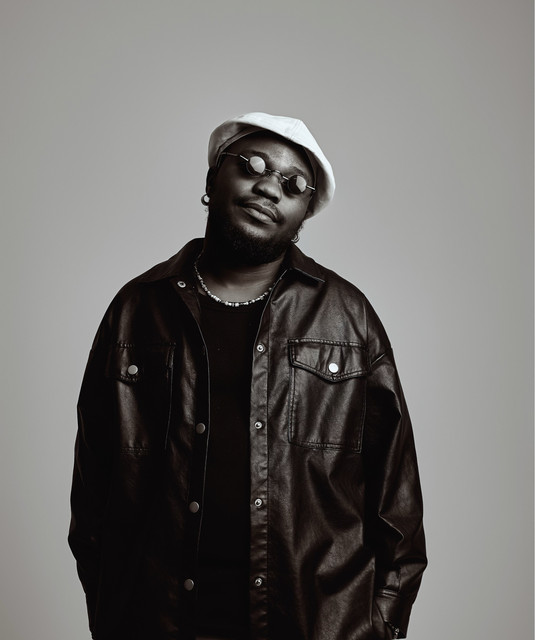
Marcus Harvey | SUPPLIED
His third full-length turns toward the name on the other side of the tree and asks what every child of an absent parent carries into adulthood: how much of me belongs to the people who made me? Some things come down through blood, some through absence, some through the stories other people tell, and some through the long work of becoming someone new. Across 13 tracks, Harvey digs through his own history and listens for the parts still breathing inside him.
The digging starts with a mother on her knees. “Rebecca’s Prayer” is built like a ritual, grand piano, birdsong, acoustic strings and a gathered choir whose voices keep the grain of real people standing together in a real room. The Sepedi chorus carries grief in the plural, “Bana ba gago ba tletše sello / Ga re sa na le kgotlelelo.” Your children are filled with tears. We no longer have patience. This is faith at the end of its rope, a plea that is spiritual and social at once, spoken by someone who knows his story lives inside generations, languages and communities larger than himself. The prayer is also how the album survived. Harvey has described the recording period as “a lot of breakdowns” and said he nearly let the album die, “I wanted to quit, I wanted to give up. I was just like, maybe I’m not good enough, but my mom’s prayer is what brought me back to this world.” Rebecca is where his music begins as well. Her record collection held Brenda Fassie and Winnie Mashaba, Selaelo Selota, Fela Kuti and Ladysmith Black Mambazo, and Harvey has said that singing in his mother tongue is what finally gave him a sound of his own. Those voices live in the album’s grammar, in the communal harmonies, the unhurried space, and the ease with which contemporary hip-hop and older African musical instincts share one breath. “Mmangwane,” named for the Sepedi word for a maternal aunt, keeps that conversation going over long gliding chords and light syncopated percussion with no kick drum anywhere. Harvey sings of envy and money, “Ba njela mona / Gobane ke humile,” they envy me because I am rich, in a near-falsetto that drifts above the subject like smoke above a fire. It’s a boast sung as a lullaby, and the softness gives it away.
Check out “Charlotte”:
Then the album starts moving, and each change of form brings a change of temperature. “Mapula,” named for rain, the Sesotho and Setswana word for blessing, pushes a funky, almost slap bass to the front under Harvey’s most soul-soaked phrasing. Its central promise, “Ke go rekela koloi ka tšhelete yaka ya mafello,” I’ll buy you a car with my last money, is tender and terrifying in the same breath. Love here means pouring out everything, a man proving he’ll stay by spending until his hands are empty. “Charlotte” answers with the album’s first open wound, “I would say I need you but you’re never around.” The line is plain, and the production lets it sit bare. Slowly the song loosens into solo piano and nylon guitar, as if its frame could no longer hold the feeling. “Turtle Doves,” built on Fiji Mageba’s dusty boom bap with BLK ODYSSY’s voices spread across the stereo field like wings, turns devotion into mythology, “You are the missing piece to my puzzle / The one who completes me.” Under the weightless imagery is the longing that runs through the whole album, to find someone who can make a fractured self feel whole. Intimacy here is recognition. To be loved on Son of Elvis is to be seen.
Harvey’s voice carries that search in its body. He treats singing and rapping as two rooms in the same house and moves between them the way a person moves between moods. His falsetto holds his vulnerability, sometimes something close to haunted. His lower register sits beside you and talks. His rapping is where he keeps the truths too sharp for melody. “Waters,” with gospel piano and Hammond-style organ over a restless funk bass, opens as easy courtship, “I’m a child of the soil, yeah / And you can see my charm,” and then turns the question back on its singer, “If the world was against me / Would you still be mine?” “Carried You” goes deeper still. Over wah guitars and swung, off-kilter drums, Harvey raps about taking someone “out the ghetto” to “a better place and a better view,” and ends the refrain on a question about price, “Tell me what it cost to marry you.” In South Africa that line leads straight to lobola, the meeting of two families where a man proves he can provide. Later he confesses, “I’m hiding my own pain / Heart in the slow lane / I struggled before prayin’.” The rescuer and the wounded man share one skin. Harvey wants to carry someone home while he’s still carrying himself, and the song closes in the roar of a live crowd, so the confession ends in public. Success has given him a wider vocabulary for his vulnerability, and the vulnerability is still there.
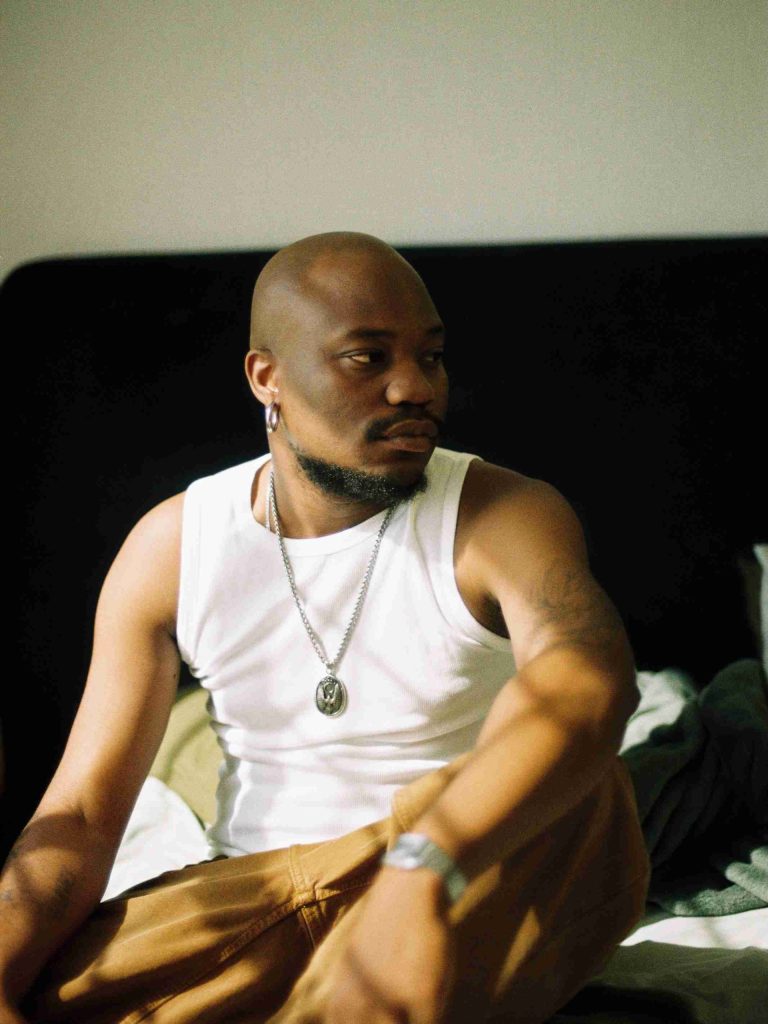
Marcus Harvey | SUPPLIED
“Come To Me” sets that vocabulary beside a rapper of matching precision. Chicago’s Mick Jenkins stretches his phrases across the bar lines over muted trumpets and a bass that sings and drives at once, with an elastic ease in the spirit. Harvey answers with melodic rap wrapped in layered harmony. The chorus invitation, “What you need I got, baby, just come to me my love / Now we’ve seen the worst of me,” weighs more because the album has already shown how hard it is for Harvey to stay present while he chases a life in music. The worst of him arrives next, and he names it himself. “Need You” trades the swing for trap hi-hats and 808s, and in a narrow, circling falsetto Harvey sings the line that unlocks the album: “Forgive me for the days I can’t be there when I’m needed the most / Gotta earn a living, if it kill me on a different roads.” On an album built around a father who left, the son is asking to be forgiven for his own empty chair. He calls it work. Elvis, in his son’s telling, answered to the street. The chair stays empty either way. Ambition has a cost, and chasing a legacy becomes its own kind of absence. “Cotton Candy,” the most forceful of Mageba’s beats, with saturated drums and a bass that plays lead, gives that legacy a map, “I’m just tryna build a legacy,” followed by street corners, dice games and a self-portrait as the family’s “Black sheep.” Harvey is building on hard ground, against a particular geography, a particular childhood and a particular history, reaching to leave something behind while he casts himself as the stray branch of the tree.
“Who Is Elvis?” comes eleventh of thirteen, and it’s the song that makes the title bleed. Everything the album has circled finally has a face. Over echoing piano, deep bass and half-time drums, Harvey raps with the care of a man reasoning with himself in the dark, and what he says about his father is startling in its awe: “I’m a fuckin’ rebel like my father / And my father is a gangster, ain’t no one above ’em / Drugs, guns and violence, my pop’s a pioneer.” Pioneer is a son’s word, a boy’s mythology still standing in a grown man’s chest. The next verse turns it over, “I remember when he left, my days had no balance / But fuck it was way too young to understand it / But now I’ve grown, and I got way too many questions.” The song lives in the narrow space between anger and curiosity. It holds its subject to account without a gavel, and it keeps Harvey whole, a full person as well as the son who was left. “Rebel like my father” is the most loaded line on the album because it claims inheritance without certainty. Is rebellion in the blood? Learned? Coincidence? A costume? The song holds all four and grows stronger for it.
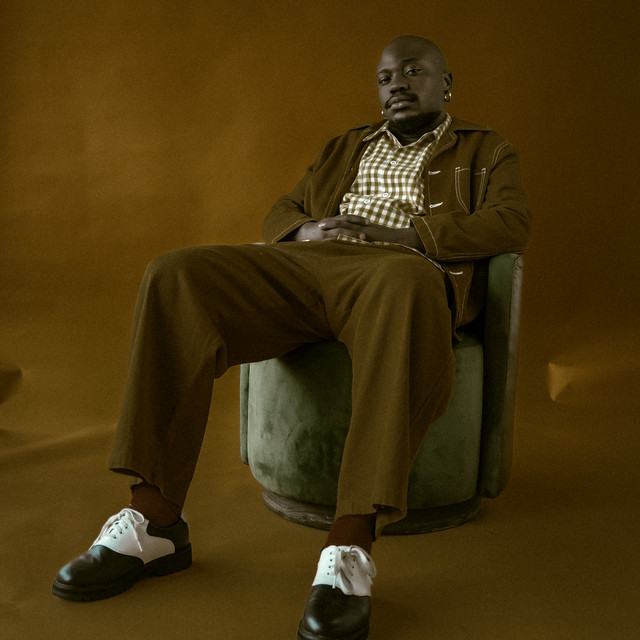
Marcus Harvey | SUPPLIED
Then the ground shifts, “For everything I am today, my mother’s love showed me the way.” The album carries the father’s name, and its heart was shaped by the parent who stayed. The only real complaint is scale. The reckoning the title promises gets about four minutes near the end of a 36-minute record, and a song this rich had the weight to anchor the entire album. The last two tracks close the argument. “Ndzi Lava Ku China,” with Umthakathi Kush, moves into Xitsonga, another of the tongues Alexandra lives in, over a call-and-response of supplication, I want to dance, our God, I ask for strength. It’s the mother’s register one final time, prayer is survival. Then “Medi Ba Baya” brings in gated 808s and a gritty, combative Harvey, “I’m the greatest they talking about me / I don’t do friends I’m all about me.” After the questioning of “Who Is Elvis?”, the flex splits in two.
One half is invention, Harvey building himself in the open, if “Who Is Elvis?” asks what was handed down, “Medi Ba Baya” answers with what he means to build. The other half is inheritance, the father’s posture of the rebel who answers to no one coming back through the son’s mouth at the very moment he claims to be self-made. That double reading is the identity crisis at the album’s centre, and it’s the album’s truth. Inheritance and invention grow from the same root, and what a person builds often carries the grain of the wood they were cut from. Harvey’s music moves the same way, through neo-soul, jazz, boom bap, R&B, Afro-inflected percussion and South African vocal tradition, like a man trying every key on the ring until one turns the lock. Some nights the writing reaches for grand metaphor, some nights it sits in plain confession, some nights it just wants to shine, and all of it belongs to the portrait of a man still learning how rapper, singer, son, lover, black sheep and South African artist can live in one body. Son of Elvis holds that tension up to the light and leaves it open. The mother speaks first. The father speaks last. In between, the son sits with the pieces that made him and chooses which ones to keep.


