


DJ Khaled has forged himself an enviable reputation as hip-hop’s void that exists to facilitate the flourishing of creation. All his albums throughout the 2010s have seen him play the role of being a galaxy that hosts countless constellations of stars. Think about “I’m On One” from We the Best (2011) and “No New Friends” from Suffering from Success (2013), which both featured Khaled’s go-to rap trinity: Drake, Rick Ross, and Lil Wayne. Go back to glorious collabos like Grammy-winning “Higher” (my personal favourite) with the late Nip and John Legend, and “They Ready”, that rare J. Cole-Kendrick Lamar collaboration, with the extra feature of Big K.R.I.T.On God Did, Khaled exploited the same formula, but the output is incoherent and inconsistent.
Khaled’s thirteenth studio album, clocking in at fifty-seven minutes, is an eighteen-track follow-up to Khaled Khaled (2021), which, much like GD, also boasted a plethora of industry big shots. In addition to the usual inclusion of his beloved trinity, the “No Brainer” hitmaker also enlisted help from Jay-Z, Ye, City Girls, Eminem, Latto, Travis Scott, Lil Baby, 21 Savage, alongside singers SZA and John Legend. And yes, I wedged Em’s name in between City Girls and Latto for the sole purpose of illustrating just how eclectic and contrasting the musical scope of this album gets.
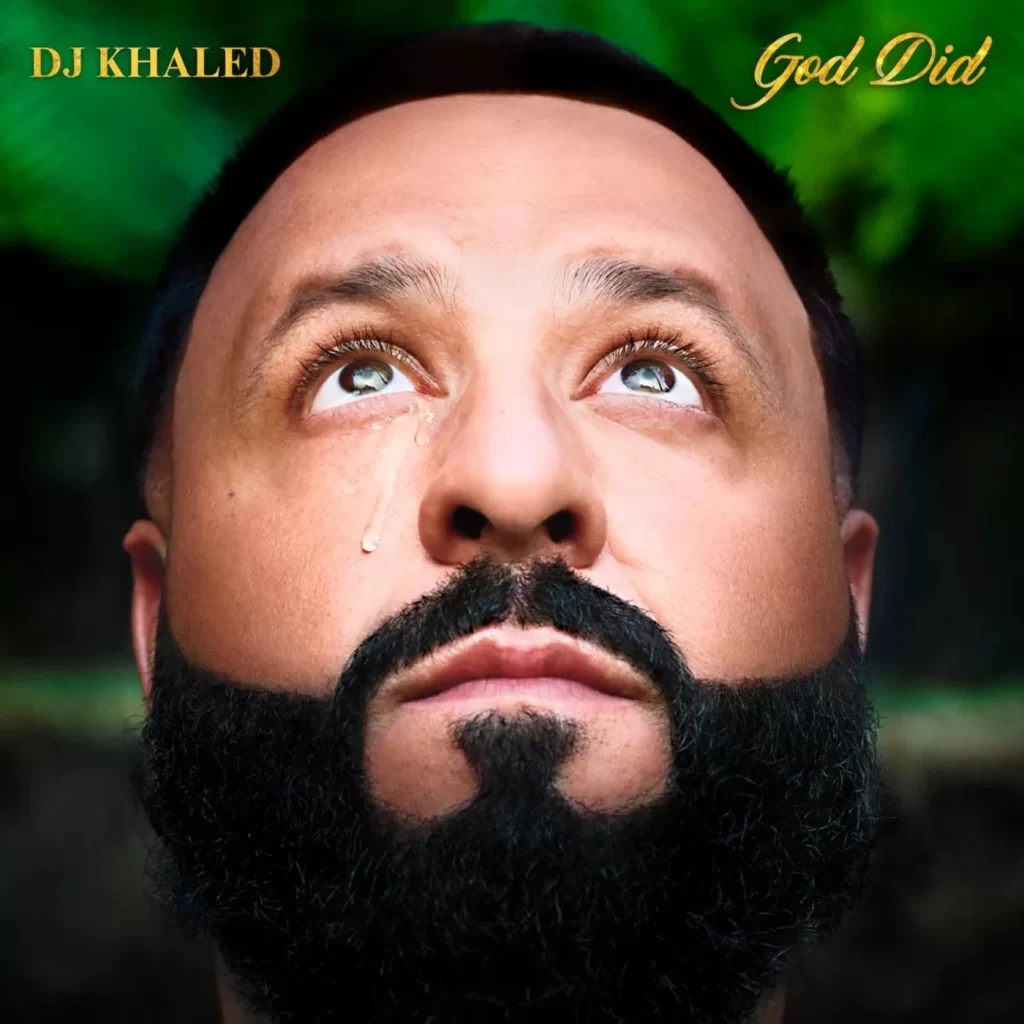
As far as eclecticism and contrast are concerned, the production is of even and expertly mixed hip hop and all its regional styles. Although the man of the album was pretty hands-on for most of the album, he did have some help from Dr. Dre and Mike Dean, among others. All the beats felt tailored to suit the musicians and their individual styles, a good thing that quite possibly was one of the things which kept the album from becoming a towering travesty.
Eyes off the artists, too. Listening to Kodak Black’s effortless verse on “It Ain’t Safe” transported me back to the first time I heard his blinder of a performance on Kendrick’s “Silent Hill” earlier this year. 21 Savage surfed on top of the soulful melodies of “Way Past Luck”, exploring themes of heartbreak, betrayal, and optimism, channelling that DJ Dahi-produced “A Lot” energy that won him his maiden Grammy two years back. City Girls and Latto repped the femme scene well on “Bills Paid”; Latto, in particular, danced on the heads of most rappers who guested the album with wit, sex positivity, and shameless hedonism—a standout feature. Em and Ye came through with “Use this Gospel (Remix)”, seeing the self-styled rap god flex his peerless rapping technique to complement Ye’s singing.
Everyone, on an individual level, held it down—that perhaps is the main issue with this record. Instead of everyone coming together in harmony, the album comes across as a disproportionate collage.
GD is a celebration of all God has done for the individuals involved. Okay, conceded. But what exactly in the grand scheme of things? I found myself asking that question halfway down the album. I was nodding at the beats. Yes, there was never a time when I didn’t grunt in surprise at a punchline like Latto’s (“He asked me what’s my horoscope, and I said ‘A Dollar sign'”). I was taken aback by egoistical boastings like those from Future (“She went and tatted my name because I’m big time”), alluding to Blac Chyna’s (his then-girlfriend) infamous tattoo of his name. Dazzling displays of lyrical mastery graced the album in the form of all the verses in the titular joint and “Use this Gospel (Remix)”. SZA and Legend iced the cake with their vocals. Everyone came to the party. But what was the celebration of again?
Everyone clashed so much it left so much room to wonder why so many different people were gathered in one place to speak about one supposed denominator.
To get a sense of what the album feels like, imagine this. Picture the album as being a party within a small room. And in this room, two people are talking about how God has been good to them (“Use this Gospel”); meanwhile, there are twerking Birkin-wearing chicks waving bricks of stacked banknotes atop a table, spilling punch everywhere (“Bills Paid”). Meanwhile, a sombre-looking guy stands in the corner down bad over heartbreaks, betrayals, and hopes for a better tomorrow (“Way Past Luck”). Then there are two weird dudes randomly harassing other guests with gun conversations and how it’s not a good idea to pick a fight with them (“It Ain’t Safe”). See, it’s a party, sure. A confused one, however.
Besides the differing worldviews of the artists involved that left the album dishevelled, GD also grappled with juxtaposing contradictory themes in a balanced way: blessedness and feeling cursed. The blessedness parts of the album (“God Did”, “Use this Gospel (Remix)”, “Bills Paid”) see the musos explore how lucky they are in their lives, how blessed and wealthy they are, supposedly adding more meat and sentiment to the album’s vague title. The cursed half cancels the other (“Way Past Luck”, “Big Time”, and “It Ain’t Safe”), and see the artists talk about their pains and vices, and they even make mentions of violence and an overall lack of internal peace. Again, there’s another glaring gap here. God did indeed give them these lives, according to the album’s name, but it would’ve helped for them to tie their experiences with the overall theme to bring the songs closer to others and elevate faithfulness to the theme of divine favour. The songs (some of which were my picks) left me frustrated and at a loss. This is great music, but it’s just ineptly lumped into a distorted collection with no sense of musical or sequential cohesiveness.
Even with all the negatives, GD wasn’t without shining moments.
The soaring highlight has to be the title song, the album’s second. Ross’s verse, next to the other two from the Carters, was appreciably shorter but packed a punch in its brevity and ability to act as a make-you-want-to-listen-more hook. Tunchi flexes his wordplay and discombobulating lyricism before Jay cuts off the third and last head of the hydra, killing it altogether. His verse runs for four minutes without any stops, just a free-flowing stream of thoughts and boasts from hip-hop’s first-ever billionaire. Other highlights came from individual performances, namely 21 Savage with his vulnerability, Latto and City Girls with their agile and quick-tongued performances, and Lil Baby with his melodic finesse when it comes to styling his raps.
The album is a proud and celebratory victory lap in DJ Khaled’s accolade-laden run. It truly is (in the man’s signature catchphrase) “another one”. Another one of what exactly, though? That’s up for interpretation because I smiled in confusion after the final song. The smile was for the well-made music. The confusion was about the disconnect regarding what the album was even saying and doing because it was saying so much and doing everything all at once that it might as well have been saying nothing and going nowhere at all.


