


Omah Lay’s Clarity of Mind is not the clean, resolved statement its title suggests. Instead, it operates as a document of contradiction, an album where clarity is pursued but rarely attained.
Coming four years after Boy Alone, the project emerges from a period of withdrawal, self-reconstruction, and creative reset, and that tension defines the listening experience. It feels less like a return and more like a continuation of an internal dialogue that was never settled in the first place. Where Boy Alone framed isolation as a wound, Clarity of Mind treats it as an environment, something he now inhabits rather than escapes, showing that he is now at peace with isolation.
At its core, the album is about internal conflict, but not in ways that are overtly dramatic or explosive. Omah Lay repeatedly positions himself between awareness and indulgence, he understands his vices, names them, even critiques them, but continues to lean into them anyway. Tracks like “Artificial Happiness” and “Don’t Love Me” circle around emotional numbness and dependency, suggesting a psyche that has grown tired of its own coping mechanisms. There is a noticeable fatigue in how he approaches these ideas, as if even the act of self-reflection has become repetitive. This is not growth in the traditional sense, it is recognition without resolution, awareness without the discipline to act on it.
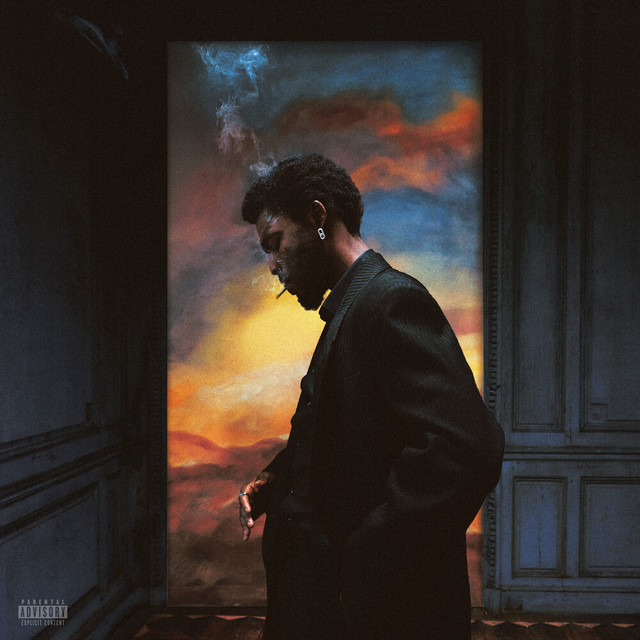
Clarity of Mind album cover | SUPPLIED
What sharpens the album’s thematic weight is its recurring collision between spirituality and hedonism. Religious language, prayers, invocations, references to God, sit uncomfortably beside desire, substance use, and excess. Songs like “Holy Ghost” and “Amen” frame faith not as salvation but as another form of escape, mirroring the same function as alcohol or lust.
There is an almost cyclical pattern to this tension, moments of guilt lead to prayer, prayer leads to temporary clarity, and clarity collapses back into indulgence. The album does not attempt to reconcile these opposites, it simply lets them coexist, which makes the tension feel more honest than moralistic, but also more unresolved.
There is also a persistent thread of identity anxiety running through the record. On tracks like “Jah Jah Knows,” Omah Lay questions who he is outside of fame, pleasure, and performance.
This is where the album becomes most compelling, when it moves beyond surface indulgence and begins interrogating the structures that define him. The question is not just “what am I doing?” but “who am I without all of this?” Fame, in this context, is not framed as success but as distortion. It amplifies everything, desire, loneliness, validation, while simultaneously eroding any stable sense of self. That tension gives the album a psychological depth that extends beyond typical themes of heartbreak or excess.
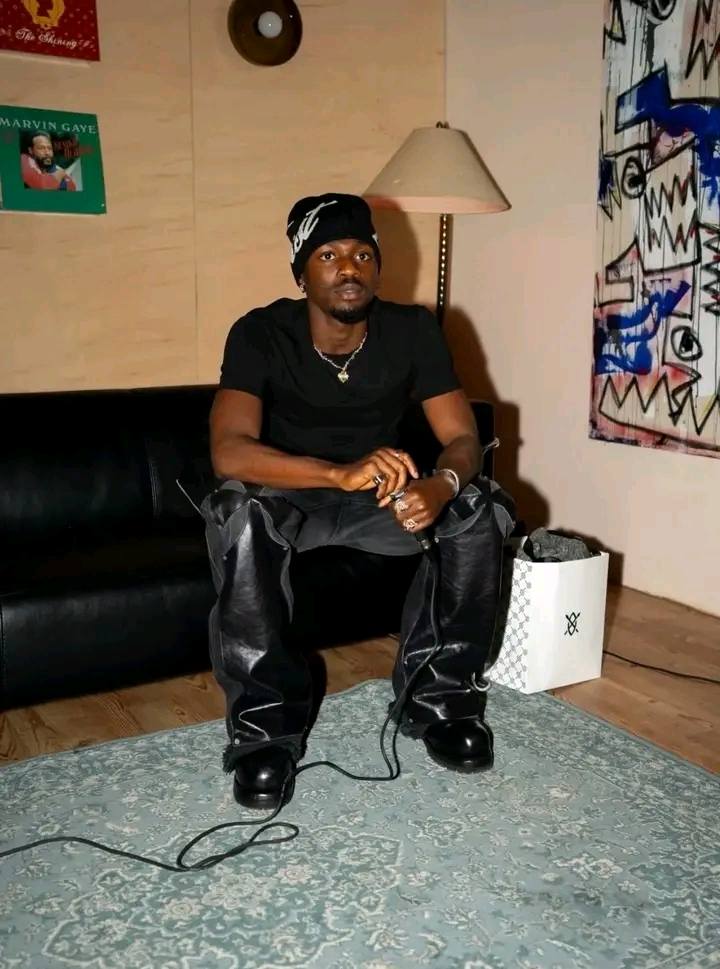
Omah Lay | SUPPLIED
Sonically, the album leans into a restrained Afro-fusion and R&B palette. The production is minimal, mid-tempo, and atmospheric, often built to leave space rather than fill it. This restraint works in the album’s favor, allowing his voice, fragile, melodic, and slightly slurred, to carry emotional weight without competition. Much of the production, shaped by collaborators like Tempoe, maintains a cohesive sonic identity rooted in subtle percussion, soft synth layers, and understated basslines. However, that same cohesion occasionally works against the project. The uniform pacing can blur distinctions between tracks, making certain moments fee less like individual statements and more like extensions of the same emotional loop.
Vocally, Omah Lay remains consistent with what has defined him, a delivery that feels half-sung, half-confessed. He rarely raises his voice, and that quietness becomes a tool. It pulls the listener closer, making even his most questionable admissions feel intimate rather than performative. There is a conversational quality to his phrasing, as though he is thinking in real time rather than reciting something rehearsed. However, this same approach flattens certain moments, especially when the writing lacks progression. When themes are visited without being deepened, the vocal restraint begins to feel less like intentional minimalism and more like limitation.
“Don’t Love Me” Music Video:
The album is notably sparse in collaborations, with only a single guest appearance from Elmah. This decision reinforces the project’s introspective nature, it feels like a conversation with himself rather than a communal experience. Elmah’s presence on “Coping Mechanism” briefly shifts the tone, introducing softness and an external perspective that contrasts with Omah Lay’s internal monologue. That momentary shift is effective, but it also highlights how insular the rest of the album is. By limiting outside voices, he preserves the emotional purity of the project, but at the cost of sonic and narrative variation.
There is also an underlying structural repetition that runs through the album, both thematically and sonically. Many of the songs operate within the same emotional frequency, revisiting similar ideas, loneliness, desire, guilt, self-awareness, without necessarily advancing them. This repetition can be interpreted in two ways. On one hand, it reflects the cyclical nature of the struggles he is describing, on the other, it raises questions about the album’s ability to evolve within its own runtime. The lack of progression is not accidental, but it does test the listener’s patience.
Check out “Waist” below:
Ultimately, Clarity of Mind is less about arriving at clarity and more about documenting the process of searching for it. It is an album that resists neat conclusions, choosing instead to sit in discomfort, contradiction, and repetition. That makes it uneven in places, but also more
psychologically accurate. Omah Lay is not presenting a healed version of himself, he is presenting someone who understands the problem and hasn’t yet found the solution. In that
sense, the album’s greatest strength is also its limitation, it is honest to a fault, committed to the process even when the process itself refuses to move forward.
Words by Zimiso Nyamande


