


London gave Skepta a stage. Nigeria gave him a history. Somewhere between the two, Joseph Olaitan Adenuga Jr. became one of the most influential architects of British grime, carrying the experiences of an immigrant household into a genre that would eventually become part of Britain’s cultural identity. But on The Fork and Knife, the question is no longer how far he has travelled. It is what that journey means to the people who came before him.
Seven years after Ignorance Is Bliss, Skepta returns with an album shaped by the distance between generations, the politics of belonging and the complicated inheritance of success. Its title draws from a wish his grandfather carried throughout his working life, that his children and grandchildren might one day enjoy the kind of life he spent his days serving others. A life where the family could sit at a table with a fork and knife, occupying the kind of position that once seemed reserved for somebody else. Decades later, Skepta finds himself taking his mother to award ceremonies and dinners, living inside a possibility that began as somebody else’s ambition.

The Fork and Knife album cover | SUPPLIED
There is something particularly significant about Skepta choosing this moment to examine his own history. The Britain that greeted his last album in 2019 is not quite the Britain that exists today. Conversations surrounding immigration, race and national identity have become increasingly polarised, with hostility towards immigrant communities finding a more visible place in mainstream political discourse. Skepta does not approach these tensions as an outside observer. He approaches them as somebody whose existence complicates the narratives being constructed about who belongs in Britain.
Born and raised in Tottenham, north London, to Nigerian immigrant parents who left their country during the Nigerian Civil War, Skepta’s relationship with Britain has always existed alongside the history of his family. His identity is not something he has recently discovered for the sake of an album cycle. It has been present throughout his music, sometimes explicitly, sometimes in the spaces between his declarations of ambition. On The Fork and Knife however, he gives that history considerably more room to breathe.

Skepta | SUPPLIED
The opening track, “Secrets of Patriarchy”, establishes the album’s emotional architecture through an icy, stripped-back production that recalls an earlier era of British grime. Its sparse arrangement leaves space for the details of Skepta’s present life, appointments, studios, fashion shows and family responsibilities. There is a striking contrast between the restless possibilities of grime’s early years and the measured confidence of an artist who has spent decades building his own world. The young man once fighting to be heard has become
somebody whose time is divided between creative industries, family and the responsibilities of an established public figure. The opening also introduces a childhood encounter in which his Nigerian surname becomes a source of interrogation, a small but revealing reminder that questions of identity often begin long before a person has the language to answer them.
The album takes some time to find its footing. “Cold Shower” and “Currency” revisit familiar rhythmic territory, while moments on “Melody” and “Gas Me Up (Diligent)” suggest an artist occasionally caught between the expectations of his earlier catalogue and the ambitions of his present. There are instances where the writing feels less considered than the subject matter deserves. For an artist who has spent much of his career demonstrating the importance of lyrical precision, these moments are noticeable. The record does not possess the immediate cohesion that made Konnichiwa such a defining statement.
But the album becomes more interesting as it moves away from the obligation to sound like Skepta and begins exploring what being Skepta has come to mean. On “Currency”, history becomes a particularly effective storytelling device. “It was ‘no blacks, no dogs, no Irish’ / Now it’s ‘Excuse me, can I help you sir?'” compresses generations of British racial experience into a single observation. It is not simply a comparison between two moments in time. It is an examination of how social attitudes evolve, how acceptance can be conditional, and how the children of immigrants can inherit a country that once questioned their parents’ right to occupy it. The transformation is presented without losing sight of the history that made it necessary.
Watch “Secrets of Patriarchy”:
The argument finds another dimension on “Innocent Smile”, featuring Madness frontman Suggs and production from Chase & Status. Over an urgent, breakbeat-driven instrumental, Skepta confronts the treatment of immigrant communities and the political machinery that repeatedly turns them into convenient targets. His words, “Ain’t no love for an immigrant child”, carry particular weight because they return the conversation to its most human consequence. Behind the headlines, election campaigns and increasingly polarised national conversations are children growing up trying to understand why the country they call home sometimes treats their existence as a problem.
Suggs’ presence is more than an interesting guest appearance. His connection to the two-tone ska movement recalls another chapter of British musical history shaped by the meeting of cultures, racial tensions and the search for a shared identity. There is also a personal connection, Skepta’s father played two-tone records during the 1980s. Across generations, the music becomes a kind of family archive, connecting the sounds that shaped his childhood to the social questions occupying his adulthood. It is one of the album’s more thoughtful creative decisions, allowing history to exist within the music rather than simply being discussed over it.
This is where The Fork and Knife begins to distinguish itself from a conventional conscious rap record. Skepta is not interested in presenting himself as an authority who has arrived to explain Britain to the British. His perspective is more intimate. He is documenting what it means to have lived through the country’s contradictions, to have benefited from the opportunities it eventually offered, and to recognise that those opportunities should not be reserved for the fortunate few.

Skepta | SUPPLIED
Musically, the album reflects this widening perspective. Skepta has never been particularly interested in remaining within the boundaries of one sound, but here the shifts feel connected to the different parts of his life. On “Chippie”, he moves into alternative African pop territory alongside Aya Nakamura, exchanging French lines over a playful, flirtatious production. “Broken Hearts”, featuring Central Cee and Jorja Smith, finds him navigating jazzy breaks, while “Aloe Vera”, with Asake, introduces a heavier, bass-driven energy. These collaborations position Skepta within a musical landscape that has become increasingly interconnected, particularly across Britain, Nigeria and the wider African diaspora.
There is an unmistakable awareness of how much the musical world around him has expanded. Skepta helped establish the conditions under which British rap could become a global cultural force. He now exists in a generation of artists who have inherited that possibility, often without having experienced the barriers that defined its earliest years. His willingness to move between these sounds suggests an artist comfortable enough with his own history not to mistake reinvention for abandonment. He is not attempting to preserve grime in a museum. He is allowing it to exist in conversation with everything that has grown around it.
“Revenge” is perhaps the clearest expression of this maturity. “I’ve been in denial, but not today,” he admits, confronting his own mistakes over a slinking instrumental. For an artist whose public identity has often been constructed around certainty, confidence and competitive dominance, there is something revealing about this willingness to revisit the less flattering chapters of his career. His reflections on lost opportunities and earlier creative misjudgements give the song an introspective quality that extends beyond the usual language of redemption. The past is neither erased nor romanticised. It is acknowledged as part of the person he has become.

Skepta | SUPPLIED
That willingness to confront his own contradictions gives the album some of its most compelling moments. Skepta has spent years constructing an identity around being the person who sets the standard, but there is a difference between knowing your influence and understanding what to do with it. On The Fork and Knife, he appears increasingly interested in the latter.
Then there is “Belly”, a nine-minute cypher that feels like a reminder of the environment from which all of this emerged. Its raw, radio-set energy places Skepta alongside younger MCs, allowing the competitive spirit of grime to reclaim the record. The beat carries the persistent beep of a low-battery smoke alarm, an almost absurd domestic detail against the intensity of the performances. Skepta revisits the kind of self-defining bars that helped establish his reputation, but the significance here is not simply that he can still rap with the hunger of his younger self. It is that he has made room for others to demonstrate their own abilities. Kibo, Kruz Leone and the other MCs bring their individual energies into a space that feels connected to grime’s original communal spirit.
The album’s closing track, “Victory Lap”, featuring Fred again and PlaqueBoyMax, offers another reminder that Skepta’s relationship with contemporary music is not governed by nostalgia. The frenetic production carries the energy of the internet’s rapidly evolving musical culture, placing him in conversation with younger creative voices. It is a fitting conclusion to a record that constantly moves between different generations, even if the transition from the reflective weight of its earlier material into its more celebratory closing stretch occasionally makes the album feel less cohesive than its ideas deserve.

Skepta | SUPPLIED
Still, the importance of The Fork and Knife extends beyond its individual production choices or the strength of its guest appearances. It is an album about what happens after the breakthrough, after the awards, after the world begins recognising the person your family always believed you could become. Skepta has occupied several positions throughout his career, grime MC, producer, fashion designer through MAINS, house music collaborator through Más Tiempo, and an influential figure in contemporary British culture. Yet the most interesting version of him on this record is the son, grandson and father attempting to understand the responsibilities that accompany those identities.
On “Revenge”, he delivers one of the album’s most revealing declarations: “I’m not an MC, I’m a locksmith / I spit bars and I open doors.” It is an effective line because it shifts the emphasis away from personal achievement towards what achievement can make possible for somebody else. There is a distinction between being the person who gets through a door and being the person who ensures it remains open.
Perhaps that is the central question of The Fork and Knife: what does an artist do after becoming the person he once needed to see? Skepta has spent much of his career proving that grime could occupy spaces it was never expected to enter. From the underground to international stages, from the Mercury Prize-winning Konnichiwa to fashion, art and electronic music, his creative identity has expanded beyond the original boundaries of the genre. Yet the album’s most compelling moments are not necessarily concerned with documenting those accomplishments. They are concerned with the people and circumstances that made them possible.
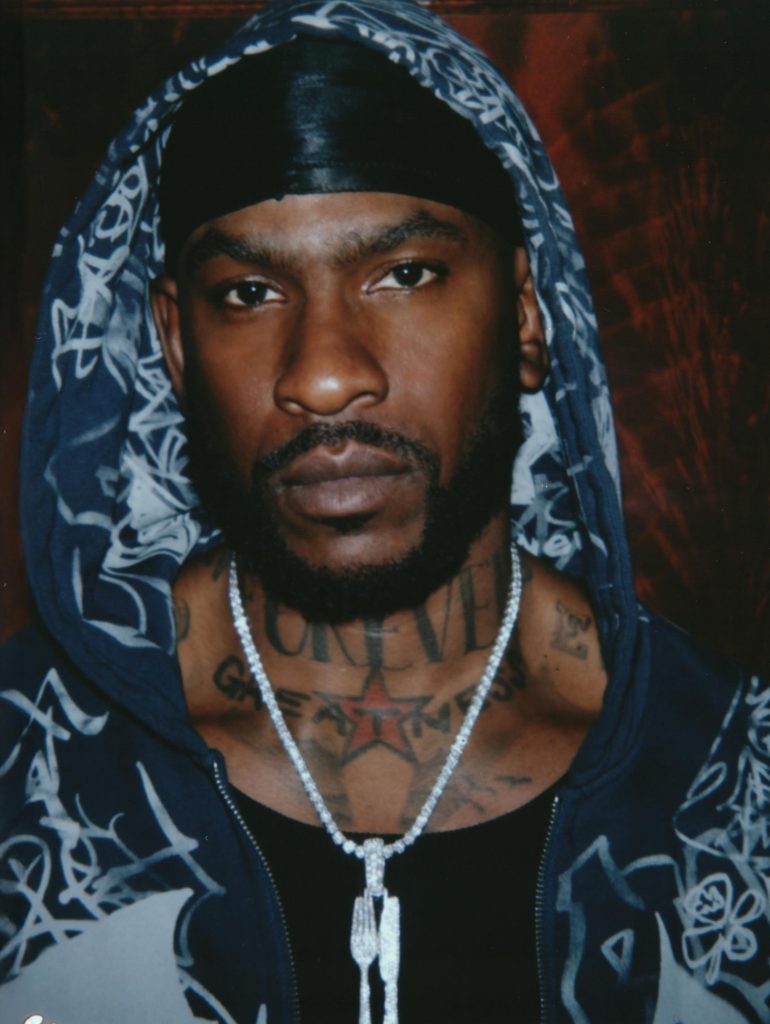
Skepta | SUPPLIED
The record is not without its frustrations. Its narrative occasionally wanders, and some of its musical ideas feel more developed than others. The sharpness and cohesion that made Konnichiwa such a defining statement are not consistently present here. But judging this album exclusively against that earlier work would miss what Skepta is attempting to accomplish. This is not an exercise in recreating a moment when grime was changing the world. It is an attempt to understand what happens to the people who helped change it.
Ultimately, The Fork and Knife presents success as something larger than an individual victory. It is a grandfather’s wish finding its way into a grandson’s life. It is a Nigerian family establishing itself in a country that has not always made room for it. It is a genre born from immigrant experience becoming one of Britain’s most recognisable cultural exports. And it is an older artist recognising that the future of the music should not end with him.


